Mogadishu takes diplomatic action against Abu Dhabi
Somalia has ordered the United Arab Emirates’ ambassador to leave the country within 72 hours, escalating a diplomatic dispute over what its government describes as interference in its sovereignty and internal affairs.
The decision was announced on November 19 following a meeting of Somalia’s Council of Ministers in Mogadishu. The government also ordered the recall of its ambassador to the UAE for consultations.
According to the “Somali National News Agency’s report” the measures were among five decisions approved by the cabinet in response to what it described as actions threatening Somalia’s unity, territorial integrity and security.
The government also instructed its foreign ministry to communicate its concerns to other countries and international organisations.

Disagreement over regional influence
The dispute centres partly on the UAE’s relationships with regional administrations in Somalia, including Somaliland, Puntland, and Jubbaland.
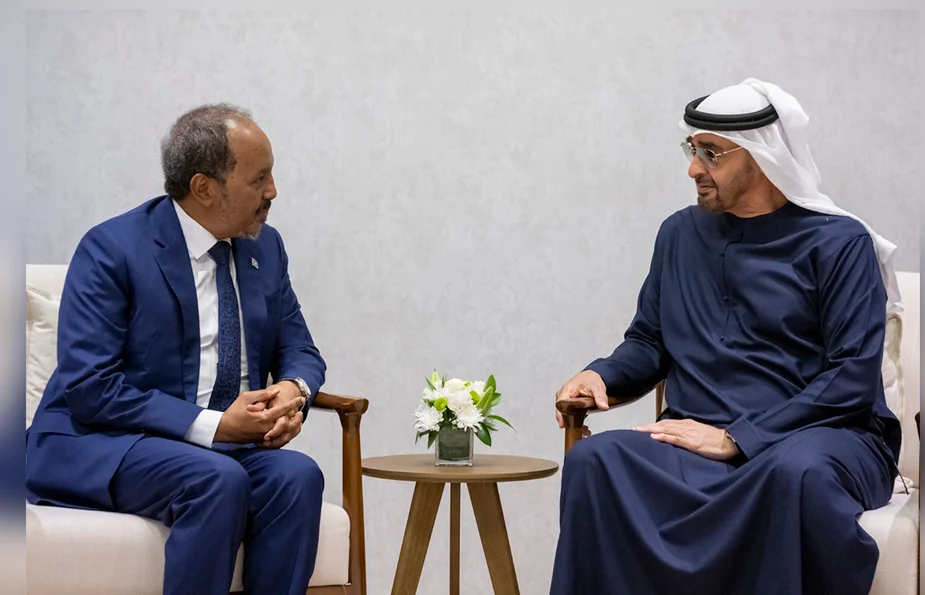
Somali President Hassan Sheikh Mohamud has accused Abu Dhabi of supporting political and security arrangements that bypass the federal government and undermine national unity.
The president has also criticised UAE agreements involving ports in Berbera, Bosaso, and Kismayo, arguing that foreign arrangements affecting Somali territory should require the federal government’s approval.
In a “November 19 report, Reuters” said Somalia’s information minister described the alleged conduct as an open invasion, although he did not provide detailed evidence of the specific actions behind the latest decision.
UAE Rejects Somalia’s Accusations
The UAE has rejected Mogadishu’s accusations, describing the Somali government’s approach as hostile and damaging to bilateral relations.
The disagreement follows Somalia’s January 2026 decision to annul its agreements with the UAE covering economic, security, and defence cooperation.
The three regional administrations with close UAE ties rejected the federal government’s decision to cancel agreements involving their territories, further exposing divisions over the distribution of authority within Somalia.
The “Associated Press reported” that the UAE has maintained significant economic and security interests in Somalia, including port investments, military training and support for regional security forces.
The dispute has therefore developed beyond a disagreement over diplomatic protocol into a wider contest over federal authority, foreign partnerships, and regional influence.
Implications for the Horn of Africa
The diplomatic confrontation could affect the UAE’s wider engagement in the Horn of Africa, a strategically important region connecting the Red Sea, Gulf of Aden, and Indian Ocean.
Somalia’s ports and coastline are particularly significant for maritime trade and regional security. The UAE has invested in infrastructure and maintained relationships with several political and security actors in the region.
However, the ambassador’s expulsion does not automatically mean that Somalia and the UAE have formally severed diplomatic relations. Somalia has ordered the ambassador’s departure and recalled its own envoy, while the broader future of bilateral relations remains uncertain.