
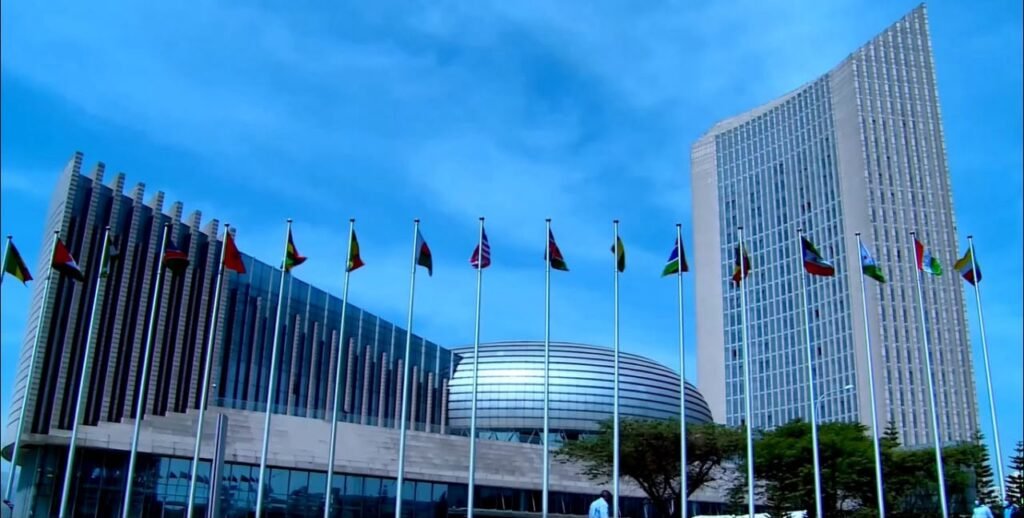
African leaders left Addis Ababa in February with commitments on water and sanitation, trade, peace and security, and Africa’s influence in global decision-making.
But beyond the speeches and declarations, the bigger question is what happens next.
The 39th Ordinary Session of the African Union Assembly, held at AU headquarters in Addis Ababa, Ethiopia, on 14 and 15 February 2026, brought together heads of state and government at a difficult time for the continent.
Conflicts continue in several regions, businesses still face barriers to trading across African borders, and hundreds of millions of people lack access to safely managed water and sanitation.
Here are the major issues from the summit and why they matter.
Water takes centre stage
Water and sanitation were at the heart of the 2026 summit under the theme of securing sustainable water availability and safe sanitation in support of Agenda 2063.
According to the African Union, about 400 million Africans lack access to safely managed drinking water, while more than 700 million lack safely managed sanitation.
Leaders endorsed the Africa Water Vision 2063 and Policy, a continental framework aimed at improving water security, strengthening governance and attracting investment into water and sanitation infrastructure.
The issue goes beyond access to drinking water. Reliable water supplies affect agriculture, health, food security, economic development and climate resilience. Water shortages can also increase pressure on communities and contribute to displacement and instability.
The real test will be whether governments can turn the continental framework into funded projects that improve people’s daily lives.
AfCFTA: Making free trade work in practice
African leaders also renewed efforts to accelerate implementation of the African Continental Free Trade Area (AfCFTA).
The agreement is designed to create a more integrated African market connecting about 1.4 billion people and make it easier for African businesses to trade across borders.
But the existence of a trade agreement does not automatically mean easier trade.
Businesses still face lengthy customs procedures, infrastructure gaps, border delays and other non-tariff barriers. These problems can increase costs and make cross-border expansion particularly difficult for smaller companies.
For AfCFTA to deliver its promise, governments must move beyond agreements and remove the practical obstacles businesses encounter.
Peace and security remain urgent
The summit also took place against continuing conflicts and political instability across parts of Africa.
Sudan, South Sudan, eastern Democratic Republic of Congo, Somalia and instability across the Sahel remain major concerns for African and international institutions.
Addressing the summit, UN Secretary-General António Guterres called for an end to hostilities in Sudan and renewed political dialogue in South Sudan. He also stressed the importance of respecting the territorial integrity of the Democratic Republic of Congo.
Another issue is how African-led peace operations are financed.
UN Security Council Resolution 2719 created a framework through which eligible AU-led peace support operations can receive UN assessed contributions on a case-by-case basis.
The framework could give African peace missions access to more predictable funding, but its effectiveness will depend on how it is implemented when major operations require sustained financial support.
Africa wants greater global influence
Africa’s representation in international decision-making was another major issue in Addis Ababa.
The African Union became a permanent member of the G20 in 2023, giving the continent formal representation in one of the world’s most influential economic forums.
The summit considered lessons from South Africa’s 2025 G20 presidency and the need for stronger coordination of African positions on issues including debt, development financing, climate action and food security.
But another longstanding question remains unresolved: Africa still has no permanent seat on the UN Security Council.
Guterres described the situation as “indefensible”.
“This is 2026-not 1946,” he told African leaders, arguing that Africa should have a meaningful place in decisions affecting both the continent and the wider world.
The real test comes after Addis Ababa
The 39th AU Summit produced ambitious commitments, but declarations are only the beginning.
Water infrastructure requires investment. Free trade requires governments to remove barriers at borders. Peace initiatives require cooperation and sustained financing. Greater influence abroad also requires African governments to coordinate their positions.
That is why the summit should ultimately be judged by results rather than declarations.
Will more Africans gain access to safe water and sanitation? Will businesses find it easier to trade across borders? Will African-led peace efforts become more effective? And will the continent gain greater influence over international decisions affecting its future?
For Africans at home and across the diaspora, those outcomes will matter far more than what was promised in Addis Ababa.
Facts first. Not frenzy.
Sources: African Union; United Nations