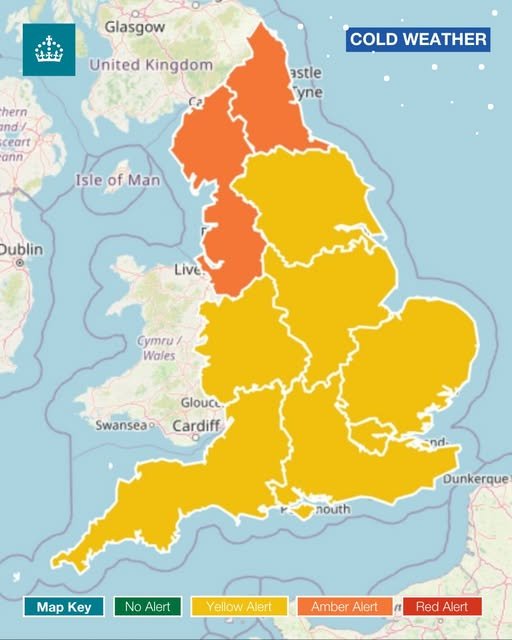
The UK Health Security Agency (UKHSA) has extended yellow cold-health alerts affecting three regions of England as low temperatures continue to create potential health risks for vulnerable people. The North West, North East, and Yorkshire and the Humber are covered by the latest update, issued on Friday, 20 November.
The UK Health Security Agency said the existing alerts had been extended by a further 24 hours. Its previous update had carried the warnings through to Monday morning, 23 November; the additional extension therefore lengthens the affected period. Other English regions were not included in the latest alert update.
The alert is a public-health signal rather than a declaration that all residents face the same degree of danger. It is intended to help health and social-care professionals prepare for a period when cold weather could place more strain on people who are already medically vulnerable.
Who faces the greatest risks?
Older adults, particularly people aged 65 or above, can be more susceptible to health complications associated with low temperatures. People with existing respiratory or cardiovascular conditions may also be at increased risk, while those sleeping rough can face prolonged exposure and difficulty finding a warm place to rest.
Cold conditions may worsen underlying illness and contribute to rising demand for community or hospital services. However, a yellow alert does not mean that every resident should expect a medical emergency. The severity of the risks depends on an individual’s health, living conditions, and ability to maintain a safe indoor temperature.
The UKHSA dashboard provides regional cold-health alert updates. Because warnings can change as forecasts develop, residents and care providers should check the current local position rather than rely only on a headline issued earlier in the week.
Practical advice during the cold spell
Health authorities advise people to heat the rooms they use most frequently where possible, wear warm clothing, and check on family members or neighbours who may struggle during colder weather. Those measures can matter particularly for people who live alone, have reduced mobility, or depend on others for heating and essential supplies.
Care providers may need to identify vulnerable patients who face extra difficulties accessing appointments, medicines, or home support when temperatures fall. Community networks also have a role in noticing when residents cannot heat their homes or need help reaching services.
The public should follow local health guidance and seek appropriate medical assistance if a person develops concerning symptoms. The alert itself should not be used to diagnose a particular illness or to decide against urgent treatment.

Winter planning remains under pressure
The latest warning comes during England’s winter health season, when NHS services must plan for seasonal infection, respiratory illness, and wider demand. The distinction between a cold-health alert and a broader severe-weather warning matters: the former focuses specifically on potential health impacts, especially for people at higher risk.
The UKHSA and Met Office work together on weather-health alerts, which help relevant organisations anticipate potential pressures. As the agency issues further updates, the precise geography and duration may change.
For now, the most immediate message is targeted protection. Staying informed, making contact with vulnerable neighbours, and acting promptly when health concerns arise can help reduce avoidable harm during the cold period.
What the warning means for services and families
A cold-health alert can trigger practical preparations without requiring people to change every aspect of daily life. Organisations supporting older adults may check whether residents have adequate heating, medicines, and reliable contact arrangements. Community services can also identify those living in poorly insulated homes or facing difficulty paying for energy. Those issues are important because people do not experience the same outdoor temperature under equal living conditions.
For health providers, the alert can inform routine planning around calls, home visits, and patients whose conditions might worsen. It should not be confused with a prediction of a specific number of hospital admissions. Forecast-based alerts describe a potential increase in risk, and the actual consequences depend on exposure, preventative action, and the health of the people affected.
An additional complication is that winter warnings are frequently revised. Friday’s extension changes the duration of an existing warning rather than introducing an entirely new national alert. Anyone arranging care over the weekend should consult the current official dashboard for updates and follow local advice if the geographical scope or end time changes.
The public-health agency’s future updates will determine when the warning is lifted, extended again, or revised for different regions. Those updates matter more than assumptions based solely on conditions in one town.
Related Trivane News
Flu Activity Rises Early in England but Remains Very Low
UK Announces £40m GP Support Scheme for 300,000 Vulnerable Patients Ahead of Winter