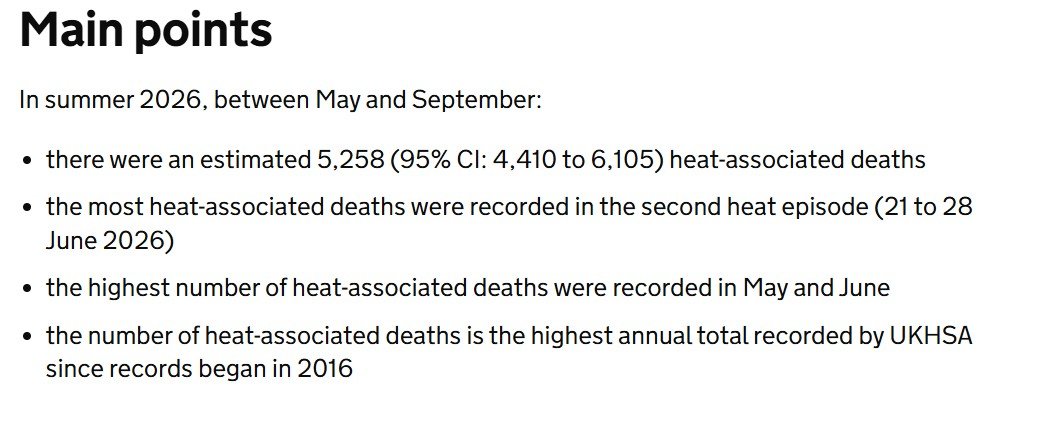
England experienced an estimated 5,258 heat-associated deaths between May and September 2026, according to a new public-health assessment published on Tuesday, 24 November. The number is the highest annual estimate recorded since the current heat-mortality monitoring series began in 2016 and points to the growing health consequences of prolonged hot weather.
The UK Health Security Agency said its second interim update identified another 2,381 heat-associated deaths beyond the number reported in July. Those additional estimates raised the seasonal total to 5,258. They are statistical estimates of mortality associated with hot periods, not a count of individual death certificates explicitly naming heat as the underlying cause.
Seven Heat Episodes in One Summer
Authorities identified seven qualifying heat episodes across 41 days during the summer. That exceeds the previous record of 40 heat-episode days recorded in 2022. The most severe individual spell was between 21 and 28 June, when the agency estimated 2,401 heat-associated deaths.
More than 3,000 estimated deaths occurred across the first two heat episodes in May and June, underscoring the dangers of early-season exposure. Heat-related risks can accumulate when warm nights prevent people from cooling down, homes trap heat and services face simultaneous pressures from illness and dehydration.
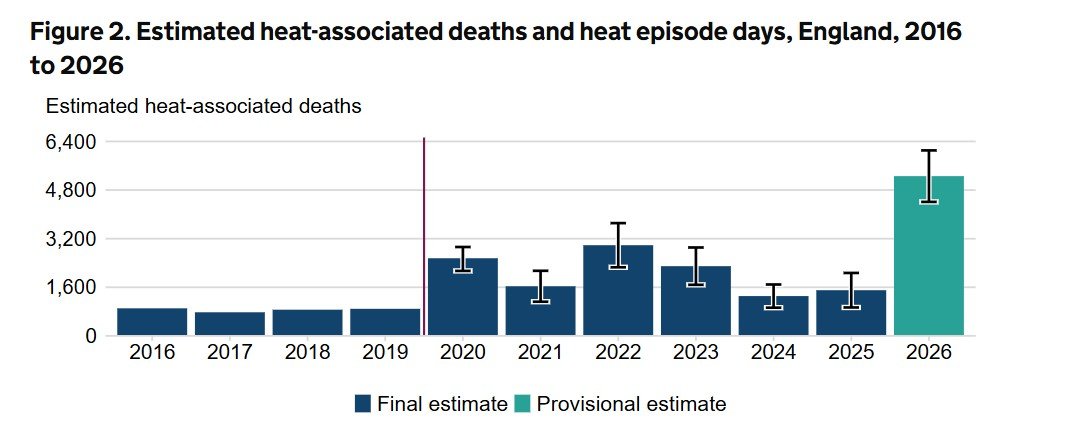
The figures put 2026 substantially above previous estimates. For comparison, the agency recorded 2,985 heat-associated deaths in 2022, 2,295 in 2023, 1,311 in 2024 and 1,504 in 2025. Comparisons are valuable, although estimates remain subject to adjustment as records and methods are reviewed.

What the Numbers Mean
The new interim report compares observed mortality during defined hot-weather periods with deaths in nearby periods without equivalent heat exposure. Statistical modelling helps estimate the extra burden associated with high temperatures, but it does not establish that each death had only one cause. Underlying illness, housing conditions, social isolation and access to care all influence individual risks.
The 2026 estimate is provisional because death registration information may still be incomplete. The published report gives a 95% confidence interval of approximately 4,410 to 6,105 heat-associated deaths, reflecting uncertainty around the central estimate. Readers should therefore avoid presenting 5,258 as a final certified count of confirmed individual heat fatalities.
The health authority says summer 2026 brought an unusually early heat-health alert in May and only the second red heat-health alert ever issued in England. These alerts are designed to help public services prepare, particularly where sustained temperature extremes could endanger people living with medical or mobility challenges.
Protecting People at Greatest Risk
According to UKHSA analysis, older adults, young children, pregnant women and people with underlying health conditions may face elevated risks in extreme heat. Some people cannot easily reduce their exposure because they live in poorly insulated or overheated homes, work outdoors or have limited access to cooling facilities.
Health protection therefore extends beyond advice to drink water. Councils, care homes, hospitals and community services may need to identify people at risk, plan checks during heat alerts, improve indoor temperature management and prepare staff for increased demand. Individual precautions should complement these system-level measures, not replace them.
The agency’s findings also add to the debate about climate adaptation. More heat-resilient homes, shaded public spaces and dependable local support could reduce risks as extreme weather becomes more frequent. The latest report makes the scale of the challenge clearer but does not, by itself, show whether specific interventions have been successful.
Future assessments will need to examine the impact of the season across demographic and geographic groups as fuller mortality records become available. For now, the confirmed new development is the publication of updated estimates on Tuesday, not a new heatwave occurring this week. The public-health implications extend into winter planning, because decisions about building design, support for isolated residents and staffing in care facilities often require months of preparation. Local officials may need to examine whether previous alert messages reached those most at risk and whether households could act on that advice. A measured response should combine clearer warnings with practical assistance, especially for people who cannot afford or physically manage changes to their surroundings. The final estimate may be revised as more death registrations become available.
Related Trivane News
UK Extends Cold-Health Alerts Across Three English Regions
England Seeks First Men’s Health Ambassador as Suicide Prevention Funding Expands