A cancer medicine already used to treat some blood cancers has reduced the reservoir of intact virus in macaques, offering a potentially important lead in the search for an HIV cure.
The drug, venetoclax, was tested alongside antiretroviral therapy in rhesus macaques infected with simian immunodeficiency virus, or SIV. SIV is closely related to HIV and is commonly used by researchers to study how the virus persists in the body.
The findings were published on 3 September 2026 in the peer-reviewed journal Nature Microbiology.
The research is significant because it targeted the long-lived infected immune cells that can allow the virus to return. However, the study did not show that venetoclax cures HIV, and the treatment has not been approved for HIV patients.
How the study was conducted
Researchers studied 24 rhesus macaques infected with SIV. Antiretroviral therapy, commonly known as ART, was started 14 days after infection.
The animals were divided into three groups of eight. One group received ART alone, a second received ART with venetoclax for 10 days, and the third received ART, venetoclax and a treatment that depleted certain CD8 immune cells.
Researchers then followed the animals for up to 294 days.
According to the published study, animals treated with venetoclax experienced a rapid reduction in CD4 immune cells carrying intact SIV DNA. The reduction was detected in both blood and lymph nodes and remained evident months after the 10-day course of venetoclax had ended.
After 10 days, treated animals had a 0.223 log reduction in intact SIV DNA per million CD4 cells compared with the control group. Researchers also recorded a larger 0.668 log reduction in the absolute number of circulating SIV-infected cells.
The initial rate at which infected cells declined was more than eight times faster in the venetoclax-treated animals when measured by the absolute number of infected cells in the blood.
Why HIV can return after treatment
Antiretroviral medicines can suppress HIV to undetectable levels, allowing people living with the virus to remain healthy and preventing sexual transmission when an undetectable viral load is maintained.
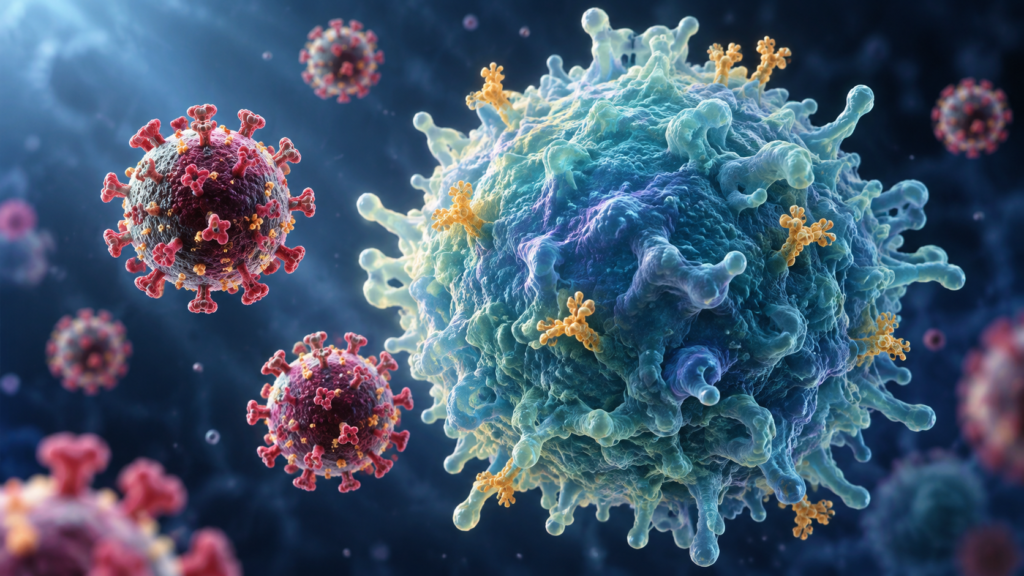
ART does not normally remove every infected cell. Some HIV remains hidden inside long-lived CD4 immune cells, forming what scientists call the viral reservoir.
If treatment is stopped, virus from this reservoir can begin replicating again. Eliminating or permanently controlling the reservoir is therefore one of the central challenges in HIV cure research.
The World Health Organization says there is currently no cure for HIV, although effective treatment can control the virus and enable people living with HIV to lead long and healthy lives.
How venetoclax may work
Venetoclax blocks a protein called BCL-2, which helps certain cells avoid their natural death process. The drug is already used to treat conditions including chronic lymphocytic leukaemia, small lymphocytic lymphoma and some forms of acute myeloid leukaemia.
Researchers believe HIV and SIV may exploit BCL-2 to help infected immune cells survive. Blocking that protein could make some reservoir cells more likely to die.
The study found that venetoclax reduced several CD4 cell populations associated with viral persistence. However, some surviving cells appeared to activate other survival mechanisms, suggesting that venetoclax alone would be unlikely to eliminate the entire reservoir.
The researchers said longer treatment or combinations targeting additional survival pathways may produce stronger results.
Important limitations
The experiment involved SIV-infected macaques, not people living with HIV. Results from animal studies do not always translate into safe or effective human treatments.
ART was also started very early, just 14 days after infection. It is not yet clear whether the same strategy would work for people who have lived with HIV for years before beginning treatment.
Crucially, the researchers did not interrupt ART. They therefore could not determine whether the reduced reservoir would delay or prevent viral rebound once standard treatment was stopped.
The reservoir was reduced, not eliminated.
Early-stage human studies are now examining venetoclax in people living with HIV. One registered study, NCT05668026, is evaluating the drug in people already receiving ART. Another, NCT07481175, is investigating its use when patients begin HIV treatment.
Until those trials establish safety and potential benefit, venetoclax should not be considered an HIV treatment and should only be used for its approved purposes under specialist medical supervision.
Trivane View
This is credible and potentially important HIV research, but it is not evidence of a cure. The accurate conclusion is that venetoclax reduced the intact SIV reservoir in a small animal study and has provided researchers with a strategy worth testing in people.