
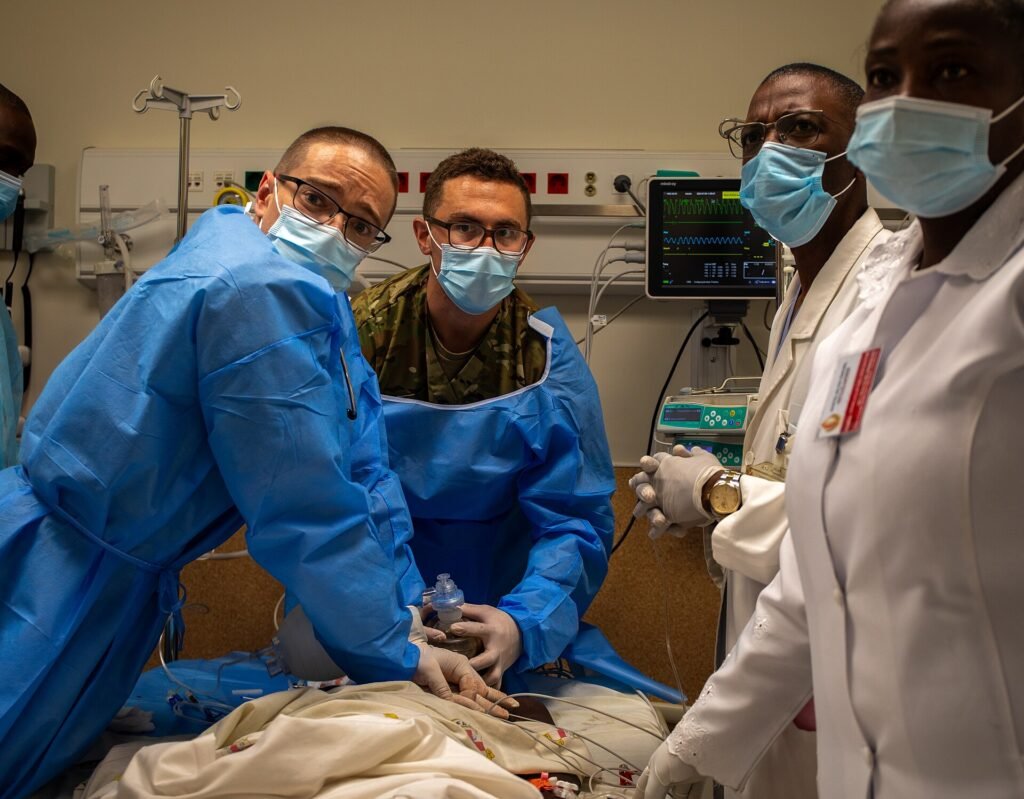
African countries have committed to educating, employing and retaining three million additional health workers by 2035 as governments seek to address persistent staffing shortages across the continent.
Health ministers endorsed the Africa Health Workforce Agenda 2026-2035 during the 76th session of the World Health Organization Regional Committee for Africa in Addis Ababa in August 2026.
The plan goes beyond simply training more doctors, nurses, midwives and other health professionals. It focuses on whether countries can create jobs, finance their health systems and retain skilled workers where they are most needed.
Africa has more health workers, but shortages remain
Africa’s health workforce has grown significantly over the past decade, but the continent continues to face a substantial shortage of professionals needed to provide essential services.
WHO says the African region has only about 46% of the health workers it needs. Without stronger action, the shortage is projected to exceed six million workers by 2035.
This affects everything from maternal and child health services to emergency care, disease prevention and the ability of health systems to respond to outbreaks.
The problem, however, is more complicated than simply producing more graduates.
Qualified professionals can still struggle to find work
One of the contradictions facing African health systems is that shortages and unemployment can exist at the same time.
WHO estimates that around one million qualified health professionals are unemployed across the region. In some countries, significant numbers of newly trained doctors, nurses and midwives struggle to secure jobs even while hospitals and clinics need more staff.
The reasons include limited government health budgets, restrictions on public-sector recruitment and weaknesses in workforce planning.
This means increasing the number of medical and nursing graduates alone will not solve the problem.
Countries also need enough funding to employ them, suitable facilities for them to work in and systems that distribute health professionals according to population needs.
Keeping skilled workers is another challenge
Migration remains another important part of Africa’s health workforce debate.
Doctors, nurses and other professionals may leave their countries in search of higher salaries, safer working conditions, specialist training and better career opportunities.
The movement of health professionals is not inherently a problem. Workers have the right to pursue opportunities abroad.
But sustained departures can place additional pressure on health systems already struggling to fill essential positions.
The new agenda therefore places retention alongside education and employment.
For governments, that means improving salaries where possible, providing safer and better-equipped workplaces, creating opportunities for career development and giving professionals reasons to build long-term careers within their national health systems.
Three million workers will require sustained investment
Achieving the 2035 target will also depend heavily on financing.
Training health professionals is expensive, but the financial responsibility does not end when they graduate. Governments must be able to pay salaries, maintain facilities, provide equipment and fund continuing professional development.
That creates a difficult challenge for countries already dealing with debt pressures, limited public revenue and competing demands for education, infrastructure and other essential services.
The health workforce agenda therefore calls for stronger cooperation between ministries responsible for health, finance, education, labour and public administration.
Without that coordination, countries could continue training professionals without creating enough positions for them.
From continental commitment to national action
The 2026 agreement builds on work already underway.
In November 2025, African countries and health experts agreed on priorities for a ten-year workforce agenda. Those discussions focused on stronger workforce planning, better health education, increased employment and retention, improved financing and more reliable workforce data.
The adoption of the agenda gives governments a common framework through 2035.
But its success will ultimately be measured nationally and locally.
For patients, the important question is not how many professionals appear in continental statistics. It is whether a qualified nurse is available at a local clinic, whether a hospital has enough doctors to treat patients safely and whether underserved communities can access essential care.
Trivane View: Training alone will not solve the shortage
Africa’s health workforce challenge exposes a difficult contradiction: health facilities can be understaffed while qualified professionals remain unemployed or seek opportunities abroad.
The three million target is significant, but the number should not become the only measure of success.
Governments will need to show that trained professionals can find sustainable jobs, that rural and underserved communities receive adequate staff and that working conditions are strong enough to retain skilled workers.
By 2035, the real test will not simply be how many health workers Africa has trained. It will be how many are employed, properly supported and able to provide quality care where people need it most.
Photo: Healthcare professionals during a medical exercise in Angola. Credit: U.S. Army/Wikimedia Commons.
Source: WHO Regional Office for Africa – African countries commit to train and retain 3 million more health workers by 2035
Facts first. Not frenzy.