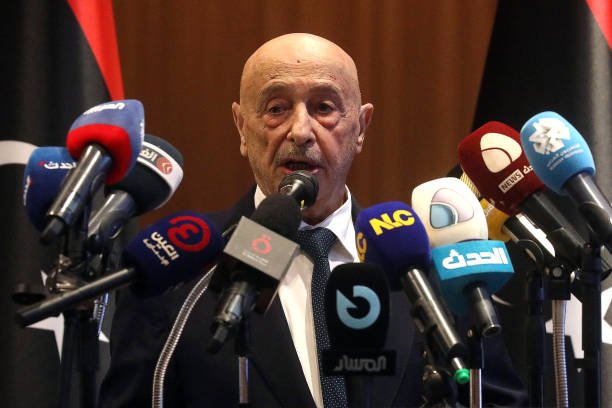
Libya’s eastern-based House of Representatives has elected Al-Salhin Abdelnabi al-Obeidi as its new speaker, replacing Aguila Saleh after nearly 12 years in the position.
According to Reuters, in a report published by MarketScreener, lawmakers selected the replacement on Tuesday, 6 October, following growing dissatisfaction with Saleh’s leadership.
The election followed a vote on Monday in which 98 lawmakers approved a system limiting the speaker and deputy speakers to a single 12-month term. The previous leadership arrangement had remained in place since 2014.
Saleh challenges the process
The leadership change has been accompanied by disagreement over whether the parliamentary sessions were lawfully convened.
Anadolu reported that Saleh rejected Monday’s session, arguing that the procedures required by parliamentary law and internal regulations had not been followed.
He said the meeting was unofficial and its decisions had no legal effect. His objection concerns the validity of the process that paved the way for a new leadership election.
According to The Libya Observer, more than 100 MPs attended Tuesday’s meeting, chaired by Second Deputy Speaker Misbah Douma.
The outlet also reported that First Deputy Speaker Fawzi al-Nuwairi supported lawmakers’ right to seek reform but stressed that decisions must meet legal requirements covering procedure, attendance, and voting.
Those competing positions mean the announced election should not be presented as an uncontested transition.
A new parliamentary leadership
Al-Obeidi represents Tobruk in eastern Libya and previously chaired the Libyan-Turkish Parliamentary Friendship Committee, according to Anadolu.
The Libyan News Agency, citing parliamentary spokesperson Abdullah Bleihaq, reported that lawmakers also elected Tariq al-Ashtar as first deputy speaker and Misbah Douma as second deputy speaker.
Reuters quoted lawmaker Jebreel Oheida as saying MPs had become dissatisfied with decisions taken without consultation and with unsuccessful efforts to address their concerns.
Saleh, an ally of eastern military commander Khalifa Haftar, has been a central figure in negotiations over Libya’s political future.
The country remains divided between rival administrations. The internationally recognised Government of National Unity is based in Tripoli, while the House of Representatives operates in the east. Replacing its speaker does not itself end that division.
Trivane View
The immediate test is whether the new leadership can establish a lawful, accepted process and improve parliamentary accountability. A change of speaker should be judged separately from national reconciliation. Progress towards unity will require agreement beyond the eastern parliament and practical steps towards credible elections.