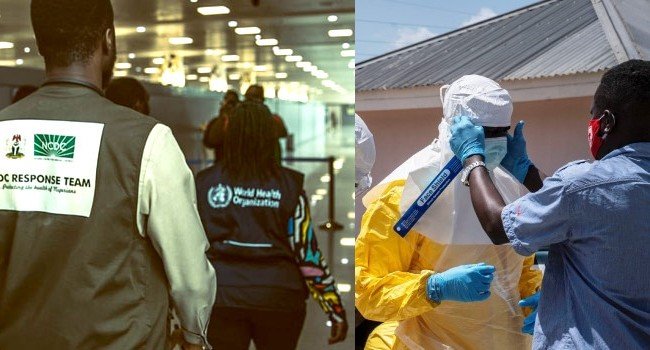
The Nigeria Centre for Disease Control and Prevention has identified two suspected Ebola disease cases in the North-East and placed the affected individuals in isolation while laboratory testing and contact tracing continue. The announcement, made on Saturday, 31 October 2026, is an investigation update, not confirmation of two new infections.
Channels Television reported the alert on Saturday after the agency disclosed the suspected cases through its official social media account. Health authorities have not yet publicly identified the states involved, the patients’ travel histories or a timetable for laboratory findings. Those omissions limit what can responsibly be concluded about the scale or source of any potential exposure.
What Has the NCDC Confirmed?
ARISE News reported that both patients were isolated and that health workers had begun identifying people who might have come into contact with them. Samples are undergoing testing to determine whether Ebola virus disease is present. The agency said it would provide further details once verified information becomes available.
These steps are standard elements of responding to a suspected high-consequence infection. Isolation reduces the risk of contact while doctors assess a patient, and contact tracing identifies people who may need monitoring. Neither precaution means that the person being examined has tested positive.
Western Post also emphasised the agency’s warning against treating the suspected cases as confirmed. It reported that people were advised to follow public-health guidance and maintain appropriate hygiene rather than circulate unverified accounts. At the time of the available reports, there was no announced positive test associated with the two North-East alerts.
How Does This Relate to Nigeria’s Earlier Case?
The new alert comes after Nigeria confirmed an imported Ebola infection in Abuja on 20 October. Authorities subsequently identified 53 contacts linked to that patient and investigated a separate suspected case in Rivers State, which tested negative. The earlier Abuja case and the two new North-East alerts should not be merged into an unsupported national total of confirmed infections.
Trivane previously covered the Abuja diagnosis, the expanded contact-monitoring operation and the patient’s medical evacuation to Switzerland. Those developments offer important background on the existing surveillance response, but they do not establish an epidemiological connection with the people now under investigation in the North-East.
To determine whether there is a connection, investigators would need travel histories, exposure information and laboratory results. Even if testing eventually confirms infection, tracing where exposure occurred requires additional evidence. Geography alone does not reveal a chain of transmission.

What Should the Public Understand About Suspected Cases?
Ebola can cause severe illness, but early symptoms such as fever, weakness, vomiting and diarrhoea overlap with those of several other diseases. That is why laboratory confirmation matters. Announcing a suspected case is a signal that the surveillance system is checking a possible threat, not a diagnosis that residents should assume is definitive.
The World Health Organization advises that Ebola spreads through direct contact with the bodily fluids of an infected person who has developed symptoms or with contaminated materials. It does not spread through ordinary casual contact in the same way as airborne respiratory infections. People with a possible exposure should seek instructions from health authorities before travelling to a healthcare facility.
Accurate communication also protects people undergoing assessment. Publishing identifying details without a medical need, blaming entire communities or circulating unsupported outbreak maps can create stigma and discourage cooperation with contact tracers. Verified updates should explain what is known, what remains under investigation and what action is genuinely required.
What Happens Next?
The next decisive development will be the laboratory results and an official explanation of whether either suspected case is linked to known exposures. The NCDC may also clarify the states involved, the number of contacts under monitoring and any additional precautions. Until those details are released, the two patients must remain classified as suspected cases.
Trivane View
Timely alerts are useful only when reported with precision. A suspected infection deserves urgent investigation, but not a premature declaration of an outbreak. Authorities should provide prompt, dated results and practical instructions; newsrooms should resist speculation and protect patient privacy.
Related Trivane News
Nigeria Confirms Ebola Case, Traces 44 Contacts
Ebola Contacts Reach 53 as Nigeria Plans More Treatment Centres
Nigeria Evacuates Ebola Index Patient to Switzerland as Contact Tracing Continues