Nigeria’s Federal Government has approved ₦40.76 billion for disbursement under the Basic Health Care Provision Fund (BHCPF) for the third quarter of 2026, an increase of approximately ₦7.88 billion from the previous quarter.
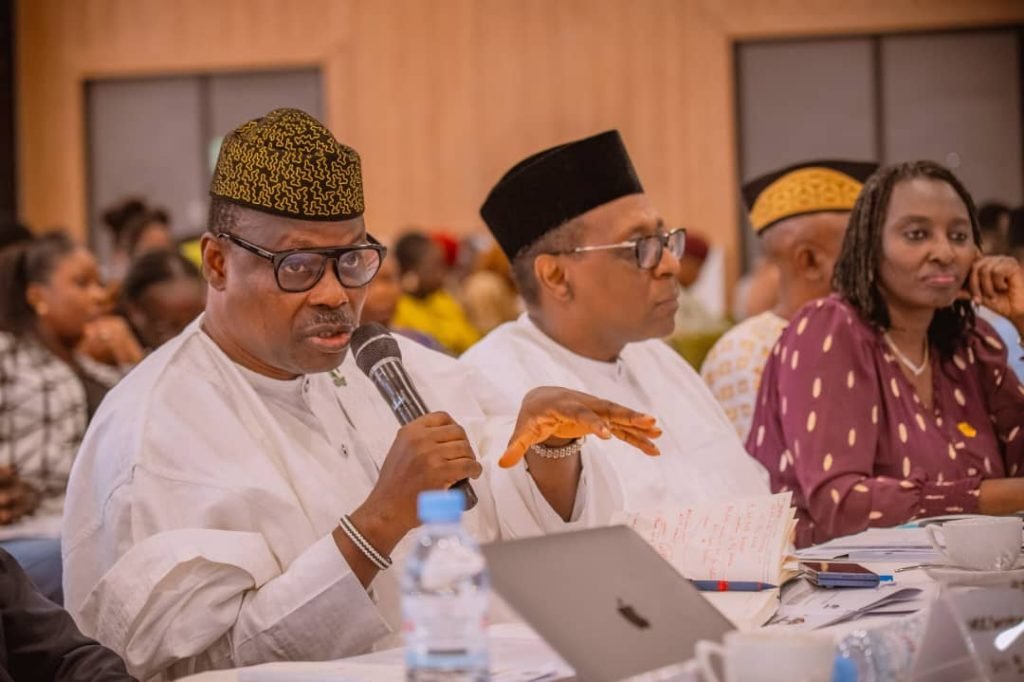
The Coordinating Minister of Health and Social Welfare, Muhammad Ali Pate, announced the decision following the 16th meeting of the fund’s Ministerial Oversight Committee in Abuja.
According to the Federal Ministry of Information and National Orientation, the exact approved amount is ₦40,758,116,943.50, compared with ₦32.88 billion in the second quarter. The increase is approximately 24%.
The approval concerns money authorised for disbursement. It does not establish that the entire amount has reached state agencies, healthcare facilities, or patients.
How the ₦40.76bn will be shared
The National Health Insurance Authority (NHIA) is allocated ₦19.87 billion, representing 48.75% of the fund. The National Primary Health Care Development Agency (NPHCDA) is allocated ₦18.34 billion, or 45%.
The Emergency Medical Treatment gateway is allocated ₦2.04 billion, or 5%, while the Nigeria Centre for Disease Control and Prevention (NCDC) is allocated ₦509.48 million, or 1.25%.
The BHCPF was established under the National Health Act 2014 to support essential health services, particularly for poor and vulnerable people.
The National Primary Health Care Development Agency explains that the fund supports medicines, equipment, facility operations and access to a basic package of care.
Pate said monthly statutory releases into the fund had risen in stages from approximately ₦8.95 billion to ₦13.08 billion and then to ₦20.43 billion.
He stressed that increased financing must result in timely releases and better health outcomes.

Health insurance planned for correctional facilities.
The oversight committee also approved extending NHIA health insurance coverage to approximately 90,000 people held in correctional facilities across Nigeria, following a request from the Nigerian Correctional Service.
The proposed implementation will require regular reporting and safeguards. People already covered by state health insurance schemes are to be excluded to avoid duplication.
The announcement does not establish that all 90,000 people have already been enrolled or begun receiving services.
Details of enrolment and service delivery will be important in assessing the scheme’s impact.
More primary healthcare centres to receive support.
The government plans to increase the number of primary healthcare facilities supported by the BHCPF from 8,309 to 13,521, an expansion of 5,212 facilities across the 36 states and the Federal Capital Territory.
This is an expansion of funding support to facilities, not an announcement that 5,212 new health centres have been built.
The committee also considered a phased financing model to help states recruit and gradually absorb skilled birth attendants and community-based health workers.
No completed recruitment figure was announced.
Medicine procurement and spending safeguards.
To improve access to essential medicines, the committee approved operational changes to the NPHCDA funding gateway, including pooled procurement through MEDIPOOL, the national group purchasing organisation.
The proposed purchasing arrangements include price benchmarks, value-for-money checks, and supply-chain monitoring.
Their purpose is to improve transparency and the reliability of medicine supplies, although the results will depend on implementation.
In its 16 October report, TheCable said the committee also agreed to establish a subcommittee to examine delays in moving funds through federal gateways, states and local governments to healthcare facilities.
The subcommittee is expected to report within six weeks.
The government said it would collaborate with the Independent Corrupt Practices and Other Related Offences Commission to track health-sector spending and reduce the risk of funds being misused.
The committee also directed that state governors be informed of funding needs for disease outbreak responses, while Pate urged states to meet their counterpart funding responsibilities.
Approval is only the first step.
The latest allocation could provide additional resources for primary healthcare, insurance coverage, and emergency medical services.
But the public benefit will depend on how quickly funds reach the intended recipients and whether medicines, staff, and services become more accessible.
For now, the ₦40.76 billion allocation, the proposed expansion to 13,521 supported facilities, and the insurance plan for correctional-facility inmates remain commitments whose delivery must be tracked.
The government has announced oversight measures, but has not reported that existing funding bottlenecks have been eliminated.