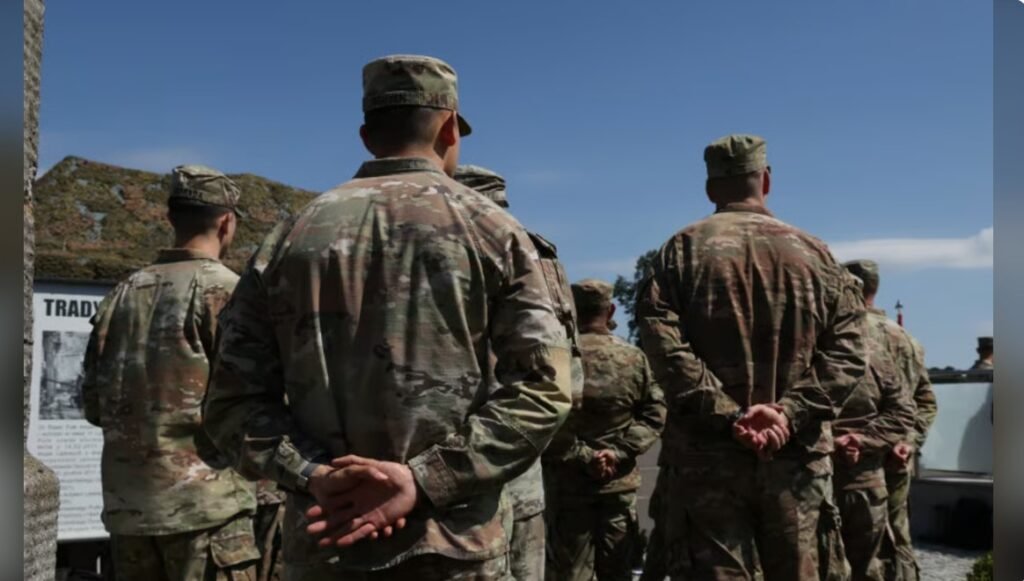
British counterterrorism police arrested a 41-year-old United States Army member near Gloucester on Tuesday, 10 November 2026, over suspected breaches of national security law. The case became a major international development as additional reporting circulated on Wednesday. The suspect had been serving at a NATO-associated military location in Gloucestershire. His identity was not publicly disclosed. According to Reuters, officers are investigating suspected offences involving obtaining or disclosing protected information and assisting a foreign intelligence service. The reported foreign connection is Russia. An arrest on suspicion is not a finding of guilt, and investigators have not publicly set out the full evidence.
Why Does the NATO Assignment Matter?
The soldier was assigned to NATO’s Allied Rapid Reaction Corps, headquartered at Imjin Barracks. That makes the allegation particularly sensitive because multinational units depend on shared planning, information protection, and confidence among military partners. Associated Press reported that American and British authorities were cooperating in the investigation. Personnel assigned to such headquarters can work alongside officers from several countries, but an assignment alone does not establish that the suspect accessed, copied, or transmitted classified operational plans. The distinction is central to responsible reporting. Authorities have not publicly confirmed that any specific military secret reached Russia.

What Do Investigators Suspect?
British law provides criminal offences relating to information protected on national security grounds and assistance to a foreign intelligence service. Investigators can examine devices, communications, and workplace records to determine whether prohibited conduct occurred. ABC News reported that British officers worked with United States officials, while the FBI and US military counterintelligence personnel were involved. Officials characterized the allegations as serious. The information available publicly, however, does not establish an indictment, a trial, or a finding of wrongdoing. The officer retains the presumption of innocence. Officials also have not announced a precise timetable for charging decisions.
Is the Arrest Connected to Other Base Incidents?
The arrest comes during a period of heightened concern about foreign surveillance, covert activity, and security threats around European military facilities. British police have nevertheless distinguished this investigation from recent security incidents involving US-operated air bases in Britain. Conflating the incidents would risk suggesting a coordinated operation without evidence. The Russia connection remains an allegation under investigation, while the separate base security concerns have their own facts and investigative processes. Each case should be assessed through official disclosures rather than general speculation about foreign interference.
Why Is the Case Important for the Allies?
For NATO, the immediate challenge is managing an insider-threat investigation without undermining routine military cooperation. Sensitive multinational organisations depend on access controls, audit records, employee vetting and procedures for reporting unusual behaviour. An alleged breach can prompt reviews even before prosecutors make a charging decision. Such reviews should not be confused with proof that an organisation suffered a successful intelligence compromise. For Washington and London, the investigation also tests information sharing between police, military commands, and civilian intelligence services. Public confidence will depend on whether authorities explain any eventual findings as far as security requirements allow.
What Does the Legal Process Protect?
The legal process must protect both national security and the rights of a suspect who has not been convicted. Police may withhold sensitive operational information while pursuing a case, particularly if disclosure could compromise witnesses, intelligence methods, or allied systems. That necessary confidentiality can leave a gap between dramatic public claims and verified evidence. Editors should resist filling that gap with speculation about espionage techniques or classified files. The most useful future developments will be formal charging decisions, court filings, statements about material actually obtained, and any demonstrable institutional safeguards put in place. In the meantime, the arrest is a serious allegation rather than proof of a successful Russian intelligence operation. Public discussion can still examine the broader problem of vetting and insider risk while avoiding claims about the unnamed officer that investigators have not established. These safeguards are especially important while international attention remains focused on the investigation.
What Happens Next?
Investigators can continue questioning, analyzing seized materials, and deciding whether the evidence supports formal charges. A court would then determine the case through the applicable legal process. Until official findings emerge, headlines should use terms such as “suspected” or “alleged” and avoid presenting Russia’s involvement as an established operational fact. The soldier’s identity, the content of any information involved, and whether it was actually disclosed are not confirmed in the public record. Further statements from British prosecutors, police, and US military authorities will be the most reliable indicators of what comes next.
Trivane View
The case warrants scrutiny without prejudging the accused. Public reporting should separate allegations, investigative steps, and judicial findings, especially where international security tensions are already high.
Related Trivane News
Cameroonian Families Demand Return of Relatives Recruited to Fight for Russia