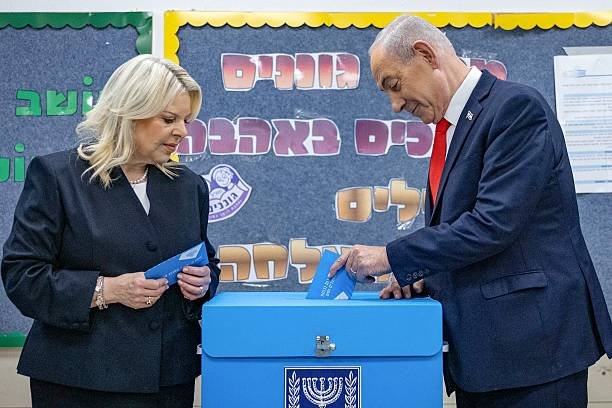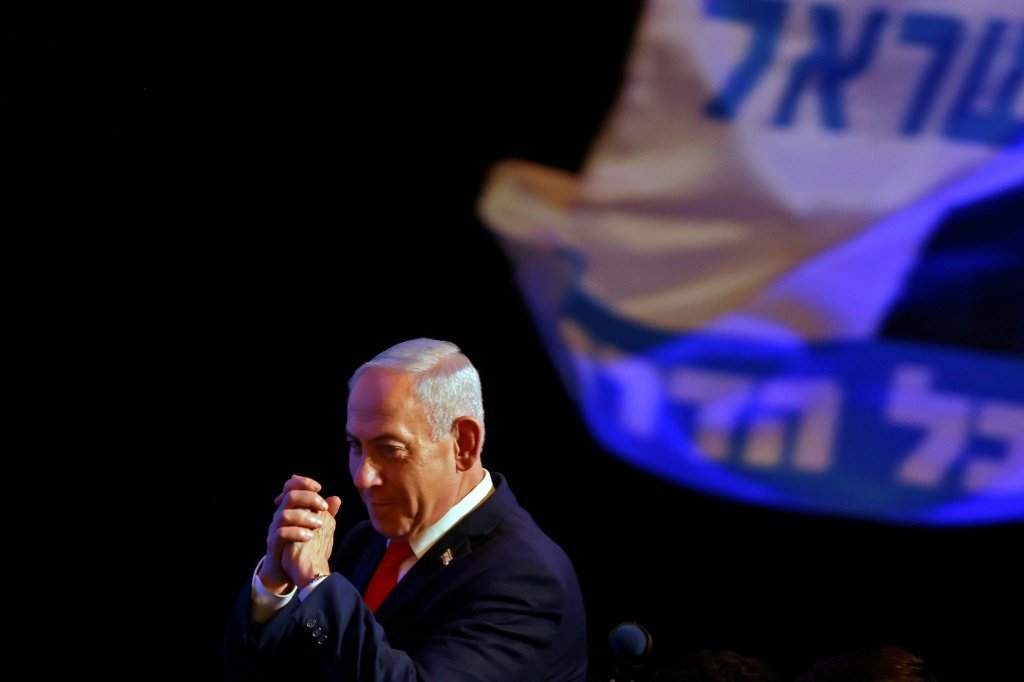
Israel’s national election has left Prime Minister Benjamin Netanyahu and opposition leader Gadi Eisenkot facing an uncertain path to forming the country’s next government, with early results showing neither side securing enough seats for a parliamentary majority.
According to Reuters, preliminary results released on Wednesday, October 28, showed Netanyahu’s bloc projected to win 55 seats, while the bloc led by Eisenkot was projected to secure 50 seats Reuters preliminary results Arab parties were projected to hold the remaining 15 seats, with 48.4 per cent of the votes counted at the time of the report.
The figures remain provisional as counting continues. A party or coalition needs at least 61 seats in the 120-member Knesset, Israel’s parliament, to command a majority.
Neither main camp has yet demonstrated a clear route to power, raising the prospect of negotiations with smaller political groups that could determine the next government.
Netanyahu and Eisenkot Claim the Political Advantage
Netanyahu called for the formation of a right-wing government and pointed to his record on national security. The veteran prime minister has presented himself as a leader capable of confronting Israel’s adversaries, including Iran.
“The right-wing bloc has a clear, decisive majority among the Zionist public, among the Jewish public and all those who support the Jewish state,” Netanyahu said on election night “We must form a strong, national, right-wing government.”
Eisenkot, a former military chief and Netanyahu’s principal challenger, argued that voters had rejected the longtime prime minister and called for a change in leadership.
“The public has chosen change,” Eisenkot said. “The coalition of failure has lost the people’s trust. The Israeli public voted against Benjamin Netanyahu continuing as prime minister.”
The election was the first since the Hamas-led attack on Israel on October 7, 2023, and the wars that followed. Security failures, the government’s handling of the conflict, and Netanyahu’s leadership were central issues in the campaign.
Netanyahu also entered the election facing longstanding corruption charges, which he denies.

Arab Parties Could Become Crucial
The projected seats for Arab parties could prove important if the main blocs remain unable to reach the 61-seat threshold. Arab parties were set to win 17 seats with 77 per cent of ballots counted, a historic high, according to AFP
However, forming a government will not depend on seat totals alone. Political alliances, the willingness of smaller parties to support a coalition, and disagreements over security and domestic policy could all complicate negotiations.
Netanyahu’s bloc has ruled out relying on Arab parties, while Eisenkot has also faced political constraints over cooperation with them. These positions could narrow the options available to both sides.
Yousef Jabareen, head of the leftist Arab-majority Joint List, said any party seeking a genuine alternative to Netanyahu would need to engage with Arab lawmakers.
“Anyone who wants to offer a substantive and genuine alternative to Netanyahu’s blood-soaked government will have to talk to us,” Jabareen said
According to the Associated Press, turnout reached a level not seen in more than two decades, reflecting the significance of the vote following years of conflict and political controversy.
What Happens Next?
The final distribution of seats will shape the next stage of Israel’s political process. Once the official results are established, coalition negotiations will determine which candidate can assemble sufficient parliamentary support to form a government.
President Isaac Herzog is expected to begin consultations with party leaders next week after receiving the official results, according to Al-Monitor
If the deadlock persists, Netanyahu could remain caretaker prime minister while negotiations continue. A prolonged impasse could also increase the possibility of another election, although that outcome is not inevitable.
The election’s immediate result is therefore not simply a contest over which bloc wins the most seats, but whether either side can build a workable governing coalition.