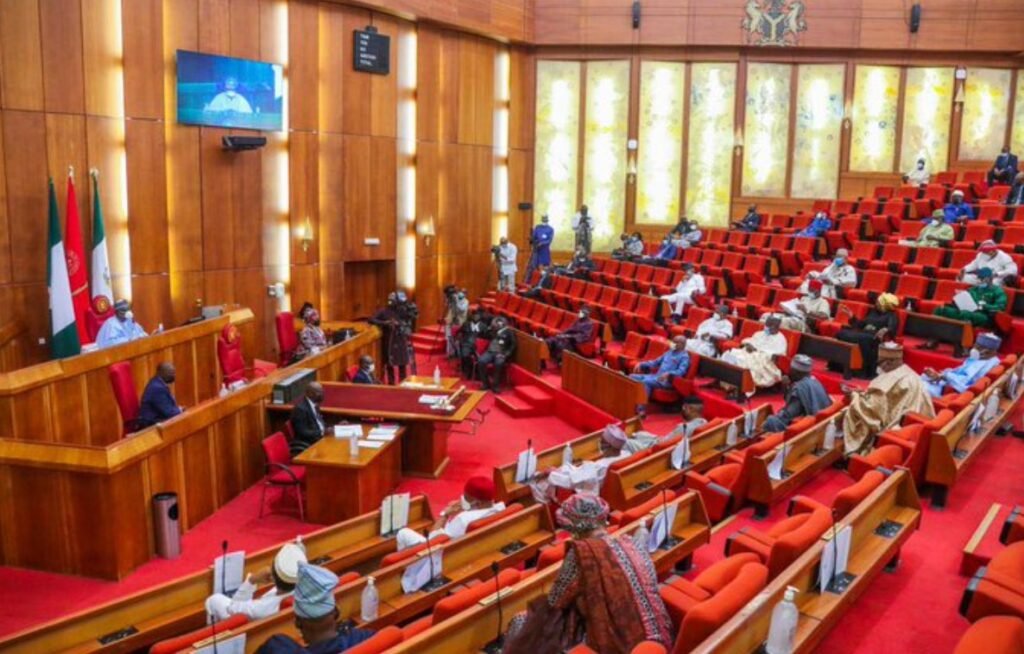
Nigeria’s Senate has passed a bill at third reading seeking to expand the Central Bank of Nigeria’s authority over major fintech operators and other non-bank financial institutions. The decision was taken on Tuesday, 10 November 2026, and featured prominently in Wednesday’s reporting. The proposed amendment targets the Banks and Other Financial Institutions Act of 2020. According to TheCable, the measure would give the regulator powers to identify, register and supervise companies classified as systemically important institutions. Passing the Senate is a legislative milestone, but the bill must still complete any outstanding constitutional legislative and assent steps before becoming law.

Which Companies Could Face Greater Scrutiny?
The legislation addresses technology-driven financial firms whose scale, interconnectedness, and transaction activity might create risks beyond their own customers. These could include payment service banks, mobile money operators, digital wallets, switching firms, and certain large non-bank lenders. However, a company does not automatically become systemically important simply because it operates an app or serves many people. The framework envisages regulatory assessment and designation against relevant criteria. THISDAY reported that the proposal would strengthen supervision where providers have become critical links in payments and financial infrastructure. The final impact would depend on implementing regulations and designation decisions.
What Additional Duties Are Proposed?
Designated institutions could face stress testing, stronger reporting obligations, improved corporate-governance requirements, and scrutiny of technology and cybersecurity risks. The bill also envisages examining data integrity, operational resilience, and beneficial ownership. Regulators would seek access to information needed to assess a firm’s ability to survive outages, cyberattacks, or financial distress. Such powers could increase the cost of compliance, particularly where existing systems require upgrades. But the aim is to prevent a failure at one heavily used provider from spreading to merchants, banks, and households that depend on its services.
Why Is Regulation Becoming More Urgent?
Digital financial services have expanded access to transfers, payments, and borrowing across Nigeria. Their growth also creates new points of concentration: a major outage, data compromise, or liquidity problem at a large platform can affect customers far beyond one branch or locality. Arise News highlighted concerns over the financial system’s increasing reliance on non-bank technology companies. Lawmakers argued that conventional rules had not fully kept pace with the importance of these operators. Regulation will need to distinguish between consumer-protection complaints, systemic financial risk, and competition issues rather than treat every problem as the same.
Could the Rules Hurt Innovation?
More intensive oversight may make some operations more expensive through reporting, testing, and capital or governance expectations where applicable. Smaller fintechs could worry about disproportionate paperwork, although the proposed approach is principally focused on institutions judged systemically important. Industry confidence may improve if clearer rules make disruptions less likely and investors better understand regulatory expectations. The practical challenge is to supervise high-risk providers without imposing requirements designed for the largest firms on every new entrant. Transparent designation criteria and consultation with affected operators will be important to achieving that balance.
What Will Consumers Notice?
For ordinary customers, the immediate experience of banking through an app is unlikely to change simply because legislators approved a bill. Transfers, account opening, dispute resolution, and wallet services remain governed by current requirements unless new rules are formally enacted. Consumers may ultimately benefit from improved service continuity and stricter security controls, but that outcome is not automatic. The quality of enforcement will matter as much as the wording of the legislation. Operators will also need predictable expectations so they can invest in safeguards without diverting excessive resources from useful products. A well-designed regime should make it easier to identify high-impact risks and hold institutions accountable when failures occur, while preserving competition and access to affordable financial services. The CBN and lawmakers will need to communicate changes clearly. Customers also need dependable complaint channels, accessible explanations of their rights, and timely remedies when service providers fail.
What Remains Before Implementation?
The Senate’s approval does not immediately change the legal status of individual fintech companies. Further legislative steps, presidential assent if the bill is completed, and regulatory guidance would determine when any new duties become effective. Companies and customers should watch for the enacted text, official CBN notices, and any public register of designated institutions. Until then, the development should be described as proposed expanded oversight, not an already implemented blanket licensing regime. The substance of the reform will ultimately be measured by resilience, accountability, and the availability of safe, accessible digital financial services.
Related Trivane News
OPay Withdraws $304m NYSE Listing Plan Following Foreign Regulatory Inquiry