At least 32 people have been killed following Russian missile and drone attacks across Ukraine on Wednesday, 7 October, according to an updated report by Reuters.
The toll rose on Thursday as emergency teams recovered more bodies. Residential buildings, industrial facilities, and energy infrastructure were hit during the attacks.
Five children killed in Pryluky
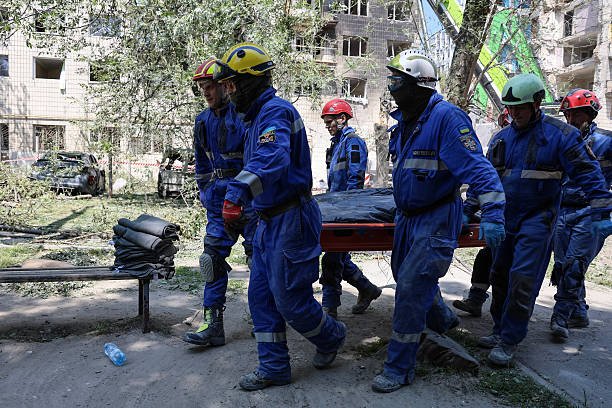
The heaviest reported losses were in Pryluky, in Ukraine’s northern Chernihiv region, where a missile struck a residential building.
According to Associated Press, citing Ukraine’s State Emergency Service, 22 people were killed there, including five children.
Another 54 people were injured, including seven children. Rescuers pulled 15 survivors from the rubble in the immediate aftermath, among them a child.
Emergency teams continued searching the damaged building on Thursday. The 22 deaths in Pryluky form part of the wider toll, rather than an additional figure.
Zelenskyy calls for more air defence support
In an address published by the Ukrainian presidency, President Volodymyr Zelenskyy condemned the attacks and offered condolences to the families of those killed.
He said Ukraine needed additional air defence missiles and faster deliveries from its partners. He also warned that intercepting ballistic missiles remained particularly difficult.
His Wednesday evening address contained lower casualty figures than those subsequently reported on Thursday. Those earlier numbers should not be treated as the latest toll.
Russia’s account
Russia’s defence ministry said its forces targeted military-industrial facilities using missiles and drones, according to Reuters. That account does not explain away the reported deaths in residential buildings.
Why it matters to Africa and the diaspora
Beyond the immediate loss of life, the war has demonstrated how disruption in Ukraine can affect countries far from the battlefield.
In its March 2022 assessment, UN Trade and Development identified substantial African dependence on Russian and Ukrainian wheat supplies. At the time, 25 African countries sourced more than a third of their wheat imports from the two countries.
That is historical context explaining Africa’s exposure to the conflict, rather than evidence that this particular attack has raised food prices.
For diaspora families with relatives in Ukraine, the immediate concerns remain safety, contact with loved ones, and access to assistance.