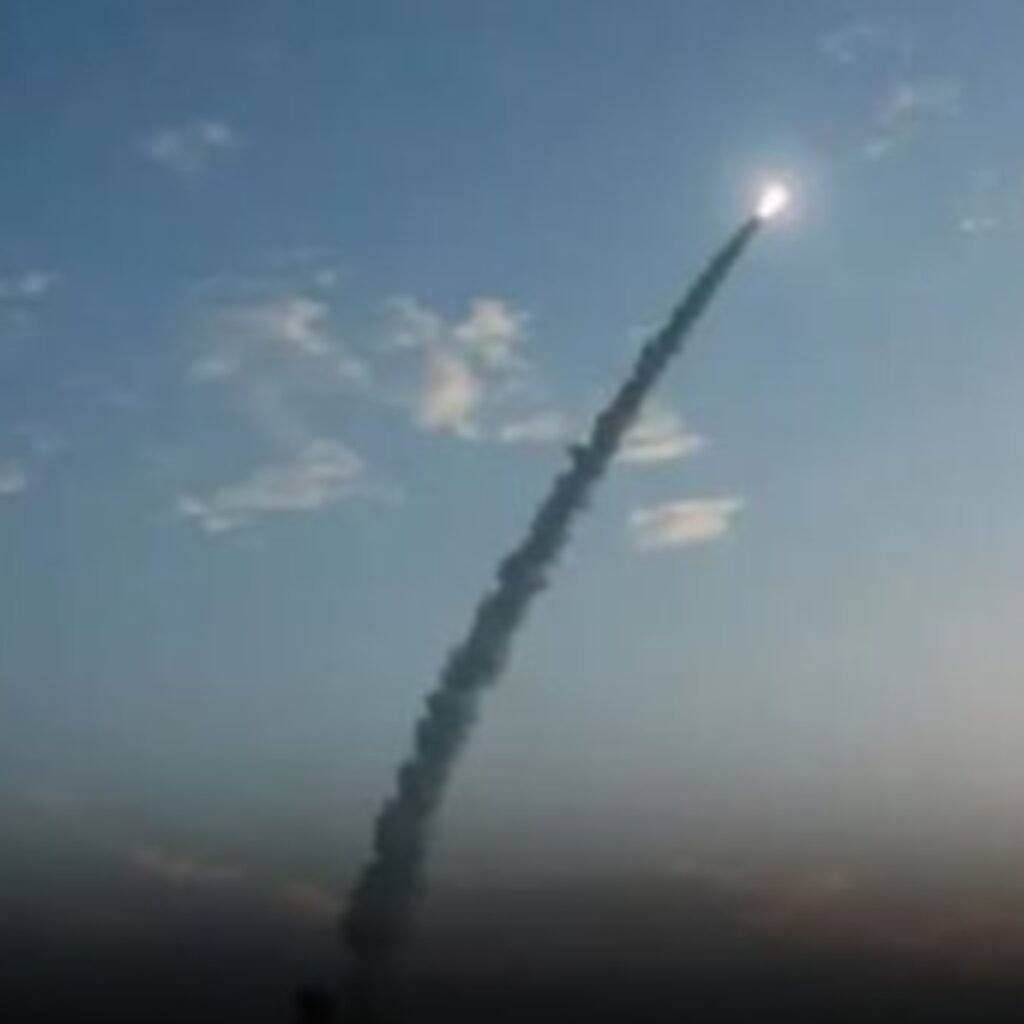
North Korea launched multiple ballistic missiles towards the sea off its east coast on Monday, 12 October 2026, prompting security assessments in South Korea and Japan.
South Korea’s Joint Chiefs of Staff (JCS) said the launches were detected near Pyongyang at about 9:20 a.m. local time, with at least one missile travelling more than 900 kilometres.
According to Yonhap News Agency, South Korean military officials were working with their US counterparts to establish the precise types and capabilities of the missiles.
Japan also confirmed multiple launches.
Deputy Defence Minister Takashi Koyari said at least two missiles were fired 17 minutes apart and landed outside Japan’s exclusive economic zone.
Japanese authorities estimated that the first travelled approximately 220 kilometres, while the second covered more than 910 kilometres.
South Korea condemns missile launches
South Korea’s presidential office condemned the launches, saying North Korea’s repeated ballistic missile tests violate United Nations Security Council resolutions.
Officials called for an immediate halt and reviewed the country’s military readiness.
The National Security Office also held an emergency meeting involving defence and security agencies to assess the situation.
As reported by SBS News, South Korea’s military increased surveillance in preparation for possible additional launches.
Launches follow South Korea’s hypersonic weapons test
The latest missile launches came days after South Korea demonstrated a domestically developed hypersonic glide vehicle.
President Lee Jae Myung oversaw the test, which was publicly disclosed on 9 October.
South Korean military officials believe North Korea’s latest launches may have been intended to demonstrate its own military capabilities in response.
JCS spokesperson Jang Do-young said further analysis was needed to determine whether the missiles were hypersonic or intermediate-range weapons.
North Korea had previously launched a ballistic missile on 3 October. Its state media subsequently described that exercise as part of training involving a hypersonic strategic weapons system.
The latest launches also follow tensions over a September landmine incident in the Demilitarized Zone, which injured three South Korean soldiers.
A joint South Korean and United Nations Command investigation attributed the explosions to mines planted by North Korea. Pyongyang denied responsibility.
Regional security concerns
The launches have renewed attention on North Korea’s missile capabilities and the challenges facing regional defence systems.
Japanese officials said one of Monday’s missiles followed an irregular flight path, suggesting it could have been a hypersonic weapon.
Such weapons can be difficult to intercept because of their speed and their ability to manoeuvre during flight.
According to Al Jazeera, South Korea and Japan have continued monitoring North Korean missile activity as tensions remain high.
Diplomatic efforts to reduce tensions have made little progress, with North Korean leader Kim Jong Un continuing to reject overtures from Washington and Seoul.

Trivane View
The latest launches underline the continuing security risks on the Korean Peninsula. With both Koreas developing advanced missile systems, military demonstrations can increase tensions and make diplomatic engagement more difficult.
The immediate concern is not only the range or sophistication of the missiles, but also the risk of miscalculation. Clear communication and credible diplomatic efforts remain important in preventing further escalation.