
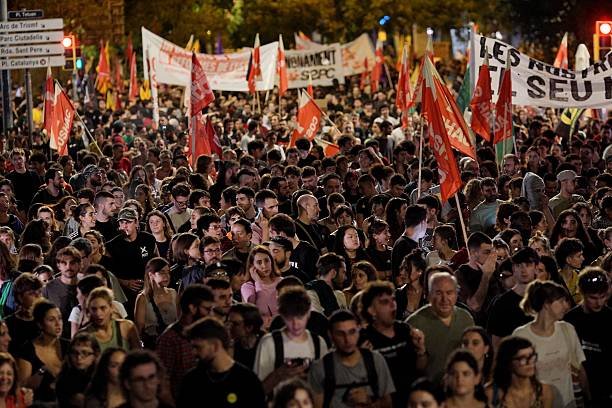
Protests over expensive housing and evictions in Spain have intensified, bringing renewed attention to the costs facing residents, including African migrants and international students.
According to an AFP report published by Channels Television, tens of thousands demonstrated in Madrid and other Spanish cities on 3 October. Authorities estimated the Madrid turnout at 70,000, while organisers claimed 500,000. The figures were competing estimates rather than an independently established count.
Eviction fuels public anger
The protests grew after 87-year-old Maricarmen Abascal was evicted from her Madrid home on 23 September.
Reuters reported on 8 October that Abascal had died the previous day, prompting renewed anger and tributes from campaigners. No cause of death had been announced.
Her case has become a symbol of the wider debate over housing affordability and protection for vulnerable tenants.
Government renews housing measures
Parliament rejected the government’s earlier housing decrees on 2 October. However, that was not the end of the legislative effort.
In an official announcement dated 6 October, the Spanish government said it had approved two revised decree-laws covering 21 housing measures.
These include rental support, housing construction and tenancy protections. The government said the decree providing automatic tenancy renewals would take effect only if ratified by parliament’s Permanent Deputation. Readers should therefore avoid assuming that every announced measure already applies.
Spain’s two largest unions, UGT and CCOO, also announced a nationwide housing-related strike for 11 November, according to Reuters. Their announcement said other unions still needed to formally ratify the date. A snap general election is scheduled for 29 November.
Why it matters to Africa and the diaspora
For African residents, higher accommodation costs can leave less money for everyday needs and support for relatives abroad. Students and workers preparing to relocate may also face difficult choices about where they can afford to live.
These are potential consequences of expensive housing. The reporting reviewed does not establish how much African households specifically have been affected.
Prospective students should check current accommodation prices in their chosen city, confirm what university housing is available, and budget for deposits, utilities, and temporary lodging. General living-cost estimates may not reflect the accommodation they can actually secure.
Trivane View
Housing measures should be judged by whether they make secure accommodation more affordable. Tenants also need clear information about which protections are in force and how to use them. That clarity matters to established residents and newcomers alike.