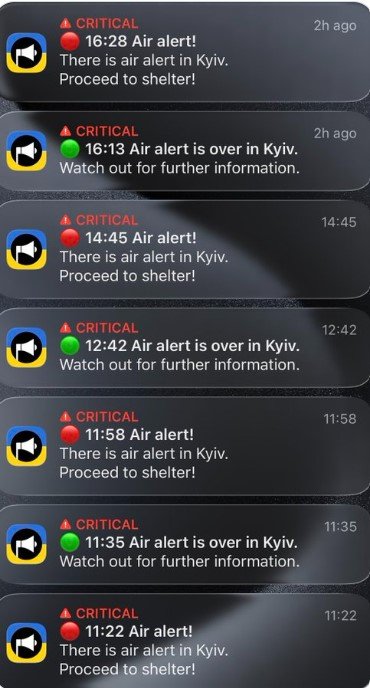
Ukraine’s air raid alert app briefly sent false warnings about nuclear and chemical threats and street fighting late on Sunday, 1 November 2026, before authorities reassured residents that there was no radiation emergency. The disruption affected a system many people use to decide when to seek shelter during Russia’s continuing invasion.
According to Reuters, the Ukrainian Air Force said the application appeared to have been compromised. One erroneous notification referred to Russia’s Oreshnik missile, while others falsely suggested severe dangers in Kyiv and other locations. The military urged residents to remain calm and consult its official updates.
The warnings appeared on Sunday night, but international news organizations published further accounts on Monday, 2 November. The incident should therefore be reported as an overnight development, not as a cyberattack first discovered during Monday’s morning handover.
What Did Residents Receive?
The notifications went beyond an ordinary air raid warning. Messages reportedly described a nuclear or radiation threat, chemical hazards and possible combat in city streets. In wartime, that combination can prompt immediate protective action, even when the messages later prove inaccurate.
Al Jazeera reported that Ukraine’s Centre for Strategic Communications publicly attributed the intrusion to Russia. That accusation remains an attribution by Ukrainian officials, rather than an independently established technical finding identifying the attackers.
An alert application has a particularly sensitive role because users may have only minutes to react to incoming threats. False information can create panic, while repeated disruptions risk undermining public confidence in authentic warnings. Authorities must therefore distinguish an application failure from a genuine military emergency.
Was the Wider Warning System Affected?
Ukraine’s Ministry for Digital Transformation said the affected application was temporarily unavailable, but other means of warning the public, including air raid sirens, continued to operate. The ministry’s explanation suggests that the compromised digital service was not the country’s only channel for emergency communications.

Journalists at The Kyiv Independent said they had personally received false alerts. The outlet also reported regional warnings against opening suspicious links, underscoring fears that malicious notifications might expose recipients to phishing attempts.
The Kyiv newsroom’s firsthand account is especially relevant, but it does not by itself establish how the application was breached, whether user records were accessed or who controlled the misleading messages. Public information available by early Monday had not conclusively resolved those technical questions.
Why Did Russia Report a Similar Incident?
Russia’s Emergencies Ministry separately reported that its own mobile warning application had suffered what it described as a major cyberattack, spreading false information. Both countries’ statements were made within hours of each other, but no verified evidence available in the reviewed reports establishes that the two incidents were connected.
The timing coincided with an increasingly fragile security environment, including the end of a local pause in fighting in southern Ukraine. That wider context makes reliable public notifications important, but timing alone cannot prove responsibility or coordination between cyber operations.
Public confidence depends on quick correction of false messages and transparent investigation of any security breach. Users also need clear, accessible alternatives if a mobile application becomes unreliable.
The reports distinguish misleading messages on the app from proof of an actual attack involving nuclear or chemical weapons. That difference matters for public safety and for newsrooms covering the war: screenshots of a notification may document what users saw, but cannot independently verify the existence of the danger described in the alert. Official corrections deserve as much prominence as the original alarming claim.
What Happens Next?
Ukrainian authorities are expected to establish how the false warnings entered the application and whether additional safeguards or changes to the alert service are necessary. Any confirmed restoration, forensic findings or official attribution should be checked against announcements from the responsible agencies.
Residents have been directed towards recognized military channels and functioning public warning systems while the application’s reliability is assessed. The status of the Russian app incident also remains subject to separate verification.
Related Trivane News
Russia Dispute Splits G20 as US Scraps Traditional Foreign Ministers’ Photograph
Cameroonian Families Demand Return of Relatives Recruited to Fight for Russia
German Intelligence Chief Warns of Conflict Risk as Tensions with Russia Rise