
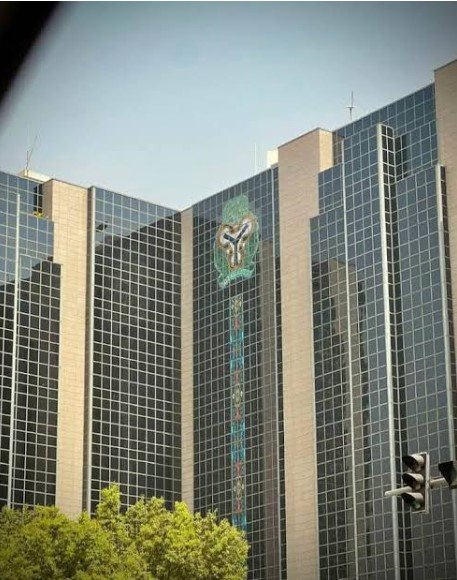
Bank lending to Nigeria’s manufacturing sector fell by approximately 34 per cent between December 2024 and August 2026, even as the industry completed a recapitalization exercise that raised ₦4.65 trillion. The contrast has prompted renewed questions over whether stronger bank balance sheets are translating into financing for productive businesses.
Figures presented by the Nigerian Economic Summit Group (NESG) showed manufacturing credit declining from about ₦8.53 trillion to ₦5.65 trillion over the period. PUNCH reported the figures on Monday, 2 November, following remarks made at the Chartered Institute of Bankers of Nigeria’s fellowship investiture in Lagos over the weekend.
The event preceded Monday’s reporting. The numbers describe changes across multiple months rather than a sudden fall that occurred overnight. They nevertheless raise an immediate question as banks move beyond satisfying minimum capital requirements.
What Do the Manufacturing Figures Show?
NESG chief executive Tayo Aduloju said manufacturing’s share of total bank credit had fallen to 8.7 per cent in August 2026, down from 17.4 per cent in December 2023. He also pointed to increased financing for trade and commerce, illustrating how the distribution of credit has shifted.
BusinessDay reported that average manufacturing credit between January and August was lower than a year earlier, while average lending to trade and commerce increased. This is not proof that trade financing is inherently undesirable, but it raises concerns over whether factories can obtain funds to expand capacity.
A larger capital base improves the ability of banks to absorb losses and potentially extend loans. It does not compel a bank to approve any particular borrower, nor does the ₦4.65 trillion capital raise represent an equivalent amount of cash already lent to manufacturers.

Why Are Banks Reluctant to Lend More?
The NESG identified expensive borrowing, credit risk, liquidity constraints and a mismatch between relatively short-term bank funding and long-term industrial investment. Manufacturers may need several years to earn returns from machinery, power systems or processing facilities, while lenders must manage deposits and repayment risk.
Aduloju also argued that government borrowing competes for funds that could otherwise support private businesses. Relatively attractive returns on government securities can influence how financial institutions allocate money, although each bank’s decisions also depend on regulation and borrower quality.
In its Monday report, The Guardian said Lagos Governor Babajide Sanwo-Olu urged banks to support manufacturing, agriculture, infrastructure and small enterprises. He described industrial expansion, not merely enlarged balance sheets, as a test of the reform’s economic value.
What Did the Banking Industry Promise?
CIBN president Dele Alabi said 33 banks had met the new minimum capital requirements after the exercise mobilized ₦4.65 trillion. He called for the stronger financial base to support investment, job creation and enterprise growth across the economy.
For small businesses, access to finance also depends on loan duration, collateral requirements and affordability. Expanding credit without proper assessment would create risks for depositors and the wider financial system. The policy challenge is therefore to improve responsible lending rather than simply maximize loan volumes.
Speakers pointed to credit guarantees, infrastructure financing and closer cooperation among financial institutions as possible ways to share risk. Those suggestions are proposals, not confirmed new lending schemes or allocations.
The lending figures also require careful comparison. A December 2024 balance and an August 2026 balance capture different moments, while average lending over eight months measures something else. An accurate assessment should explain the dates and definitions rather than combine them into a single trend without context. Public figures do not yet show how much of the fresh capital has been committed to new industrial projects.
What Happens Next?
Attention will turn to whether banks report stronger credit growth in manufacturing and other productive sectors in coming quarters. Comparable figures for borrowing costs, loan maturities and sectoral lending will help show whether the additional capital is reaching firms that need long-term investment.
Policy announcements alone will not settle the issue; measurable changes in credit availability and business investment will be more useful evidence.
Related Trivane News
Why Africa’s Small Businesses Still Struggle to Access Finance
Nigeria Rejects 96% of Treasury-Bill Bids as DMO Allots Just ₦71.2 Billion
Dangote Cement Leads as Nigerian Stock Market Adds ₦2.01 Trillion in October