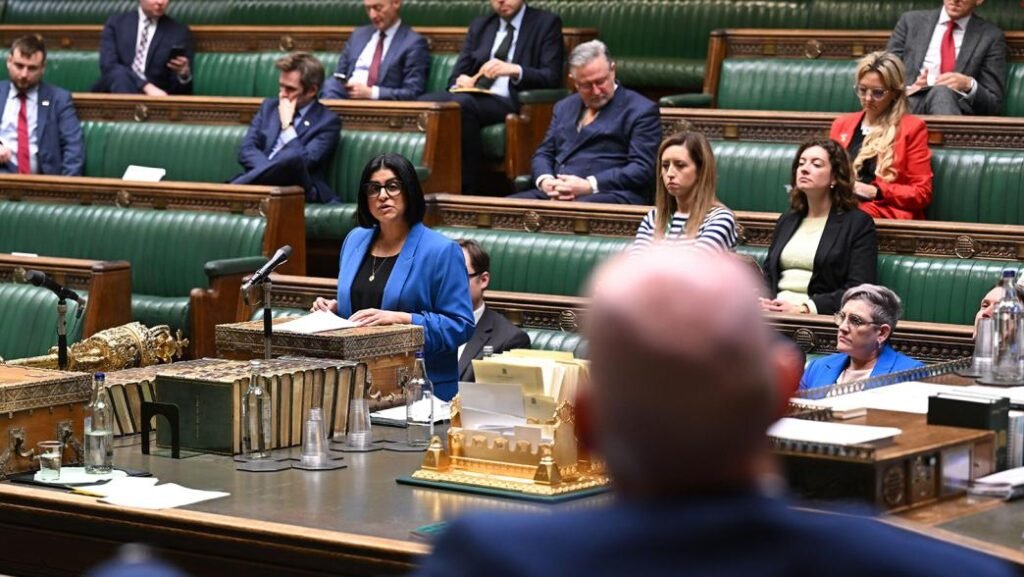
The United Kingdom’s Health Bill returns to detailed examination in the House of Lords on Monday, 23 November, as peers consider proposals to restructure parts of England’s National Health Service and change the way healthcare information is managed. The scheduled committee-stage debate is a legislative step, not final approval of the measures.
According to the UK Parliament, the proposals include abolishing NHS England and Healthwatch under the bill’s current framework, shifting responsibilities within the wider system and establishing a single patient record accessible in healthcare settings and to patients. Peers are examining provisions line by line, with scope to propose amendments.
The parliamentary timetable places the bill among several significant measures being discussed during the week beginning 23 November. It remains subject to further legislative stages and could emerge in a different form from the provisions currently under review.

What the proposals would change
One issue is the balance between central government responsibility and independent oversight. NHS England has had a national role in managing health-service priorities and performance, while Healthwatch has represented patients’ experiences through national and local structures. Changing or removing those bodies raises practical questions about where responsibility for monitoring services would move.
Another is the proposed single patient record. Supporters of better-connected records say clinicians should be able to obtain relevant information without repeatedly asking patients for the same history. Yet delivering this requires rules on who can see data, how access is logged, how errors are corrected, and what patients can expect when information is shared.
Recent scrutiny of NHS digital procurement illustrates why lawmakers are paying close attention. Trivane has separately reported on the extension of the NHS data-platform contract with Palantir, an issue concerning supplier accountability rather than proof of misuse of patient records. The two debates are related by their focus on governance but concern different decisions.
Questions peers may raise
A House of Lords business update lists further line-by-line consideration of the Health Bill this week. Parliamentary scrutiny may address healthcare inequalities, the regulation of NHS data access, and the relationship between national and local services. The list identifies subjects for consideration; it does not establish that any proposed amendment has been accepted.
For patients, the central test is whether administrative reform produces clearer complaints channels, safer care, and more coordinated treatment. For health workers, organisational changes also require dependable guidance about which bodies set standards, handle information, and take responsibility when things go wrong.
Ministers will need to explain the implementation timetable if the legislation passes. Ending an institution in law cannot by itself transfer staff, records, budgets, or oversight functions without transitional arrangements.
Lawmakers will also have to decide how the promised simplicity of a unified record fits existing legal responsibilities under data-protection rules. A clinical system can only support safer treatment if it is accurate, resilient, and used by properly authorised staff. “Recording consent, managing emergency access, and correcting mistakes are detailed operational questions, not matters that can be settled by announcing a new database.
What happens next
The Lords committee stage permits close examination and amendments, but the bill must pass its remaining parliamentary stages before becoming law. It would be premature to tell patients that the single-record system has already been introduced or that every named institution has ceased operation.
The debate will also show how Parliament proposes to balance a more integrated NHS with credible checks on executive power. Those questions are especially consequential when patients need to know who can access sensitive records and where to raise concerns about treatment.
The timing of any future change matters for families with ongoing treatment, particularly those moving between GPs, hospitals, and community services. Patients should not be expected to understand the boundaries between agencies simply to make a complaint, obtain a referral, or correct a record. Clear explanations and independent oversight would help ensure that any administrative restructuring improves care rather than moving confusion to a different office.
Trivane View
The clearest measure of reform will be whether patients retain independent routes to challenge poor care while clinical teams gain better access to the information they genuinely need.
Related Trivane News
UK Extends Palantir NHS Contract to 2029 as MPs Question Delayed Exit
UK Announces Neighbourhood Care Teams for 1.8 Million Vulnerable Patients