
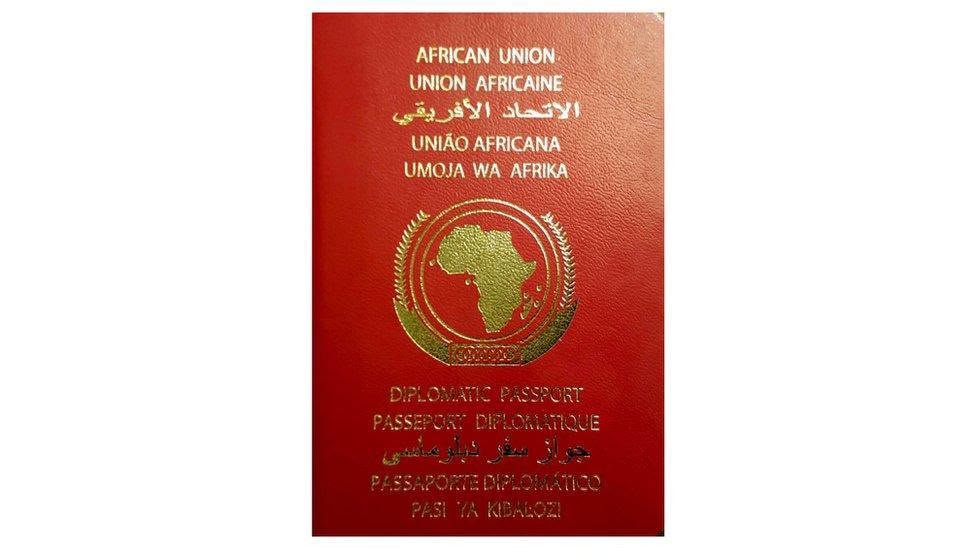
Ten years ago, African leaders unveiled a passport that was meant to represent a more connected continent-one where Africans could travel, work and live more freely across national borders.
The African Union Passport was launched at the 27th AU Summit in Kigali, Rwanda, in July 2016. Chad’s then-president Idriss Déby and Rwanda’s President Paul Kagame received the first passports. The African Union described the launch as part of its push towards greater freedom of movement and deeper continental integration.
A decade later, however, an AU passport is still not generally available to ordinary African citizens.
From a continental ambition to slow implementation
The African Passport and Free Movement of People is one of the flagship projects under the AU’s Agenda 2063. The goal is to remove barriers that make it difficult for Africans to travel, work or settle elsewhere on the continent.
But turning that ambition into reality requires individual countries to change immigration laws, border systems and national policies.
An important step came in January 2018, when the AU adopted the Protocol on Free Movement of Persons, Right of Residence and Right of Establishment.
Progress has been slow. AU records show that 33 member states have signed the protocol, while only four-Rwanda, Niger, Mali and São Tomé and Príncipe-have deposited ratifications. At least 15 ratifications are needed for it to enter into force.
Until more governments make that commitment, continent-wide free movement remains difficult to achieve.
Africans still face major visa barriers
Some countries have made travel easier, but Africa remains far from a continent where its citizens can routinely cross borders without first obtaining visas.
The 2025 Africa Visa Openness Index, produced by the African Development Bank and African Union Commission, found that 28.2% of travel between African countries was visa-free. In 51% of travel scenarios, Africans still needed a visa before departure.
That is an improvement from 2016, when only 20% of intra-African travel was visa-free, but progress has been uneven.
For ordinary travellers, where they can go easily still depends heavily on the passport they carry and the country they want to visit.
Free movement also has an economic argument
The case for easier movement has become even stronger with the development of the African Continental Free Trade Area.
Africa is working towards a larger integrated market, but moving goods and services is only part of that ambition. Entrepreneurs, professionals, workers and investors also need to move between countries.
In February 2026, the African Development Bank and African Union Commission held a high-level symposium in Addis Ababa focused on advancing a visa-free Africa, linking easier movement directly to economic integration and prosperity.
South Africa exposes another challenge
Freedom of movement is not only about visas.
South Africa saw a major wave of anti-migrant protests in mid-2026. More than 900 people were arrested during nationwide demonstrations around the end of June and beginning of July, according to police figures reported by Reuters. Most of the demonstrations were peaceful, but some incidents involved violence, robbery and attacks on migrant-owned businesses.
Reuters later reported that thousands of foreign workers had left South Africa as anti-migrant pressure increased.
The unrest is separate from the legal process surrounding an African passport, but it exposes another difficulty. Removing visa barriers alone cannot guarantee meaningful freedom of movement if migrants face hostility or insecurity after crossing a border.
Some countries are moving ahead
There are signs of progress outside the slow continental process.
In May, Republic of the Congo President Denis Sassou Nguesso announced that African nationals will be able to enter the country without visas from 1 January 2027, subject to limited administrative and security requirements.
Other African countries have also adopted more open visa policies, showing that governments do not necessarily have to wait for a single continental system before making travel easier.
But individual reforms cannot create continent-wide free movement.
Ten years later, the promise remains unfinished
The African passport remains a powerful symbol of what continental integration could eventually become.
Yet for ordinary Africans, the real issue is less about possessing one passport bearing the AU emblem and more about whether they can cross African borders safely, legally and without unnecessary barriers.
Ten years after Kigali, that freedom remains uneven.
Until African governments turn political promises into working immigration rules, stronger border cooperation and wider legal commitments, one of Agenda 2063’s most recognisable ambitions will remain unfinished.
Sources: African Union; African Development Bank; Reuters
Facts first. Not frenzy.