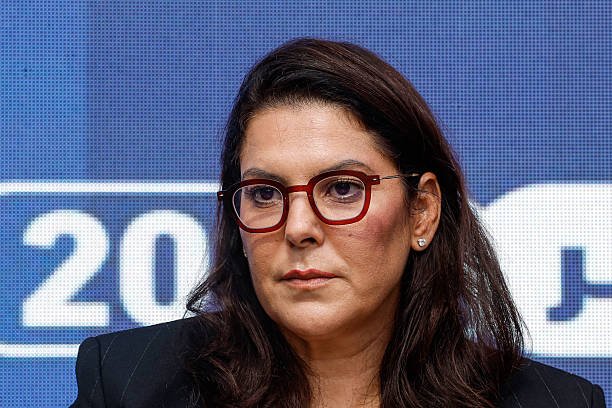
Fatima Ezzahra El Mansouri has begun consultations with Morocco’s political parties to form a new government after King Mohammed VI appointed her head of government on Tuesday, making her the first woman to hold the post. The official royal appointment notice says the King appointed El Mansouri under Article 47 of the Constitution and entrusted her with forming the new government.
Her Authenticity and Modernity Party, known as PAM, won 97 of the 395 seats in the House of Representatives in the 23 September election. That made it the largest party, but left it well short of the 198 seats needed for a majority. The Interior Ministry’s final election results confirmed the same seat distribution announced in the preliminary count.
El Mansouri must therefore secure support from other parties and negotiate a governing programme before a parliamentary majority can take shape.
Her appointment does not, by itself, determine which parties will enter government or which politicians will receive the major cabinet portfolios. Those questions remain subject to the coalition negotiations now under way.
The Numbers Behind the Coalition Talks
The National Rally of Independents, or RNI, finished second with 66 seats, while the Istiqlal Party took 65. Both parties served alongside PAM in the outgoing coalition.
If PAM, the RNI and Istiqlal agreed to govern together again, they would hold a combined 228 seats, comfortably above the 198 required for a majority. Their previous partnership, however, does not mean that a new agreement has already been reached.
A PAM-RNI alliance alone would have 163 seats, while PAM and Istiqlal would have 162, meaning either two-party combination would still fall short.
The Justice and Development Party, or PJD, won 54 seats, followed by the Popular Movement with 29, the Socialist Union of Popular Forces with 26 and the Party of Progress and Socialism with 19.
The distribution gives El Mansouri several possible paths to a majority, but each would require negotiations over policy priorities, cabinet representation and the programme of the next government.
First Meetings Begin with RNI and Istiqlal
El Mansouri opened her consultations on Wednesday by meeting delegations from the RNI and Istiqlal before holding talks with other parliamentary parties.
According to Médias24’s report on the coalition consultations, the initial round is intended to establish each party’s priorities and determine where common ground may exist before possible alliances are negotiated in greater detail.
PAM leadership member Mehdi Bensaïd told the publication that El Mansouri would take the positions expressed during the consultations back to the party’s political bureau. Any eventual coalition agreement would also need approval through the relevant internal decision-making structures of the parties involved.
The RNI and Istiqlal had not committed to joining the new government after their first meetings and said they would consult their respective party bodies before making a decision.
El Mansouri had already signalled after PAM’s election victory that her party was open to discussions across party lines. An invitation to negotiate, however, does not amount to an agreement to join a coalition.
Talks are also expected to involve the PJD even though its leader, former head of government Abdelilah Benkirane, has indicated that the party intends to remain in opposition. Médias24 reported that the first round of consultations would include parliamentary parties even where participation in government was not expected.
A Historic Appointment with a Tight Timetable
El Mansouri, a lawyer who previously served as housing minister and mayor of Marrakech, is the first woman appointed to lead Morocco’s government. Reuters reported that her appointment followed PAM’s first-place finish in the election and now places responsibility on her to assemble a governing coalition.
Turnout in the election was about 38%, down from roughly 51% in the previous parliamentary vote, according to reporting on the Interior Ministry’s figures.
The incoming administration will also govern during preparations for the 2030 FIFA World Cup, which Morocco is scheduled to co-host with Spain and Portugal. FIFA formally appointed the three countries as hosts in December 2024.
Those preparations will sit alongside domestic pressures over living costs, employment, public services and confidence in political institutions.
What Happens Next
The immediate task is for El Mansouri to determine which parties are willing to form a majority and whether they can agree on a common governing programme.
PAM officials have indicated that they want the process to move quickly because Morocco’s draft finance law is due to be presented to parliament by 20 October. Médias24 reported that the deadline is increasing pressure on the parties to reach agreement, although it does not amount to a confirmed date for the formation of a cabinet.
For now, coalition talks are under way, but the membership, policy programme and cabinet structure of Morocco’s next government remain unsettled.