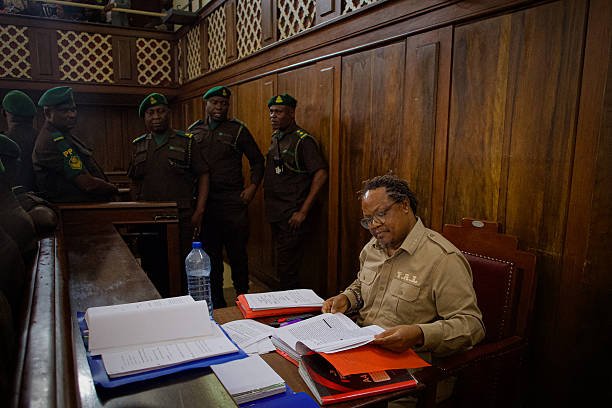
Tanzania’s High Court has acquitted opposition leader Tundu Lissu of treason but convicted him of the lesser offence of incitement, bringing an end to a high-profile case that attracted national and international attention.
The judgment was delivered on Friday, November 6, 2026, by a three-judge panel at the High Court’s Dar es Salaam Sub-Registry, led by Justice Dunstan Ndunguru.
Lissu, chairman of Tanzania’s main opposition party, Chama cha Demokrasia na Maendeleo (CHADEMA), had faced a treason charge over remarks prosecutors said were intended to mobilise supporters to prevent the country’s October 2025 general election from taking place.
However, the court found that the prosecution had failed to establish a key element of the treason charge: that Lissu intended to intimidate the government.
According to “Reuters’ report on the judgment” the court instead found him guilty of incitement, a lesser offence arising from the same case.

What Led to the Treason Trial?
Lissu was arrested in April 2025 after delivering a speech at CHADEMA’s headquarters in Dar es Salaam.
Prosecutors alleged that he called on supporters to block the 2025 general election and mobilise rebellion against the government. They argued that his remarks amounted to an attempt to threaten the government and disrupt the electoral process.
Lissu denied the allegations, maintaining that his statements did not violate the law and that the prosecution was politically motivated.
The treason charge carried the possibility of the death penalty, making the proceedings particularly significant for Tanzania’s opposition movement.
Court Convicts Him of a Lesser Offence
Although the judges found that the prosecution had not proved treason, they concluded that Lissu’s statements amounted to incitement.
The court relied on Section 319 of Tanzania’s Criminal Procedure Act, which allows judges to convict an accused person of a lesser offence where the evidence supports it, even if that offence was not separately included in the original charge.
The conviction was entered under Section 390 of the Penal Code.
“The Citizen” reported that the judges considered testimony from prosecution witnesses who said Lissu’s remarks had influenced people to take part in activities aimed at disrupting the election.
A state attorney said the offence of incitement carries a maximum penalty of five years’ imprisonment, a fine or both. This is the statutory maximum, not a reported sentence imposed on Lissu.
Case Comes Amid Wider Political Tensions
Lissu’s arrest and prosecution took place against the backdrop of growing tensions between the government and opposition groups ahead of the October 2025 elections.
CHADEMA was disqualified from participating in the election after refusing to sign an electoral code of conduct, a decision the party strongly opposed.
The election period was subsequently marked by widespread protests and deadly violence. A commission appointed by President Samia Suluhu Hassan reported that at least 518 people were killed during the unrest, attributing the deaths to protesters. The government has rejected allegations by human rights organisations that security forces used excessive force.
The wider controversy has raised concerns about political freedoms, opposition participation and the treatment of government critics in Tanzania.
Lissu’s acquittal on the treason charge removes the possibility of a death sentence in this case, but his conviction for incitement means he still faces potential punishment.
The verdict therefore closes one part of a closely watched legal battle while leaving wider questions about political opposition and democratic freedoms in Tanzania.