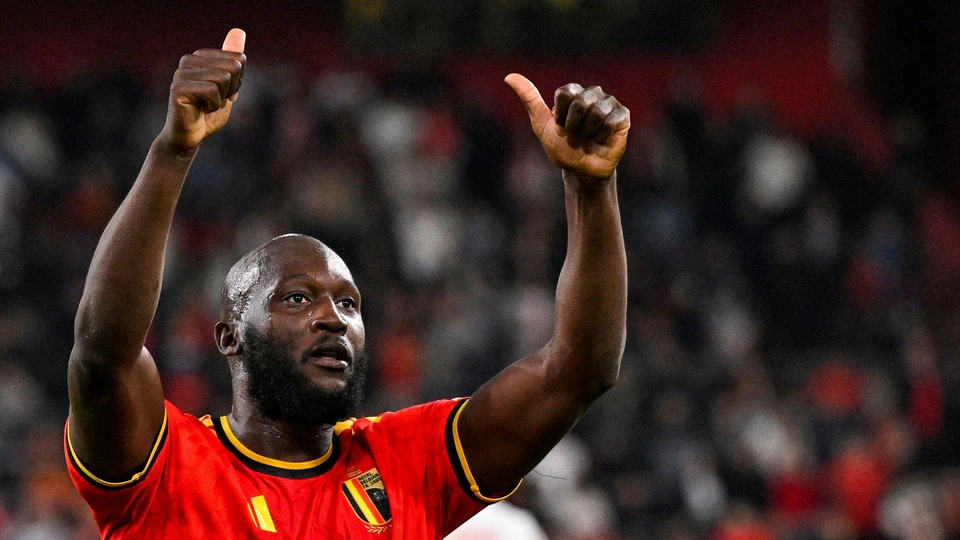
Belgium’s record goalscorer Romelu Lukaku announced his retirement from international football on Monday, 16 November 2026, ending a 16-year association with the senior national team. The 33-year-old leaves with 94 goals from 135 appearances and says he is at peace with the decision. According to Reuters, he thanked coaches, teammates and fans after a career that encompassed four World Cups and three European Championships. Retirement from Belgium duty does not mean retirement from professional football: he remains a club player with Turkish side Fenerbahce. The announcement brings a definite end to one of the most productive individual scoring careers in European international football.

Where Does His Record Stand?
Lukaku is Belgium’s all-time leading men’s goalscorer and ranks fifth on the men’s international scoring list reported following his retirement. His 94-goal total is an official career figure, not a forecast based on matches he could have played. Associated Press reported that Cristiano Ronaldo, Lionel Messi, Ali Daei and Sunil Chhetri are the four players ahead of him on the all-time list. The numbers illustrate his consistency over a prolonged career, but raw totals alone cannot account for competition strength, injuries, or tactical roles. His country nevertheless relied upon him for many major tournament cycles.
What Were His Defining Moments?
Lukaku was part of Belgium’s so-called golden generation, which delivered a third-place finish at the 2018 World Cup. His physical presence, movement behind defenders, and penalty-box finishing supplied a consistent attacking reference point for successive managers. He also helped the national team through the European Championship qualifying campaigns and became a regular presence at major finals. BBC Sport noted that he scored 14 times in eight matches during qualification for Euro 2024, an exceptional run that underlined his value even as criticism sometimes followed his tournament performances. International careers include difficult misses as well as decisive goals, and neither should eclipse the other.
Why Is He Leaving Now?
The player has described his decision primarily through gratitude and closure rather than blaming a coach, injury, or a federation official. Belgium beat Italy 4-1 on Sunday in the Nations League, with Lukaku an unused substitute. Recent fitness concerns also influenced his availability across international windows, but the available statements do not establish a single medical reason for retirement. The timing allows the national team to plan without assuming it can recall him for another tournament. His club obligations continue and may still provide him opportunities to compete at a high level.
What Changes for Belgium?
A striker who scored nearly one hundred international goals cannot be replaced through a simple like-for-like selection. Belgium’s coaching staff will need to assess several attacking profiles, including forwards who press intensely, link play, or stretch defences. Other established players may also take greater responsibility for leadership and goals. The challenge is not limited to finding a new centre-forward; a successful transition requires adjusting attacking patterns, chance creation, and late-game options. Belgium’s talent development system will come under scrutiny as supporters look for the next generation of performers.
What Does Retirement Mean for His Club Career?
International retirement can reduce travel and fixture congestion, but supporters should not assume that the change automatically improves a player’s fitness or goalscoring form. Lukaku will continue to face the demands of domestic and European club competition, where tactics and opponent styles differ from national-team matches. His managers may welcome having him available during future international windows, while Belgium’s staff must turn elsewhere when preparing squads. Club performances will remain relevant to his broader football legacy, although they will no longer increase his official Belgium statistics. The decision also highlights an issue familiar to veteran internationals: the challenge of balancing national expectations against the physical and personal demands of another demanding season. Lukaku has chosen a clear boundary rather than leaving supporters to speculate about a possible recall.
How Should His Legacy Be Judged?
Lukaku represented a long stretch of Belgian football during which the country regularly challenged leading international teams. He endured criticism over missed chances but repeatedly returned to produce important goals. His achievements should be measured through longevity, overall contribution, and the team’s broader results rather than a single match. The federation has publicly recognised his leadership and commitment. For supporters, the announcement closes a familiar era; for Belgium, it begins a practical rebuilding task in which expectations must be realistic. Future results will reveal how successfully the side adapts after its record scorer.
Related Trivane News
Arokodare Double Lifts Nigeria Past Tanzania, Revives AFCON Qualification Bid
Super Eagles Face Tanzania in Crucial AFCON Qualifier Without Osimhen