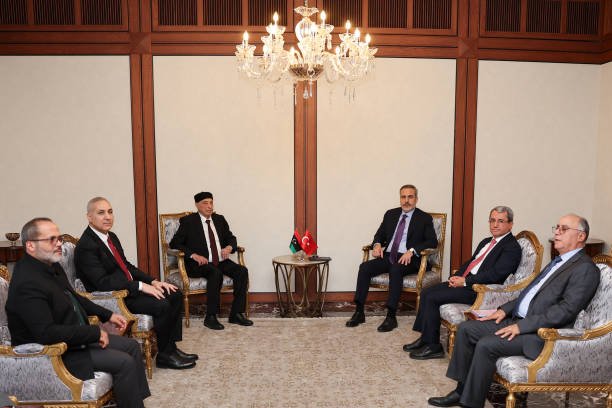
Libya’s eastern-based House of Representatives has replaced Aguila Saleh as speaker, ending his 12-year tenure amid disputes over leadership and parliamentary procedures.
Lawmakers selected Al-Salhin Abdelnabi al-Obeidi on Tuesday, 6 October. According to The Libya Observer, parliamentary spokesperson Abdullah Blehiq announced the decision following a session chaired by Second Deputy Speaker Misbah Douma.
Al-Obeidi is an engineer who represents the eastern city of Tobruk, Africanews reported. His selection changes the leadership of an institution that remains central to Libya’s divided political system.
Leadership rules changed before the vote
The decision followed a vote on Monday to limit the speaker and deputy speakers to a single 12-month term.
Africanews reported that 98 members supported the new arrangement. This was the vote on leadership terms, rather than a published tally for the selection of Saleh’s replacement.
The Libya Observer reported that Monday’s session took place in Benghazi with 102 lawmakers present. More than 100 attended Tuesday’s meeting to select the new speaker.
However, the proceedings were disputed. Saleh rejected Monday’s session as unofficial and without legal effect. He also announced that the Tuesday session he had called was cancelled and would be held at a later date.
First Deputy Speaker Fawzi al-Nuwairi said lawmakers had a right to seek reforms, but stressed that decisions needed to follow the law and the House’s internal rules. He questioned whether another meeting could produce official decisions without meeting the required procedures, quorum, and voting conditions.
The spokesperson’s announcement therefore establishes the reported selection of a new speaker, while the objections show that agreement over the process is incomplete.
A change within a divided country
Libya remains divided between the United Nations-recognised government in Tripoli, led by Prime Minister Abdul Hamid Dbeibah, and a rival administration in the east backed by military commander Khalifa Haftar.
In AFP’s report published by Arab News, Saleh was described as a longstanding Haftar ally. The report noted that the eastern parliament sits in Benghazi, an important centre of Haftar’s influence.
AFP also cited Chatham House analyst Emadeddin Badi, who interpreted Saleh’s removal as part of Saddam Haftar’s efforts to strengthen control over decision-making in eastern Libya. That is an analyst’s assessment of the political balance, rather than an established explanation for every lawmaker’s vote.
Replacing the speaker does not, by itself, resolve the division between Libya’s rival administrations or establish a timetable for national elections.
Trivane View
A new speaker may change how parliament works, but Libyans need more than a change of leadership. Decisions must follow clear rules and help move the country towards accountable government.
The next test is whether the new leadership can gain acceptance, reduce institutional disputes, and support a credible political process. It is too early to treat this vote as a breakthrough towards national unity.