More than $700 million in international funding intended to support the Ebola response in the Democratic Republic of the Congo (DR Congo) remains outside the financial records available to national health authorities, according to the Africa Centres for Disease Control and Prevention (Africa CDC).
The agency is calling on international organizations and aid groups involved in the response to provide fuller accounts of the money they received, spent, and still hold.
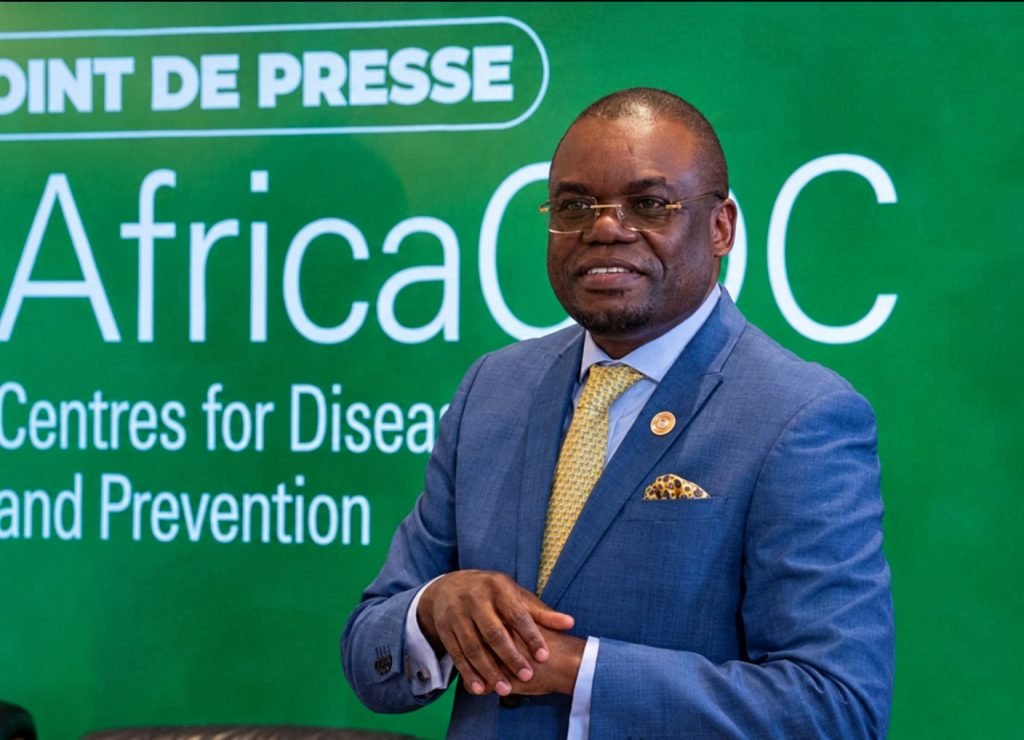
Africa CDC Director-General Dr Jean Kaseya raised the concerns at a press conference in Kinshasa on 14 October 2026. The agency subsequently issued a formal statement on 15 October, clarifying the figures and the responsibility for reporting them.
Kaseya stressed that the discrepancy should not be treated as evidence of embezzlement before the necessary financial records have been examined.
How much funding is involved?
According to Africa CDC, international donors disbursed approximately $962 million to organizations responsible for carrying out Ebola response activities.
The money was paid directly to international organizations and non-governmental organizations, rather than to the Congolese government.
That distinction is important because the authorities are seeking financial information from the organizations that received and managed the funds.
Kaseya said a verification meeting organized by Congolese public health officials brought together only about 30% of the organizations involved in the response.
In its official statement, Africa CDC said that the participating organisations reported receiving approximately $220 million. Of that amount, about $120 million had been used, while $100 million remained available.
In a separate account reported by Reuters on 16 October, Kaseya gave more precise figures of $228 million received and $127 million spent, with roughly $100 million remaining.
Both accounts point to the same concern: authorities have received only a partial picture of the money disbursed by donors.

Why more than $700 million remains unaccounted for
Using the more precise figures, the difference between the $962 million disbursed and the $228 million reported by participating organisations is approximately $734 million.
However, this does not establish that the money has disappeared.
It means Congolese authorities have not yet received sufficient financial information from all the organisations involved to establish how the wider funding was allocated and used.
Kaseya explained the distinction in an interview with Congolese news outlet Actualite.cd, saying the funds had gone to implementing partners and that authorities were seeking an account of the difference.
The unresolved issue is therefore one of financial transparency, documentation and accountability.
It would be misleading to describe the entire amount as stolen or to suggest that the Congolese government received it and failed to explain its use.
Congolese authorities demand greater transparency
DR Congo’s Health Minister, Samuel-Roger Kamba, has also called for organisations involved in the response to provide details of their funding.
These include the sources of their money, the objectives of their programmes and progress made in carrying out planned activities.
The information would allow health authorities to compare reported spending with the work being undertaken in communities affected by Ebola.
Kaseya warned that organisations refusing to meet reporting requirements could face restrictions on their ability to operate in the DR Congo and potentially elsewhere in Africa.
Those are possible consequences raised by the Africa CDC director-general, not penalties that have already been confirmed against specific organisations.
Why accountability matters during an Ebola outbreak
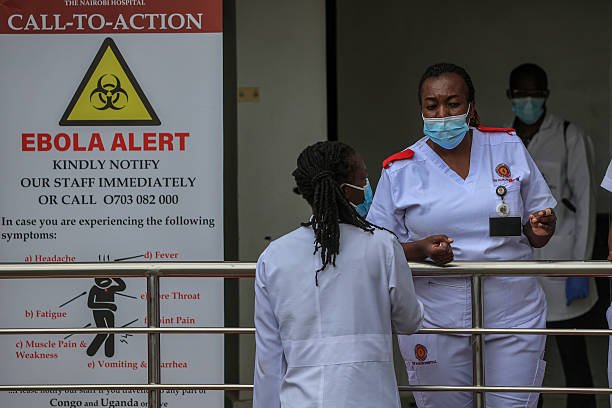
The dispute comes at a difficult time for the country’s health services as they continue responding to Ebola infections.
Effective outbreak control depends on public trust, trained health workers, reliable supplies, and coordination between national authorities and humanitarian organisations.
Where financial information is incomplete, it becomes harder for officials to identify which activities have been funded, where resources remain available, and whether additional support is needed.
The concern is particularly serious in a country where earlier Ebola responses have faced allegations of favouritism and corruption.
However, those past allegations do not prove wrongdoing in the present funding dispute.
The immediate challenge is to obtain complete records without undermining essential health services or making unsupported accusations against organisations involved in the response.
What happens next?
Africa CDC and Congolese health authorities want implementing organisations to submit the financial information needed to reconcile donor disbursements with reported spending.
The records should help establish how much each organisation received, what it has spent, what remains available, and which activities the money supported.
Until that process is completed, the gap of more than $700 million remains a serious accountability concern rather than a confirmed case of stolen public health funds.
For communities affected by Ebola, the central question is whether the resources provided for the emergency response are being used effectively and can be properly accounted for.