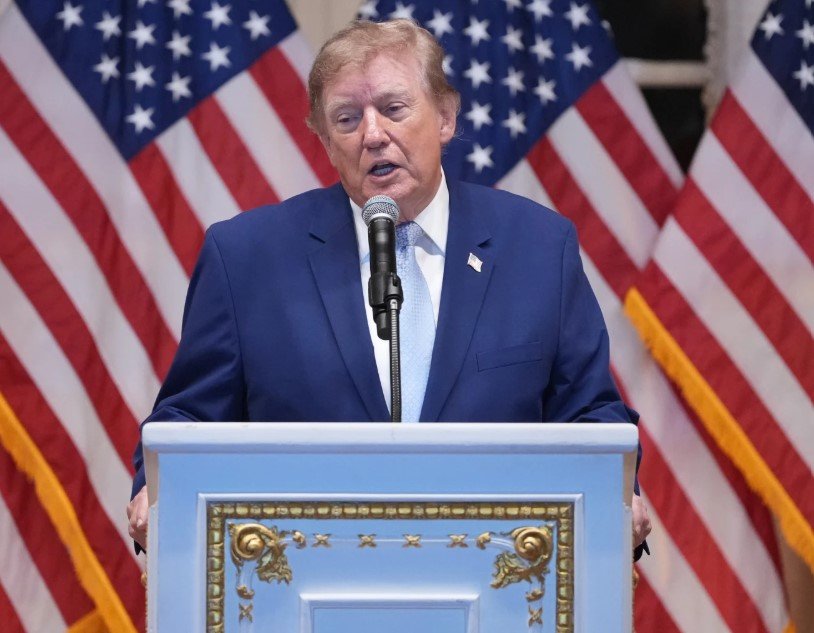
US President Donald Trump has waived a series of new sanctions and tariffs targeting Russia and the countries involved in buying its energy, days before the measures were due to take effect.
The decision was set out in an executive order dated Friday, 16 October 2026, under the Lindsey O. Graham Sanctioning Russia and Iran Act of 2026.
Trump signed the legislation on 18 September as part of efforts to increase economic pressure on Moscow over its war in Ukraine.
According to the White House executive order, the president determined that waiving the specified measures was in the national interest of the United States.
The order also confirms that the administration submitted the required certification and explanatory report to Congress.
The decision delays the application of measures under the new law. It does not repeal the legislation or remove all existing US sanctions against Russia.
What Trump has waived
The legislation introduced additional economic penalties aimed at Russia and the countries involved in purchasing Russian energy or helping Moscow evade sanctions.
Under the executive order, goods imported into the United States from Russia would face an additional tariff of 500%, subject to specified exceptions and waivers.
The order also provides for additional tariffs of 100% on goods from the five largest importers of Russian crude oil and natural gas if they knowingly make new purchases covered by the law from 18 October.
A separate provision targets the five largest facilitators of Russian oil sanctions evasion with additional tariffs of 100%.
However, the same order waives the application of those duties.
It also waives specified sanctions and restrictions covering individuals and entities under the Graham Act.
This means the new penalties will not be applied while the relevant waivers remain in force.
Why the administration granted the waiver
Trump invoked a provision allowing the president to suspend the law’s measures after certifying to Congress that doing so serves US national interests.
The White House order states that the required certification and report explaining its basis have been submitted.
It does not provide a detailed public explanation of the economic calculations behind the decision.
However, the move comes amid concerns about energy prices and the possible effects of additional trade restrictions.
According to Reuters, the proposed tariffs raised concerns among major buyers of Russian energy, including India and China.
The measures could have affected trade with countries that continue to purchase Russian oil and gas.
Analysts have also warned that further restrictions on Russian energy supplies could place additional pressure on global oil prices.
Those concerns provide context for the decision, although the White House has not publicly identified them as its sole justification.
What the decision means for India and China
India and China are among the world’s major buyers of Russian energy.
The proposed tariffs were designed to increase the cost of maintaining certain energy-trade relationships with Moscow.
For affected countries, an additional US tariff of 100% could have created significant trade consequences.
However, the law’s conditions matter. The penalties do not automatically apply to every country that purchases Russian oil or gas.
The order identifies specific categories of countries and requires monitoring of their activities.
With the waiver now in place, the additional duties will not be enforced under these provisions unless the administration takes further action.
That offers temporary relief from the new measures, but it does not guarantee that the tariffs will never be imposed.

Decision draws criticism over Ukraine
The waiver has prompted criticism from politicians who supported stronger economic pressure on Moscow.
Some US lawmakers argue that suspending the measures weakens efforts to limit Russia’s ability to finance its war in Ukraine.
As reported by the Associated Press, critics have questioned the administration’s decision to hold back sanctions that Congress had approved.
Russian officials have taken a different view.
Kirill Dmitriev, an investment envoy associated with President Vladimir Putin, welcomed the move and argued that the legislation threatened economic cooperation between Russia and the United States.
These responses reflect opposing political assessments of the waiver. They do not establish whether the decision will change Russia’s conduct or bring negotiations over Ukraine closer to a settlement.
Existing Russia sanctions remain in place
The distinction between the new waivers and existing US sanctions is important.
The executive order explicitly states that it does not affect certain measures already imposed under separate presidential authorities relating to harmful activities by the Russian government.
Therefore, the announcement should not be described as a general lifting of American sanctions against Russia.
The Graham Act also remains law, even though specified measures have been waived.
The president has used an exemption contained within the legislation rather than cancelling the legislation itself.
What happens next?
The waivers will remain in effect until the president, or the Secretary of State in consultation with other relevant officials, determines that further action is appropriate.
The United States Trade Representative has been directed to continue monitoring purchases of Russian oil and gas and activities linked to sanctions evasion.
Officials must report developments that could justify reconsidering the waivers.
For now, the administration has chosen not to enforce the specified new sanctions and tariffs.
Whether that position changes will depend on future decisions by the White House and the officials responsible for implementing the law.
The wider dispute over Russia’s war in Ukraine and the use of economic sanctions to pressure Moscow remains unresolved.