A fire has destroyed an Ebola transit centre at a displacement camp in the eastern Democratic Republic of Congo, adding to the difficulties facing health teams responding to the country’s largest recorded Ebola outbreak.
The facility was at Kigonze camp near Bunia in Ituri province. The United Nations reported its destruction on Thursday, 1 October, as insecurity continued to obstruct access to affected communities.
Separately, Médecins Sans Frontières, known as MSF, warned that surveillance and detection gaps mean the outbreak’s true toll is likely higher than reported figures. The organisation also confirmed that a staff member had contracted the virus. (globalissues.org, msf.org)
Fire removes capacity as families flee
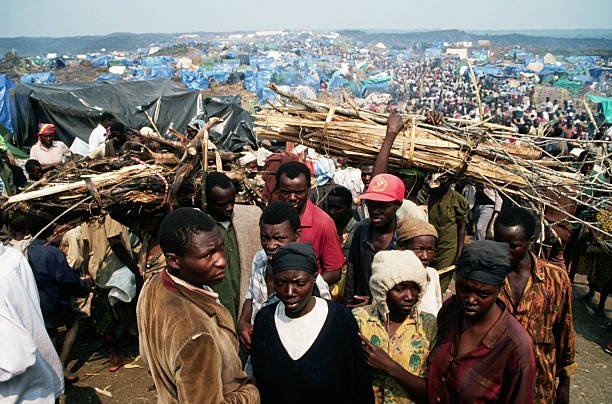
According to UN News, Kigonze had sheltered approximately 19,000 people displaced by violence.
Thousands fled after reports that soldiers entered the camp searching for weapons and suspected members of armed groups. Gunfire was also heard, according to the account.
Julien Harneis, the UN’s senior Ebola coordinator in DR Congo, said establishing response facilities had required substantial funding and staffing. Losing the centre meant losing capacity and investment.
The UN account does not establish who caused the fire. It should therefore not be described as a proven deliberate attack by a named group. (globalissues.org)
Insecurity obstructs testing and patient transfers
The UN said violence had restricted access to Fataki, Drodro, and Lita health zones. It also delayed laboratory samples reaching Bunia and disrupted transfers of confirmed patients.
In neighbouring North Kivu, humanitarian reporting indicated that two Ebola responders were killed on 27 and 28 September.
The destruction of a facility, displacement of residents, and interrupted patient transfers represent separate pressures on the response. The available reporting does not provide a rebuilding timetable for Kigonze. (globalissues.org)
Reported deaths approach 4,000
In its statement issued on Thursday, MSF summarised the outbreak as involving more than 8,000 confirmed cases and approximately 4,000 deaths since May.
It said the actual toll was likely higher because surveillance and case detection remained incomplete.
Those rounded figures should not be presented as an exact, independently verified count exceeding 4,000 deaths. Published updates use different reporting cut-offs, and the distinction between an estimate and a dated surveillance total matters.
MSF’s Dutch branch published a more detailed update listing 8,245 confirmed infections and 3,984 deaths. The figures describe the scale reported in that update, rather than a final total for an ongoing outbreak. (msf.org, artsenzondergrenzen.nl)
MSF staff member evacuated for treatment
MSF confirmed that a colleague working on the response had tested positive for Bundibugyo virus disease.
It said the evacuation to the Netherlands was being conducted under strict medical protocols, coordinated with health authorities in both countries. The organisation withheld individual details to protect the patient’s privacy.
MSF acknowledged that healthcare workers face substantial exposure risks and that training and protective measures cannot eliminate every possibility of infection.
Its Dutch branch said arrangements for a possible evacuation had been discussed with national health authorities after the outbreak emerged in May. The patient would enter a specialist isolation unit staffed by trained personnel. (msf.org, artsenzondergrenzen.nl)
A geographically widespread emergency
The World Health Organization’s latest detailed outbreak assessment records affected health zones across seven Congolese provinces.
It warns that expansion into additional areas increases the risk of cross-border transmission. However, its national figures are dated 23 September and should not be substituted for later updates.
WHO also notes that an improving national trend can conceal continued intense transmission in particular provinces and health zones.
The agency assesses risk within DR Congo as very high and risk to countries sharing its land borders as high. Its assessment places risk elsewhere in Africa and globally at low levels, illustrating that risk varies substantially by location. (who.int)
Care and containment remain essential
WHO says this outbreak involves Bundibugyo virus, for which there is no approved vaccine or specific treatment, although research into candidates continues.
That does not mean medical care is unavailable. The response includes clinical care, laboratory testing, infection prevention, surveillance and community engagement.
MSF says it continues supporting the response in Ituri, North Kivu, Tshopo and Haut-Uélé. Protecting facilities and restoring access are necessary for those services to reach affected communities. The Kigonze fire leaves responders with another gap to address while transmission continues. (who.int, who.int, msf.org)