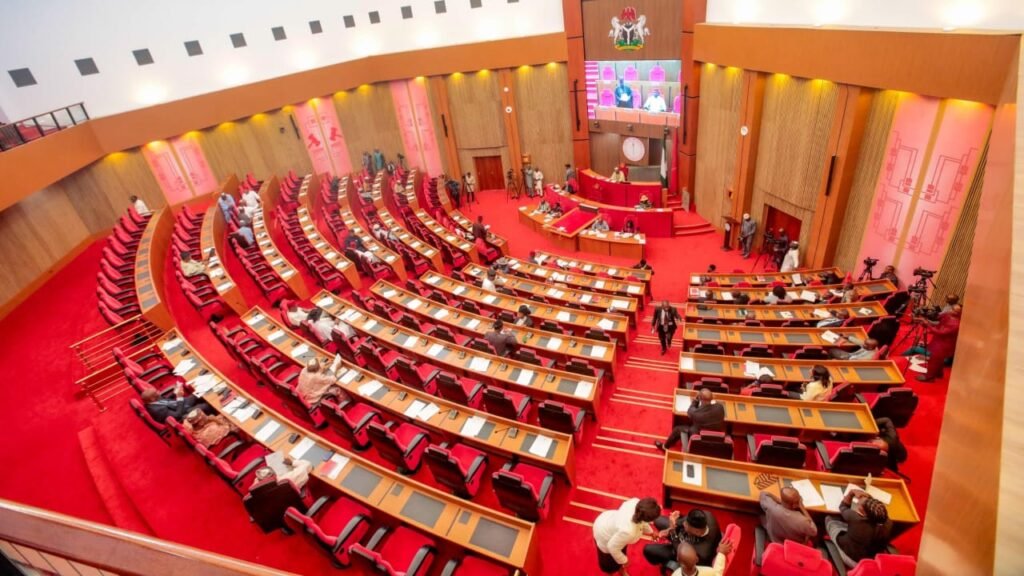
Nigeria’s Senate has approved a supplementary external borrowing plan of $20.517 billion and €1.045 billion for the 2026–2027 fiscal period, alongside a separate request authorising additional external borrowing of approximately ₦10.79 trillion to finance the 2026 budget deficit.
The approvals were granted during plenary on Tuesday, November 24, following consideration of recommendations from the Senate Committee on Local and Foreign Debts.
However, the decision has attracted attention because President Bola Tinubu had previously withdrawn the original $20.5 billion and €1.045 billion borrowing request before submitting a revised proposal.
According to “Premium Times” the President formally withdrew the earlier request on November 4 and replaced it with a revised external borrowing proposal of approximately $7.7 billion, intended partly to finance the 2026 budget deficit.
Despite that withdrawal, the Senate committee recommended approval of both the earlier rolling borrowing plan and the revised request. Lawmakers subsequently approved the proposals during Tuesday’s sitting.

Three borrowing approvals
The Senate’s decision covered three separate borrowing components.
The first was the 2026–2027 supplementary external borrowing rolling plan of $20.517 billion and €1.045 billion. The second was a revised external borrowing request of approximately $7.707 billion, while the third was an additional authorisation of approximately ₦10.79 trillion to finance the deficit in the 2026 Appropriation Act.
The committee explained that the larger rolling plan would provide a framework for negotiations with prospective creditors, development finance institutions, and other external lenders. The revised $7.7 billion request, meanwhile, was intended to facilitate the implementation of external borrowing provisions already contained in the 2026 budget.
Reporting on the Senate’s decision, “THISDAY” said the Deputy Senate President, Jibrin Barau, maintained that the proposed facilities would not immediately be drawn down. Access, he explained, would depend on meeting stipulated requirements and aligning the financing with national priorities.
Government defends borrowing plan
During deliberations, Barau argued that Nigeria’s debt-to-GDP ratio was approximately 35 per cent and could rise to about 42 per cent following the proposed borrowing, which he said remained below the internationally recognised threshold of 70 per cent.
Senators also stressed the importance of ensuring that borrowed funds were properly monitored and directed towards their intended projects.
The administration has maintained that the borrowing arrangements are intended to support development programmes, infrastructure, and existing fiscal commitments.
However, the approval of the earlier borrowing proposal despite its withdrawal by the President has raised questions about the legislative process. “Premium Times” reported that lawmakers did not address the withdrawal during the debate.
The approval does not mean the entire amount has already been borrowed or disbursed. Negotiations, financing conditions, and the fulfilment of relevant requirements would still determine whether and when individual facilities are accessed.