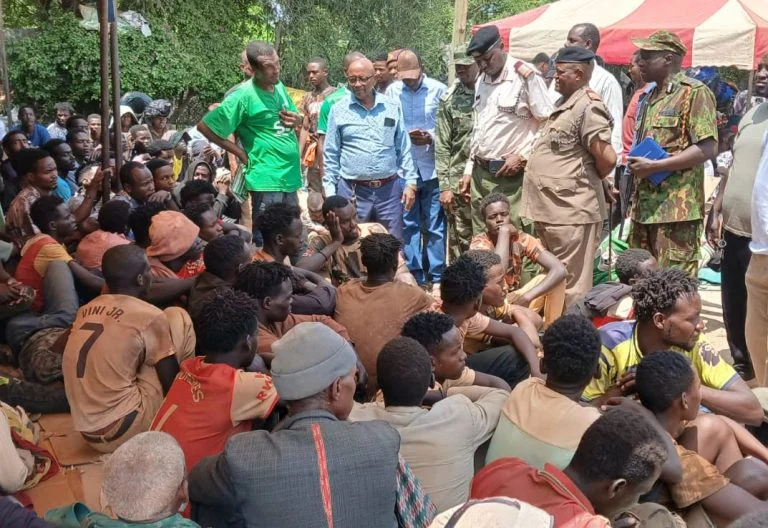
Up to 50,000 people are estimated to have crossed from Ethiopia into neighbouring Kenya following clashes near the border town of Moyale, as humanitarian agencies warn that growing displacement is putting pressure on local communities.
In a statement published on October 28, the United Nations High Commissioner for Refugees (UNHCR) said ongoing violence on the Ethiopian side of the border had forced thousands of people to seek safety in Kenya The agency stressed that the figure remained provisional as authorities continued registration and verification efforts.
According to UNHCR, many of those arriving are women and children. Some are staying with relatives and host communities, while others have sought temporary shelter in schools and churches.
The growing movement of people is raising concerns about access to basic necessities and the capacity of border communities to accommodate those fleeing the violence.

Food and Shelter Among the Most Urgent Needs
UNHCR identified food as the most urgent need among displaced people, alongside safe drinking water, emergency shelter, sanitation and healthcare.
The agency said it had deployed an emergency team to Moyale and was working with the Kenyan government, county authorities and humanitarian partners to support the response.
Relief supplies, including essential household items and temporary shelter materials, are being mobilised to assist nearly 12,000 people, while efforts continue to expand support as needs increase.
The response involves several organisations, including the International Organization for Migration, UNICEF, the World Food Programme, and the Kenya Red Cross Society.
However, the difference between the estimated number of people crossing the border and those targeted by the initial relief effort highlights the scale of the challenge facing humanitarian agencies.
Local Communities Face Growing Pressure
The displacement is also affecting communities in Kenya’s Marsabit County, where local leaders have warned that the influx could strain resources in areas already experiencing food and water shortages.
The border town of Moyale spans Ethiopia and Kenya, making developments on either side particularly significant for residents and cross-border movement.
Earlier reporting by the Associated Press cited United Nations figures indicating that approximately 36,000 people had fled into Kenya by Tuesday UNHCR’s subsequent estimate of up to 50,000 suggests that the scale of displacement may have increased, although the figures remain subject to verification.
Kenyan officials have also reported incidents involving stray bullets in Moyale, while human rights advocates have called for urgent assistance to protect displaced people and support host communities.
What Is Driving the Violence?
The fighting has been linked to a territorial dispute involving Ethiopia’s Oromia and Somali regional administrations. Reports indicate that tensions intensified after the killing of a 13-year-old girl.
The situation illustrates how local disputes can trigger wider humanitarian consequences when violence affects communities close to an international border.
The precise circumstances surrounding the clashes and the full extent of the displacement remain subject to further verification.
For Kenya, the immediate challenge is to provide safe accommodation and essential services while protecting host communities from additional pressure. For humanitarian agencies, the priority is to establish more reliable figures and ensure assistance reaches those most in need.