Applications for UK Skilled Worker visas fell sharply in the year ending September 2026, according to provisional figures published by the Home Office, extending a downward trend in several major immigration routes.
The official statistics recorded 26,400 applications from main applicants seeking Skilled Worker visas during the 12-month period, a 43 per cent decrease compared with the year ending September 2025, Applications for sponsored study visas also declined, falling by 19 per cent to 352,500 over the same period.
The figures were published in the Home Office’s monthly entry-clearance visa statistics for September 2026. They measure applications submitted from outside the UK rather than the number of visas approved or the total number of people already living in Britain.
Skilled Worker Applications Continue to Fall
The Skilled Worker route allows eligible overseas nationals to work in the UK for approved employers, provided they meet the applicable requirements.
The Home Office said applications for Skilled Worker and Health and Care Worker visas had followed a gradual downward trend since mid-2024.
Applications from Health and Care Worker main applicants fell even further, to 7,500 in the year ending September 2026. That represented a 63 per cent decrease compared with the previous 12-month period.
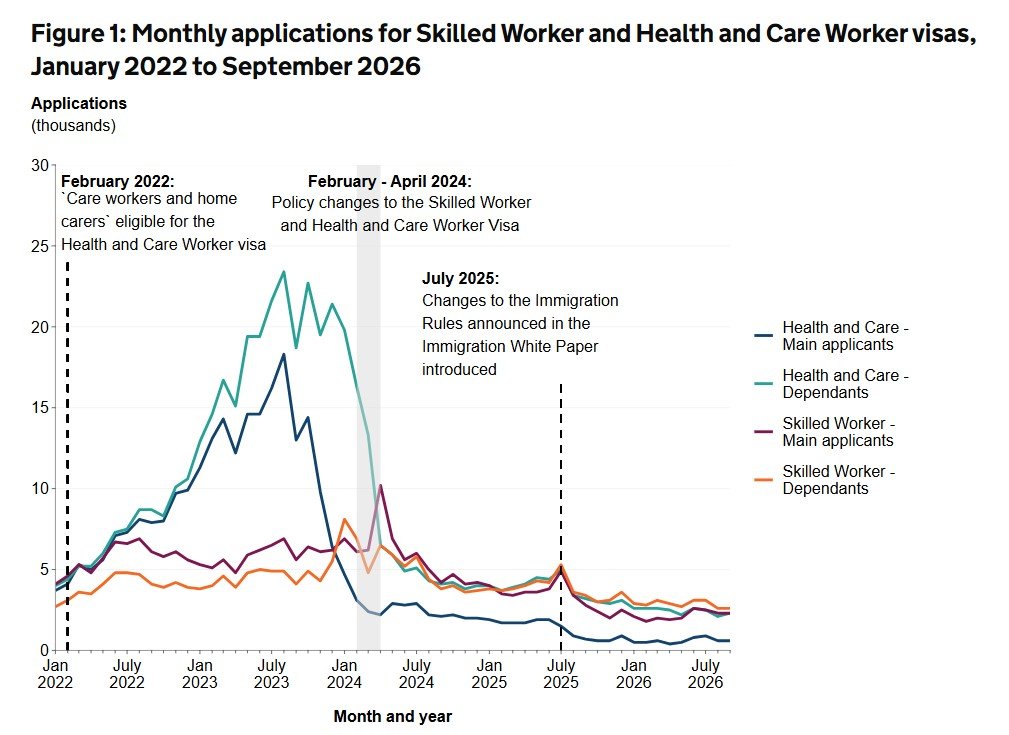
The decline in these routes follows changes to immigration policy, including restrictions introduced in 2024 and further measures implemented in July 2025. The minimum salary threshold for the Skilled Worker route rose from £38,700 to £41,700, and most jobs must now meet RQF level 6, broadly equivalent to graduate-level work.
The changes also included ending new overseas recruitment through the care-worker visa route, subject to transitional arrangements for certain people already in the UK.
The Home Office identifies these policy changes as among the factors affecting application trends, although the statistics alone do not establish how much of the decline can be attributed to each measure.

Student Visa Applications Also Decrease
Sponsored study applications reached 352,500 in the year ending September 2026, down 19 per cent from the preceding year.
The route covers international students applying to study in the UK through eligible sponsoring institutions. Application numbers typically rise during the summer ahead of the start of the academic year, meaning annual comparisons need to account for seasonal patterns.
Applications from student dependants also declined. The Home Office recorded 15,700 applications from student dependants during the 12-month period, a 31 per cent fall compared with the previous year.
The government has restricted most international students on taught courses from bringing dependants since January 2024, a policy change that has contributed to a substantial decline in dependant applications.
The latest figures therefore point to reductions across both work and study routes, although the reasons and effects differ between categories.
What the Figures Mean for Prospective Migrants
The fall in applications indicates that fewer people applied through these routes during the period, but it does not mean that every applicant faces a lower chance of approval or that the UK has stopped recruiting overseas workers and students.
Prospective applicants must still meet the rules for their chosen route, including applicable salary, qualification, sponsorship, financial, and English-language requirements.
The figures also do not measure all migration to the UK. They exclude other routes and do not represent total arrivals, visa grants, or net migration.
For employers and universities, sustained reductions in applications may affect recruitment and international student intake, although the actual impact will depend on demand, admissions, vacancies, and the number of applications that result in approvals.
The Home Office is due to publish its next quarterly immigration statistics in November, which should provide a broader picture of visa outcomes and other migration trends.