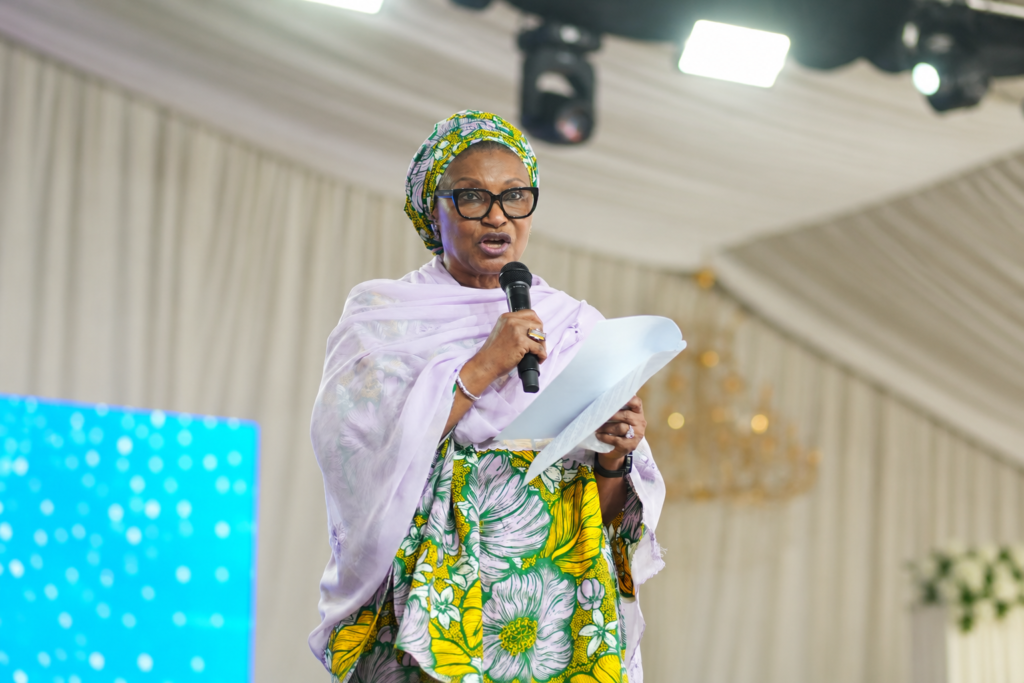
Senator Ireti Kingibe, who represents the Federal Capital Territory, has called for stronger domestic financing and legislative support to improve healthcare access in Nigeria. The Guardian reported the appeal on Saturday, 24 October, following discussions at a health summit in Abuja earlier in the week. The publication is new today, but the underlying event was not held on Saturday. Kingibe’s central argument was that promising health interventions must be expanded beyond small demonstration projects.
What Did the Summit Examine?
According to TheCable, the Gatefield Health Summit, held from 21 to 22 October, brought together policymakers, innovators and healthcare stakeholders to discuss how proven interventions could reach more communities. Participants considered funding models, technology and the institutional obstacles that keep effective ideas from becoming routine services. The News Agency of Nigeria also reported calls for more domestic financing and policy reform. These are policy recommendations, not announcements of a newly approved government budget.
What Do the Survey Findings Suggest?
TheCable described a pilot survey involving 1,070 adults in Lagos, Kano and the Federal Capital Territory. It reported that 49 percent of surveyed households were managing long-term health conditions, while 52 percent of respondents experienced financial strain or went without treatment because of healthcare costs. The News Agency of Nigeria reported the same sample size and a finding that one in eight young adults surveyed had a chronic illness. Because this was a pilot survey in selected locations, the percentages should not be presented as nationally representative prevalence estimates.

Why Is Domestic Funding Important?
Domestic health financing can provide greater predictability for essential services than short-term grants alone; however, the value of any funding increase depends on its allocation and oversight. Reliable budgets can help maintain medicines, staffing, preventive programmes and referral systems after pilot funding ends. The Guardian reported Kingibe’s emphasis on directing capital, technical expertise and legislative attention towards approaches that have already demonstrated value. The available coverage does not specify a proposed naira amount or a newly enacted financing law.
Could Artificial Intelligence Improve Care?
The Guardian also reported discussion of AI tools that could help analyse health trends and anticipate disease outbreaks. Such applications may support planning, but they depend on dependable data, validation, appropriate privacy safeguards, and integration into actual health services. A forecasting tool cannot replace clinical staff, laboratory capacity, or medicine supply. Policymakers would need to show how digital innovations improve measurable outcomes before treating them as a solution to funding shortages.
What Barriers Remain?
According to TheCable, participants identified financial pressures, missed services and wider institutional barriers as major concerns. Poor access is not simply a matter of inventing more products; patients must be able to reach facilities, pay for necessary care, and trust the systems administering it. The News Agency of Nigeria‘s coverage similarly emphasised expanding interventions already shown to work. The reports do not demonstrate that any specific national scale-up has started as a direct result of the summit.
What Happens Next?
The next meaningful developments would be budget proposals, legislative measures, published implementation plans, or measurable expansion of effective services. Researchers should also seek the complete survey methodology before generalising its findings. For today’s handover, the defensible headline is Kingibe’s renewed funding appeal, not a claim that Nigeria has already committed fresh health spending. Whether patients benefit will depend on concrete policy choices and delivery.
The financial findings deserve particular care. A survey that includes only selected urban and regional populations may illuminate pressures faced by respondents without representing every Nigerian household. Differences in income, rural transport, insurance coverage, and local facility availability could substantially change the experience elsewhere. Editors should preserve the pilot-study description whenever using its percentages and should not turn an exploratory finding into a nationwide estimate.
There is also a practical difference between announcing a health innovation and making it sustainable. A successful screening programme, for example, needs follow-up appointments, trained workers, confirmatory testing, and affordable treatment. Without those components, early detection may not lead to better outcomes. The same applies to digital platforms: their value should be judged against outcomes for patients, not merely the number of users enrolled or devices distributed.
Lawmakers considering domestic financing would need to assess which services deliver the greatest benefit, how funds move from federal or state budgets to facilities, and how performance is measured. Public reporting on waiting times, medicine availability, and patients’ out-of-pocket costs could help determine whether increased spending reaches the intended population. These are questions prompted by the summit, not measures the speakers were reported to have formally adopted.
Related Trivane Story
Nigeria Expands R21 Malaria Vaccine Rollout to 15 Additional States in Phase 2