Britain and the European Union have announced a new package of agreements designed to reduce barriers to trade, strengthen cooperation on emissions, and allow more young people to live and work across borders, but their renewed partnership still faces a dispute over university fees.
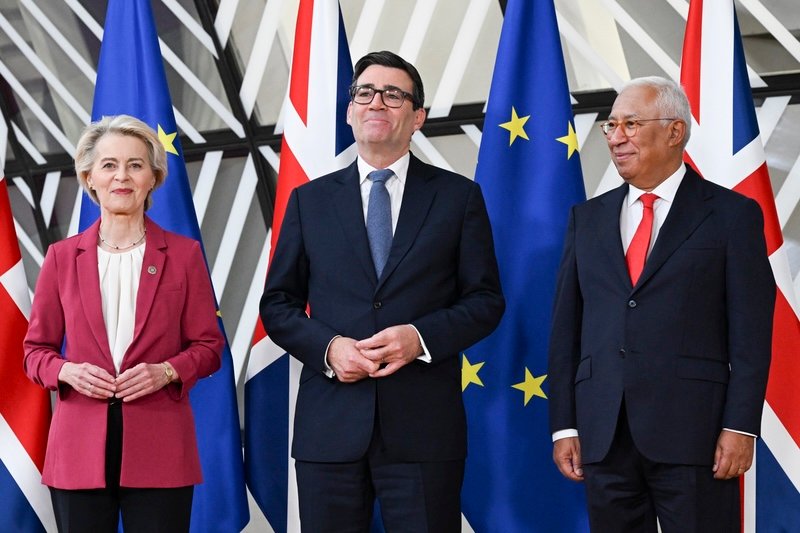
The announcement followed a summit in Brussels on Friday, 20 November 2026, involving British Prime Minister Andy Burnham, European Commission President Ursula von der Leyen, and European Council President António Costa. Downing Street said negotiations on the principal agreements had concluded, while EU officials stressed that important conditions remained before the package could take effect.
What Did Both Sides Agree?
The package covers arrangements for food and agricultural trade, the connection of British and EU emissions-trading systems, and a programme intended to expand opportunities for young adults. It marks an attempt to address practical obstacles that emerged after Britain left the bloc rather than reopen the question of membership.
Reuters reported that Downing Street considered negotiations concluded and said implementation timetables would be set out in the leaders’ joint statement. That distinction matters: political agreement on negotiating terms does not mean each measure becomes legally operational immediately. Businesses and travellers will still have to wait for the relevant procedures, legislation, and implementation dates.
University Fees Remain a Sticking Point
The main unresolved issue concerns the tuition fees European Union students would pay at British universities and the treatment of British students studying in the bloc. Since Brexit, many EU students have faced international fee rates in the UK instead of the home-fee treatment available before the change.
The Guardian reported that EU officials regard the linked measures as a package whose implementation depends on a further settlement on tuition fees. British officials, by contrast, have described the central arrangements as agreed. These positions are not necessarily contradictory: the deal may have been politically negotiated while its formal signing or entry into force remains conditional.
The joint summit statement commits the sides to work towards a supplementary arrangement on tuition fees and to conclude negotiations within six months. That timetable offers a test of whether the diplomatic breakthrough can survive difficult domestic arguments over the cost of higher education.

What Could Change for Young People?
A proposed youth mobility arrangement would create a structured route for eligible participants to spend time living, working, or studying on the other side of the Channel. It is not the restoration of unrestricted free movement and should not be presented as an immediately available visa route.
The details of eligibility, duration, application charges, and annual limits will determine how many young people can use it. Students and prospective applicants should avoid making binding travel or tuition decisions until the governments publish final rules and starting dates.
For British universities, any agreement on EU student fees would also affect recruitment and finances. The debate therefore extends beyond diplomatic symbolism to the budgets of institutions and the choices facing prospective students.
Trade Benefits Will Depend on Delivery
The proposed food and farming arrangement is intended to ease checks and paperwork affecting goods traded between Britain and the EU. A parallel agreement linking carbon-trading systems could reduce some regulatory uncertainty for businesses operating in both markets.
However, the savings and market access promised by officials are projected benefits. Their scale will depend on legal detail, enforcement, and whether businesses can comply with the new rules without facing additional costs elsewhere. Critics are expected to examine how closely British regulators must align with EU requirements and what influence London will retain over those standards.
The summit provides a diplomatic headline, but the real test will be the practical position of exporters, employers, and travellers when the arrangements eventually enter force. For Nigeria and other countries outside Europe, the shift may also affect businesses that trade through British supply chains, although no immediate change to Nigerian visa rules has been announced.
Trivane View
A reset should be judged by the rights and opportunities it actually delivers, not by a declaration of improved relations. Publishing the outstanding conditions and the timetable would help students, employers, and businesses distinguish an agreement in principle from rules they can rely on.
Related Trivane News
Burnham Sets Three Tests for EU Reset as Friday Summit Nears
Home Office Faces Legal Challenge Over Residency Rights of Almost 1,500 EU Citizens