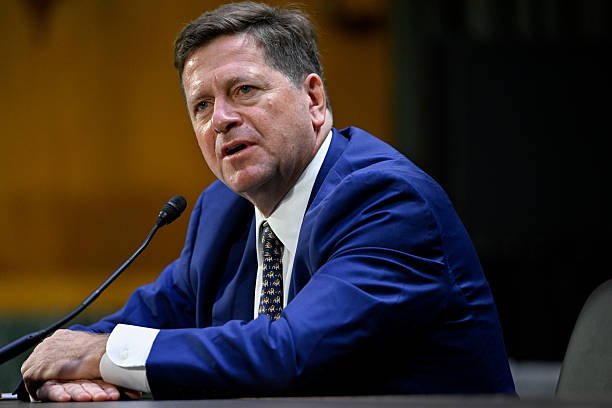
US President Donald Trump has named Director of National Intelligence Jay Clayton to lead a new artificial intelligence task force intended to coordinate the federal government’s approach to the technology.
Trump announced the leadership on Sunday, 4 October, calling the group the “Super Intelligence Force”. Its stated objectives include maintaining US technological leadership and protecting Americans’ interests.
The announcement establishes a coordination role. It does not itself introduce new binding safety requirements for AI companies.
Who will lead the group?
Clayton will work alongside Federal Trade Commission chair Andrew Ferguson, Pentagon technology chief Emil Michael, and Office of Personnel Management director Scott Kupor.
According to CNN, Trump said the task force would report to him and White House chief of staff Susie Wiles.
The group will coordinate government engagement with consumers, public interest organisations, religious groups, critical infrastructure providers, and AI companies. Its leadership brings together officials responsible for intelligence, consumer protection, defence technology, and the federal workforce.
A report expected within 120 days
Clayton told The Wall Street Journal that the task force would have 120 days to assess AI’s risks and opportunities and recommend the federal government’s role, Reuters reported.
The Journal also reported, citing the group’s charter, that it would examine arrangements for reporting AI-related breaches, hacks, and other incidents, and recommend improvements to federal responses under existing powers.
These are tasks for a review, rather than completed findings or enacted regulations.
Why the administration calls it “super intelligence”
The name follows a separate executive order signed on 29 September.
A White House fact sheet says that order directs executive agencies to replace “artificial intelligence” with “super intelligence” in official communications and non-statutory documents.
It also instructs the president’s science and technology adviser to propose a federal definition of the term. The terminology change is an administrative decision; it does not establish that existing AI systems have surpassed human intelligence.
The task force announcement follows a White House meeting with leading AI executives, where Trump promoted voluntary commitments by companies to police their own models, CNN reported. The forthcoming review will help show how that approach translates into recommendations for government oversight.
Trivane View
The useful test will be the task force’s recommendations: who should report harmful incidents, how government should respond, and where responsibility lies. Appointing senior officials creates a structure for that work, but the safeguards will depend on what follows.