Nigerian period drama To Adaego With Love has emerged as the overall Best Film (Jury’s Choice) at the fifth Africa Films for Impact Festival (AFFIF). NTA reported that the festival took place from 28 to 30 October at Silverbird Cinemas in Abuja under the theme “Reimagine Africa: Storytelling for Transformation.” The newly announced award results are distinct from the festival’s opening, previously reported before the winners were known.
Which Awards Did the Film Receive?
NTA’s winners’ report lists To Adaego With Love as Best Film (Jury’s Choice), Best Film (Narrative), Best Cinematography, Best Story on Democracy, Accountability and Anti-Corruption, and Best Film on Peace, Security and Counterterrorism.
Chisom Agoawuike was named Best Female Actor and Adam Garba Best Male Actor, while screenwriter Brenda Ogbukaa-Garuba received Best Screenplay. These categories are awards from AFFIF, not from the Africa Movie Academy Awards (AMAA), whose 2026 ceremony is scheduled for November.
The result puts the drama’s performers, writing and visual storytelling in the spotlight. Nevertheless, the publicly available reporting reviewed here does not provide complete jury scoring or detailed deliberations, so the award record should be stated without inventing rankings against individual competing films.
What Story Does To Adaego With Love Tell?
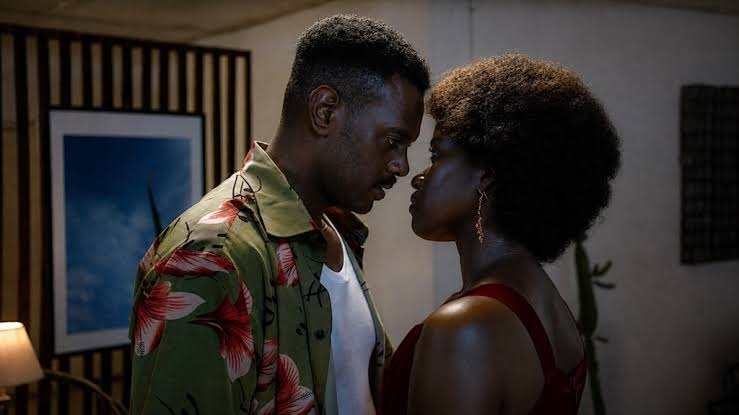
The film is set in the aftermath of the Nigerian Civil War, examining hostility, forgiveness and the difficulty of rebuilding trust between communities and the military. Its narrative follows Major Balarabe Alkali, a soldier sent to Enugu on a reconciliation assignment, and Adaego, a mathematics teacher whose family has suffered wartime loss.
Their relationship develops against the tensions of a society still negotiating memory, identity and responsibility. The premise allows the filmmakers to explore how conflict can endure within families even after formal hostilities end. The award-winning film was written by Ogbukaa-Garuba and directed by Nwamaka Chikezie.
By recognising the production in categories spanning narrative filmmaking and civic themes, the festival has highlighted its social-impact ambitions. That does not mean a film alone can resolve historical divisions; it means the jury recognised the artistic treatment of subjects that remain important to public conversation.

Why Is the Timing Significant for Nollywood?
The fresh AFFIF results arrive as To Adaego With Love prepares for a second awards stage. In its earlier report on the 2026 AMAA nominations, Premium Times said the film received 11 nominations, the highest total for a Nigerian production on this year’s list. The ceremony is scheduled for 15 November in Lagos.
BellaNaija independently covered those AMAA nominations in October, identifying the drama among Nigeria’s strongest entrants and confirming its presence in the Best Film category. That coverage supplies background to the festival win; neither earlier report should be misrepresented as having confirmed the AFFIF winners announced today.
The distinction is important because the two ceremonies have different organisers, categories and voting processes. An AFFIF trophy does not automatically translate into an AMAA win. It can, however, increase the film’s visibility as audiences and industry professionals consider the forthcoming nominees.
It may also invite renewed attention to the film’s portrayal of the aftermath of war. Period dramas rely on costume, production design and historical context to create a believable setting, but creative interpretation is not the same as a documentary record. Viewers can appreciate the performances and cinematography while recognising that the narrative presents a fictional relationship against a real historical background. The new honours are strongest as evidence of festival recognition rather than proof of any specific social impact.
The film’s earlier AMAA nomination record remains a separate story to watch. The nominations include major categories and craft disciplines, allowing attention to extend beyond headline performances to the artists responsible for sound, writing and the visual environment. Festival success may lead to additional interviews and screenings, but none should be reported as confirmed until organisers or distributors provide the details.
What Happens Next?
The next scheduled milestone is the 22nd Africa Movie Academy Awards on 15 November. Further reporting should confirm the official AFFIF winners’ list, distribution and screening plans for the film, and any comments from the production team about the reception of its historical themes.
For viewers outside Abuja, awards publicity is not proof that the film is already available on every streaming service or in cinemas nationwide. Availability should be checked against confirmed release arrangements.
Related Trivane News
Africa Films for Impact Festival Opens in Abuja
Ghanaian Comedian Watabombshell Clinches Best Actor Award at 2026 EILA
10 Movies to Watch in Nigerian Cinemas This Weekend