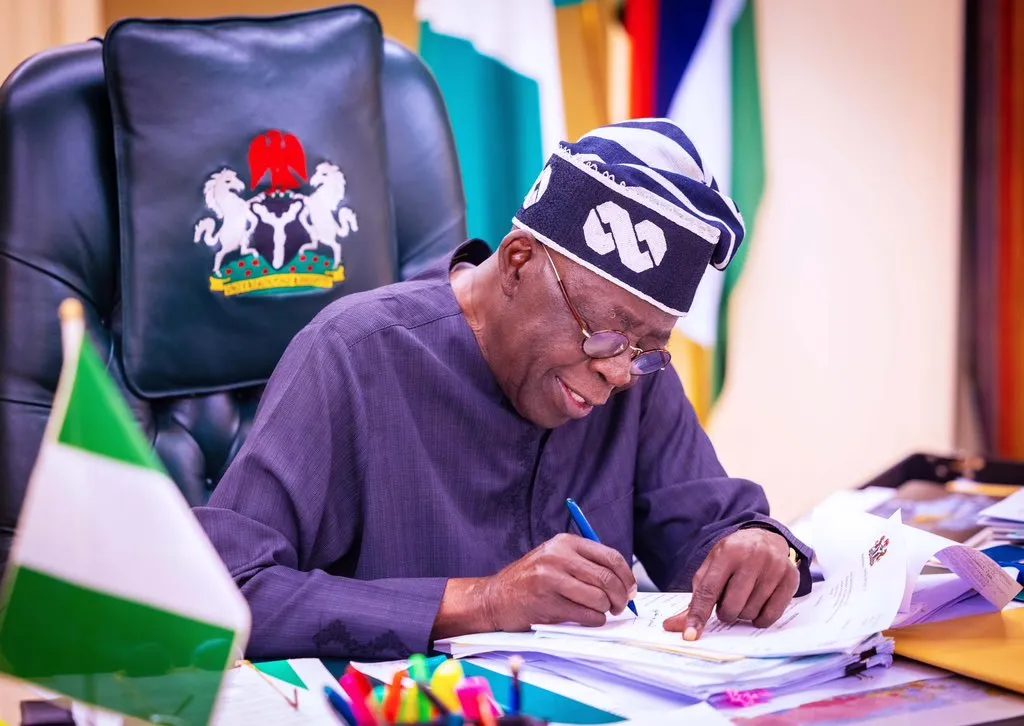
President Bola Tinubu has sent a revised 2026 appropriation proposal to the House of Representatives, seeking to reduce total federal expenditure from ₦68.323 trillion to ₦65.176 trillion. The request was read at plenary on Tuesday, 24 November, and reported overnight on Wednesday. It is a legislative proposal rather than a budget already replaced by law. The president’s accompanying fiscal framework retains a projected deficit of ₦31.457 trillion even though the proposed total spending figure has fallen. The development was reported by PUNCH.
Deficit and Borrowing Remain
The revised framework projects federal revenue, including government-owned enterprises, at ₦33.720 trillion and capital expenditure at ₦26.232 trillion. The reported deficit represents 5.64 per cent of GDP. New borrowing is proposed at approximately ₦29.218 trillion, divided into ₦18.428 trillion in domestic borrowing and ₦10.790 trillion in external loans. This distinction is central to the story: reducing the headline budget does not, by itself, mean a matching reduction in financing needs or debt exposure.

Why the Figures Changed
In the letter, dated 20 November, the presidency said the revisions would align the spending plan with existing obligations and available resources. The request covers recognition of some Nigerian National Petroleum Company Limited spending on behalf of the federation, underprovided debt-service obligations, and existing capital warrants. It also refers to refunds and allocations across ministries, departments, agencies, and special accounts. These are the government’s explanations for its request; lawmakers have yet to complete their scrutiny of the revised figures.
Scrutiny of priority spending
Tinubu identified road completion, agricultural production and market access as areas receiving attention, alongside efforts to address production costs, farm yields and water vulnerability. The extent to which those priorities are protected will depend on the line-by-line provisions of the bill rather than the headline totals alone. Legislators must consider which previously approved projects have been reduced, deferred or reclassified, and whether outstanding commitments have credible funding arrangements. The public will also need clarity about implementation timelines.
What lawmakers can still change
A letter transmitting a budget proposal begins parliamentary consideration; it does not automatically authorise the adjusted expenditure. Committees may examine supporting schedules, compare the proposed changes with the existing appropriation, and request explanations from executive agencies. The revised framework also identifies a planned $7.7 billion external financing component within its existing borrowing envelope. Any approval should make the conditions and intended uses of borrowing intelligible to taxpayers, especially where projects extend beyond the current fiscal year.
The next fiscal test
The policy question is whether the smaller appropriation improves execution while preserving essential obligations. Spending ceilings, releases, debt servicing and actual collections will determine the practical results. It would be premature to describe the change as an enacted cut or as evidence that the deficit has narrowed. What is established is the president’s formal request and the numbers presented to lawmakers on Tuesday. The next development to monitor is the parliamentary response and any amendments before passage.
The meaning of a revised appropriation
A revision midway through a fiscal year can reflect changes in the timing and classification of spending, but it can also alter the resources available to projects that people were expecting to see completed. The distinction cannot be resolved from the aggregate total alone. Legislators and independent budget monitors should compare the original and proposed schedules, looking at releases already made and liabilities that remain outstanding. They must also distinguish authorisations from actual expenditure. The government’s announced figures describe what it wants lawmakers to approve; they are not a complete record of cash spent or savings achieved. Subsequent implementation reports will be needed before any claims about the economic effect can be tested.
The wider implications
The proposal also creates an important question about transparency for citizens and businesses. Contractors may want to know whether work already commissioned will be paid for, while communities will want to know whether promised roads and public services remain on schedule. Those answers will require detailed appropriation tables and subsequent disbursement reports. A high-level deficit figure cannot tell readers which projects have financing or whether budgeted revenue will materialise. The administration has asked for expedited consideration, but speed should not prevent a thorough examination of the changed assumptions. The final approved bill, not the transmission letter alone, will determine the revised legal spending authority.
Related Trivane News
Debt Servicing Absorbs 91% of Nigeria’s First-Quarter Federal Revenue