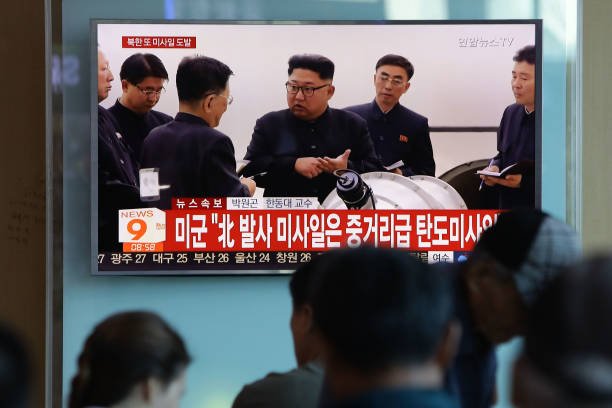
North Korea announced on Thursday, 5 November 2026, that it had tested a newly designed air-defense missile system and conducted a separate long-range cruise-missile strike drill the day before. The announcement gave fresh details about launches detected by South Korea on Wednesday and placed the weapons activity back at the center of security concerns on the Korean Peninsula. The missile system was described by Pyongyang as a test of detection, tracking and guidance functions; those claimed results have not been independently demonstrated.
What Did North Korea Say It Tested?
According to Reuters, the Korean Central News Agency said the air-defense trial examined technical specifications, the reliability of new materials and several guidance modes. It also claimed to assess the system’s capacity to identify and follow targets and process detection data. In a separate exercise, a long-range strategic cruise-missile unit struck a simulated airport target. These were reported as two activities, and the evidence available does not establish that the missiles all shared the same design or mission.

What Did South Korea Detect?
South Korea’s military detected multiple missiles heading towards the sea from the Sondok area in South Hamgyong Province early on Wednesday. Yonhap News Agency reported that its Joint Chiefs of Staff monitored the launches while assessing the type of weapons involved. The military account is important because it confirms observable launches without endorsing all of Pyongyang’s claims about their technical performance. Early estimates suggested the projectiles flew less than 300 kilometers, but such assessments can change when tracking information is reviewed.
Why Does the Difference Between Missile Types Matter?
An air-defense missile is designed primarily to intercept aircraft or incoming threats, whereas a cruise missile can fly towards a designated land or maritime target. Different systems have different purposes, flight characteristics and strategic implications. Treating all the launches as a single ballistic-missile test would therefore obscure an important technical distinction. North Korea’s claims also concern more than range: they emphasize target detection, guidance and the capacity to attack a simulated airfield.
Who Oversaw the Exercises?
SBS News reported that Kim Jong-sik, a senior figure associated with North Korea’s military programme, supervised the air-defense test alongside missile-administration and defense-research officials. The named attendance underlines the importance Pyongyang attached to the exercise, although it does not indicate that the system has entered routine operational deployment. North Korean state media reported the exercises after they occurred, so an announcement of successful testing is not equivalent to independent verification of readiness.
Why Are the Launches Raising Concerns?
The tests add to a sequence of weapons activity reported in recent weeks. They come against a backdrop of strained inter-Korean relations, sanctions over North Korea’s missile programme and close security coordination among South Korea, Japan and the United States. Military exercises and missile launches can serve as demonstrations of capability or political signals, but the precise intention behind these particular events cannot be established from the launches alone. Seoul must assess the practical threat while avoiding unsupported predictions about imminent conflict.
What Remains Unclear?
Key uncertainties include the exact configuration of the new defense system, whether the test used operational equipment and what performance measures were actually achieved. Public images and state-media statements offer clues but do not provide a complete engineering assessment. Officials have not disclosed enough independently verifiable data to determine whether the system would perform as claimed under combat conditions. Nor does the report prove that every missile detected by South Korea was the same weapon described in the state-media account.
How Should the Tests Be Assessed?
A careful evaluation should separate North Korea’s description of the system from independent military observations. The fact that a projectile flew does not confirm every advertised guidance function or interception capability. Analysts would normally want evidence about repeatability, real targets, testing conditions and performance against countermeasures. Public reporting rarely contains that level of detail. The sequence also matters: Wednesday’s launches were detected before Thursday’s public account, giving outside observers an opportunity to compare the chronology. Further statements from Seoul could clarify the weapons involved, while any additional North Korean demonstrations may reveal whether the new air-defense system is still experimental or moving towards wider deployment.
What Happens Next?
South Korea and its partners are likely to continue monitoring weapons activity and reviewing available technical evidence. A meaningful next development would be an official assessment identifying the launched systems more precisely, a response from neighboring governments or evidence of additional tests. For now, the confirmed news is that launches occurred on Wednesday and North Korea publicly described two exercises on Thursday. Whether those exercises substantially change the regional military balance remains an open question.
Trivane View
The reporting should distinguish confirmed launches from state-media performance claims. Independent assessments of the weapons, rather than dramatic assumptions about their capabilities, will determine how meaningful the test proves to be.
Related Trivane News
North Korea Fires Around 10 Ballistic Missiles as Tensions with Seoul Deepen
Kim Jong Un Displays Long-Range Missile as Trump Raises Possibility of Talks