What Did the Finance Minister Announce?
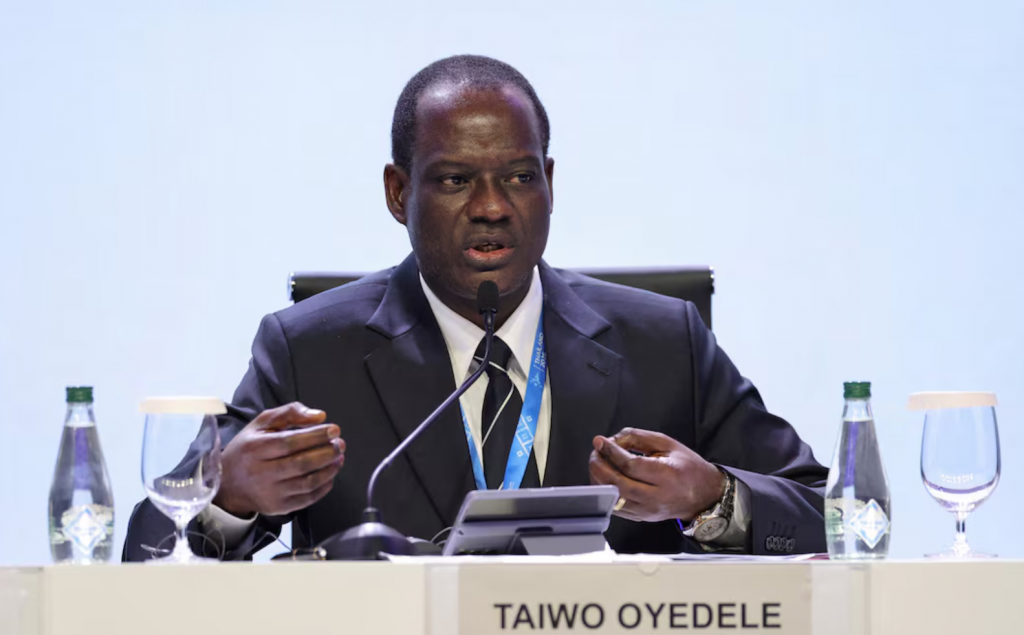
Nigeria intends to rely more heavily on private domestic and foreign investment to finance its next phase of economic expansion rather than increasing government borrowing, Finance Minister Taiwo Oyedele said on Wednesday, 21 October.
Speaking at an event hosted by Chatham House, Oyedele argued that the country must move beyond a growth model dependent on public debt. Reuters reported that the minister identified private capital as the principal funding source for the next stage of expansion.
The announcement signals a policy emphasis rather than proof that new investment has already been secured. The government has not, in the reporting reviewed, published a project-by-project schedule or a financing agreement covering the whole proposed shift.
Why Does the Government Want This Change?
The minister presented private investment as a route to stronger growth without adding the same pressure to the public borrowing requirement. In principle, businesses and investors can finance infrastructure, manufacturing and services, while government resources are directed towards priorities that private markets may not adequately fund.
That approach also carries risks. Private investors typically require predictable regulation, credible contracts and an acceptable return. If projects depend on user fees, tariffs or government guarantees, the ultimate financial burden may still fall partly on households or taxpayers.
The question is not simply whether investment is described as public or private, but how risks are allocated, whether procurement is transparent and whether the projects deliver lasting economic value.

What Growth Targets Did Oyedele Set?
According to Reuters, Oyedele said the government was targeting average annual growth of about 7% over the next five years, above International Monetary Fund projections of approximately 4.2% for 2026 and 4.3% for 2027.
The difference is substantial. A government target describes an ambition; an IMF forecast is an estimate based on its own assumptions. Neither figure is a guarantee of future performance.
The minister also cited lower inflation and plans to improve income growth, while acknowledging that reforms have imposed a heavy cost-of-living burden. Those pressures are central to whether stronger headline economic indicators translate into tangible benefits for citizens.
How Is This Different From Earlier Subsidy Remarks?
Oyedele again ruled out restoring petrol subsidies. That is not the main new development in this report: Trivane covered the same policy position on 18 October. The fresh angle is the minister’s statement about how Nigeria intends to finance future growth.
The government argues that reforms to petrol pricing and foreign exchange have helped stabilise public finances and attract investment. However, higher transport and living costs continue to affect households and small businesses, making implementation and distributional effects crucial.
Any investment-led strategy will therefore be judged by whether it produces jobs, increases productivity and improves wages rather than by announcements alone.
What Could This Mean for Investors and Workers?
For domestic businesses, access to finance and reliable infrastructure will determine whether private capital expands productive activity. For foreign investors, policy consistency, currency convertibility and legal certainty are likely to shape decisions.
For workers and consumers, benefits would be indirect unless projects create employment, reduce supply constraints or improve public services. Large investment commitments do not necessarily translate quickly into household income gains.
The minister also referred to cash transfers reaching around ten million households, according to Reuters. That claim should be attributed to the government until programme coverage and payment records are independently verified.
What Happens Next?
Attention turns to concrete investment commitments, project financing terms and forthcoming economic data. The government will need to show how the strategy affects borrowing, job creation and living standards, rather than relying solely on growth targets.
Related Story
Read Trivane’s earlier report on Oyedele’s petrol-subsidy position