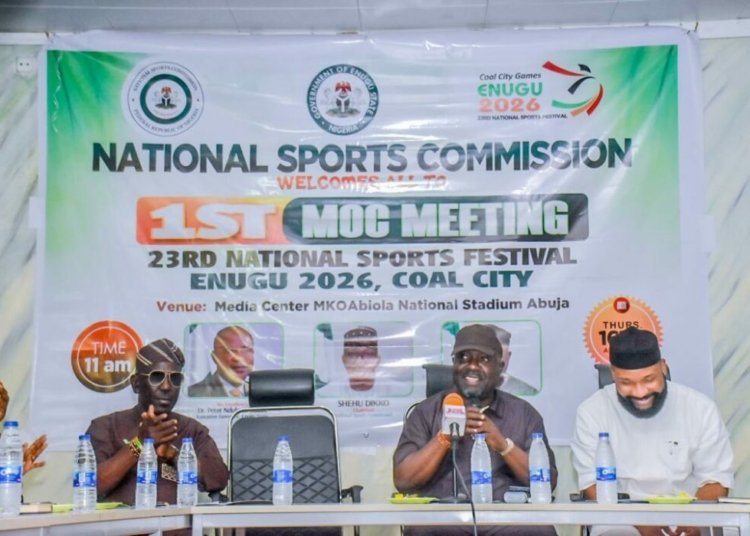
The National Sports Commission (NSC) has formally approved the postponement of the 23rd National Sports Festival in Enugu State to May 2027, ending uncertainty over whether the event could begin as scheduled later this month. The decision follows a request from the host state, which said critical facilities were not ready for the competition.
The festival, branded the Coal City Games, was due to take place between late November and December 2026. The commission’s acceptance of the postponement means athletes and state contingents must now adjust their preparation and travel plans. An exact opening date in May has not been announced in the statements reviewed.
Why the Festival Was Postponed
According to Channels Television, the NSC confirmed the decision on Thursday, November 19. Enugu’s local organising committee had requested additional time to complete the necessary sporting infrastructure and ensure the event met agreed standards for participants and officials.
The scheduling problem had been building for several days. Enugu State earlier sought a move to the first week of May 2027 amid concerns about the readiness of facilities intended to host competitions and accommodate visiting delegations. The latest announcement is significant because it turns a proposal from the host state into an approved decision by the national sports authority.
A statement circulated through the News Agency of Nigeria press release service said the organising committee apologised for being unable to stage the festival in the original window. The commission said it accepted the request while acknowledging the disappointment that athletes, coaches, and spectators may feel.

Athletes Face Another Waiting Period
For competitors who have trained for the November start, a postponement of several months changes more than travel arrangements. Coaches may need to adjust selection schedules and training cycles, while state sports councils must revise budgets for camps, equipment, accommodation, and transport.
The effect will not be the same for every athlete. Some could benefit from more preparation time, particularly those recovering from injuries or joining programmes later than planned. Others may lose momentum after organising training and personal commitments around the original dates. Those consequences make early publication of the revised schedule important.
The National Sports Festival is a major domestic multisport event intended to bring competitors from across Nigeria together. Delays therefore affect an extended network of athletes, technical officials, sporting associations, state governments, and local businesses that had expected activity around the host venues.
What the Commission Has Said
NSC Director-General Bukola Olopade described the delay as regrettable and said the commission would intensify engagement with Enugu officials before the May event. The objective, he said, is to ensure that the rescheduled festival is organised to a standard worthy of the athletes and participating states.
The Guardian had earlier reported Enugu’s postponement request, including the state’s explanation that more time was needed for facilities and coordination. The formal NSC decision should now become the benchmark for planning; earlier reports that described the move merely as a request no longer reflect the latest position.
Authorities have not released a detailed public account of the remaining construction work in the announcements reviewed. Without that information, it would be premature to assert that every project will be finished by a particular month or to claim that all funding and procurement issues have been resolved.
A Test of Sports Administration
The postponement raises familiar questions about timelines for hosting large competitions. An event of this scale depends on facilities, accommodation, transport, safety arrangements, and coordination with multiple sporting federations. Announcing a new month addresses the immediate scheduling problem but does not, by itself, resolve the underlying infrastructure constraints.
A credible recovery plan would identify outstanding work, assign responsibility, and communicate milestones to the public. Participating states also need enough notice to revise training and logistics without incurring unnecessary costs. The national body and host government will be judged on whether those practical details emerge ahead of May.
For athletes, the priority is certainty. The festival is no longer expected to begin this November, and stakeholders will look for a specific date, a competition timetable, and confirmation that venues have passed the required readiness checks.
Related Trivane News
Nigeria Sends 19 Athletes to Historic Dakar Youth Olympics Across Six Sports
Super Falcons Begin Receiving $100,000 Rewards for WAFCON Triumph