Kenya could spend an estimated Sh57.3 billion to conduct its 2027 general election, according to a new study examining the rising cost of elections in the country.
The figure is a projection rather than a final government allocation. The amount ultimately spent will depend on the budget approved by Parliament, the number of registered voters and the operational decisions taken by the Independent Electoral and Boundaries Commission.
The report, titled Cost of Elections in Kenya 2026, was produced by South Consulting Africa Limited with support from the Netherlands Institute for Multiparty Democracy.
South Consulting Africa said the research examined public spending on elections, campaign expenditure and the factors that have made Kenya’s electoral process increasingly expensive.
Cost estimated at Sh1,500 per voter
The study estimates that the 2027 election could cost about Sh1,500 for every registered voter. It compares that figure with a global benchmark of approximately US$5, or about Sh645, per voter.
This would put Kenya’s estimated administrative cost per registered voter at more than twice the benchmark used by the researchers.
However, the final cost per voter cannot be established until the voter register for the 2027 election has been completed. The calculation will also depend on whether researchers count all registered voters or only those who cast ballots.
The Netherlands Institute for Multiparty Democracy said Kenya’s elections rank among the most expensive globally. Its summary of the research attributes the high cost to election technology, security, staffing, legal disputes and repeated procurement of materials and services.
IEBC previously requested Sh61.7 billion
The Sh57.3 billion estimate differs from an earlier budget presented by the IEBC.
In March 2025, the IEBC said it had developed a Sh61.7 billion budget for the 2027 general election, spread across three financial years.
The commission said Sh55 billion had been provided as a baseline assumption by the National Treasury, leaving a projected funding gap of Sh6.7 billion at the time.
More recent reporting indicates that the proposed election budget was later revised to approximately Sh57.3 billion. Sifa FM reported that the new study used this reduced figure when assessing the expected administrative cost of the election.
The different figures should not be treated as confirmed expenditure. They represent planning estimates that remain subject to review and parliamentary approval.
What the election budget covers
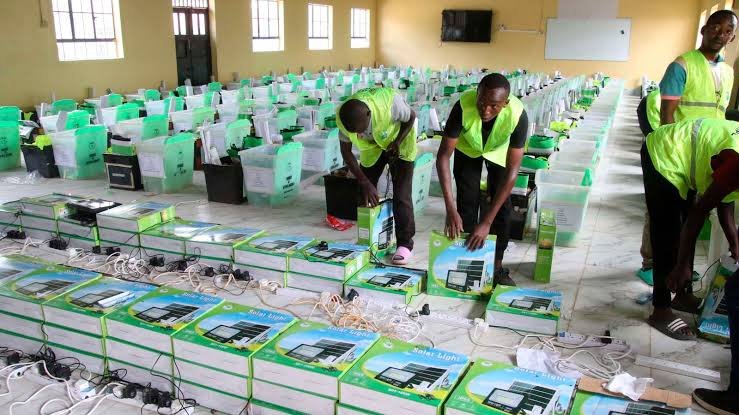
The IEBC will require funding for voter registration, election technology, ballot papers, polling stations, temporary election workers and the transportation of materials across the country.
Other major expenses include voter education, security coordination, results transmission systems and training for election officials.
The commission must also prepare for presidential, parliamentary and county elections taking place on the same day. Kenyan voters elect a president, members of the National Assembly and Senate, governors, county assembly representatives and county women representatives during a general election.
Kenya’s next general election is scheduled for 10 August 2027.
Campaign spending adds another cost
The Sh57.3 billion projection mainly concerns the administration of the election. It does not represent the full amount that political parties and candidates may spend on campaigns.
A separate analysis reported by Nation Africa estimated that the combined cost of election administration and political campaigning could reach Sh272 billion.
Campaign expenditure can include advertising, transport, political rallies, campaign staff, branded materials and payments made through party structures.
Researchers have warned that weak enforcement of campaign-finance rules makes it difficult to establish the true cost of Kenyan elections.
The Election Campaign Financing Act provides for controls on political spending, but the implementation of effective limits has remained a challenge.
Calls for greater accountability
The study recommends stronger oversight of election procurement, better use of existing technology and greater transparency in campaign financing.
It also calls for long-term planning to reduce expensive last-minute purchases and emergency preparations.
The central issue is not only how much Kenya spends on elections, but whether the money produces a credible, secure and trusted process.
Until Parliament approves the final budget, Sh57.3 billion should be described as an estimate or projected cost, not as money Kenya has already committed to spend.