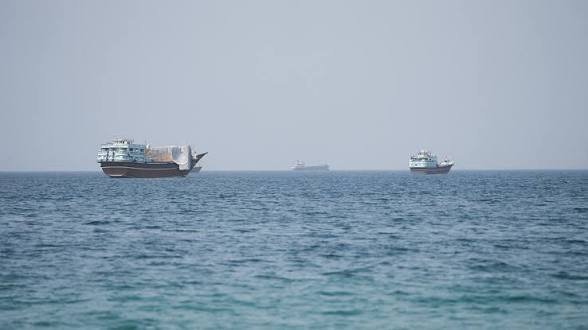
Iran has offered to reopen the Strait of Hormuz within seven days if the United States eases military pressure and lifts its blockade on Iranian ports, raising the possibility of renewed negotiations between the two countries.
The proposal was disclosed as Iranian President Masoud Pezeshkian and Foreign Minister Abbas Araghchi attended the 81st session of the United Nations General Assembly in New York.
According to Reuters, a senior Iranian official said the country’s delegation at the UN had been given authority to pursue negotiations aimed at ending the conflict.
However, no direct meeting between Pezeshkian and US President Donald Trump had been arranged.
Iran sets conditions for reopening strait
The Strait of Hormuz is one of the world’s most important shipping routes for oil and gas. Disruption around the waterway has affected international energy supplies and contributed to higher fuel prices.
Iran’s latest proposal would require Washington to reduce military pressure and remove its blockade on Iranian ports before the waterway is fully reopened.
The Iranian official said Tehran could restore shipping access within seven days if the United States met those conditions.
Iran submitted its proposal to Washington through mediators on 16 September, according to Reuters. The timing suggests that Tehran’s earlier statements about seeking a peaceful settlement formed part of a wider diplomatic approach rather than an unconditional offer to end the conflict.
Foreign Minister Abbas Araghchi has repeatedly said that Iran remains open to diplomacy but will not negotiate under military or economic pressure.
This means the social media claim that Iran is simply “not interested in continuing the conflict” does not provide the complete position. Tehran has expressed an interest in negotiations, but it has also attached clear conditions and warned that further attacks would bring retaliation.
Trump renews pressure on Iran
The diplomatic signals came as Trump used his UN General Assembly address to defend the American military campaign against Iran.
Trump claimed that the campaign had prevented Tehran from obtaining a nuclear weapon. He also warned that Iran could face further military action if it failed to reach an agreement with Washington.
Iran has consistently denied seeking a nuclear weapon and maintains that its nuclear programme is intended for peaceful purposes.
The two countries have continued to exchange threats despite signs that both sides may be willing to return to negotiations.
In an earlier Reuters report, Iran’s military warned that another attack would lead to sustained retaliation against American bases and interests in the region. Trump, meanwhile, said he remained open to meeting the Iranian president.
Gulf countries watch developments closely
Gulf countries are closely following the discussions because of the conflict’s effect on regional security, oil exports and commercial shipping.
Saudi Arabia, the United Arab Emirates, Qatar, Bahrain, Kuwait and Oman are among the countries seeking an end to further escalation.
Any agreement to reopen the Strait of Hormuz could ease pressure on oil supplies and reduce the risk facing commercial vessels. However, reopening the route would depend on both countries reaching an agreement on Iran’s conditions.
The United Nations gathering provides both sides with an opportunity to explore indirect negotiations through mediators, even without a meeting between Trump and Pezeshkian.
The UN General Assembly’s general debate continues until 28 September, with the Iran conflict and wider instability in the Middle East among the main issues being discussed.
This is a developing story.