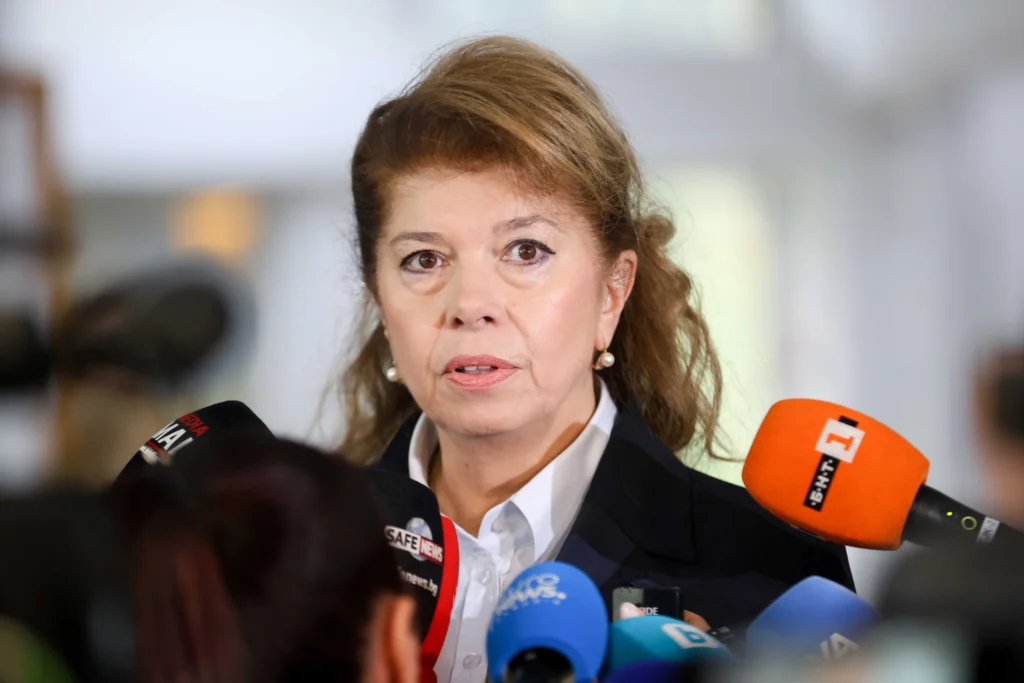
Iliana Yotova has won Bulgaria’s presidential runoff election, becoming the country’s first woman elected to the presidency after securing 57.6 per cent of the vote.
The Central Election Commission confirmed the result on November 2 after all votes from Sunday’s November 1 runoff had been counted.
Yotova defeated Andrey Gyurov, the candidate of the liberal, pro-Western opposition, who received 39.5 per cent of the vote.
Yotova secures presidential mandate
According to the “Associated Press“, Gyurov conceded defeat and said the election result reflected the choice of Bulgarian voters.
Following her victory, Yotova pledged to pursue national consensus through dialogue and work towards stronger institutions.
The 62-year-old had already been serving as acting president since January, when former president Rumen Radev resigned to enter parliamentary politics. She contested the election to secure her own elected mandate.
Yotova previously served as Radev’s vice president after being elected alongside him in 2016 and re-elected in 2021. Her political career also includes service in Bulgaria’s national parliament and the European Parliament.

Political implications of the result
Yotova was endorsed by Radev’s Progressive Bulgaria party, which secured an outright majority in the country’s 240-seat parliament during the April parliamentary election.
Her victory means the presidency will remain aligned with the governing political bloc. The development has raised questions among observers about the concentration of political influence and the strength of institutional checks and balances.
Although Bulgaria’s president does not exercise executive powers over day-to-day government policy, the office carries important constitutional responsibilities. These include serving as commander-in-chief of the armed forces, vetoing legislation and appointing ambassadors.
Bulgaria’s position on Europe and Ukraine
Yotova has expressed support for maintaining Bulgaria’s European direction while also advocating improved relations with Russia.
On the war in Ukraine, she has opposed further Bulgarian military assistance, arguing that the conflict requires a diplomatic solution rather than continued military support.
Her position reflects the divisions within Bulgaria over its relationship with Russia, particularly since Moscow’s full-scale invasion of Ukraine.
Bulgaria joined NATO in 2004 and the European Union in 2007, and its foreign policy continues to be shaped by debates over European integration, security and relations with Moscow.
Yotova is expected to be inaugurated on January 22 for a five-year presidential term, alongside vice president-elect Kiril Valchev.
For more politics news, read Trivane News’ related coverage here