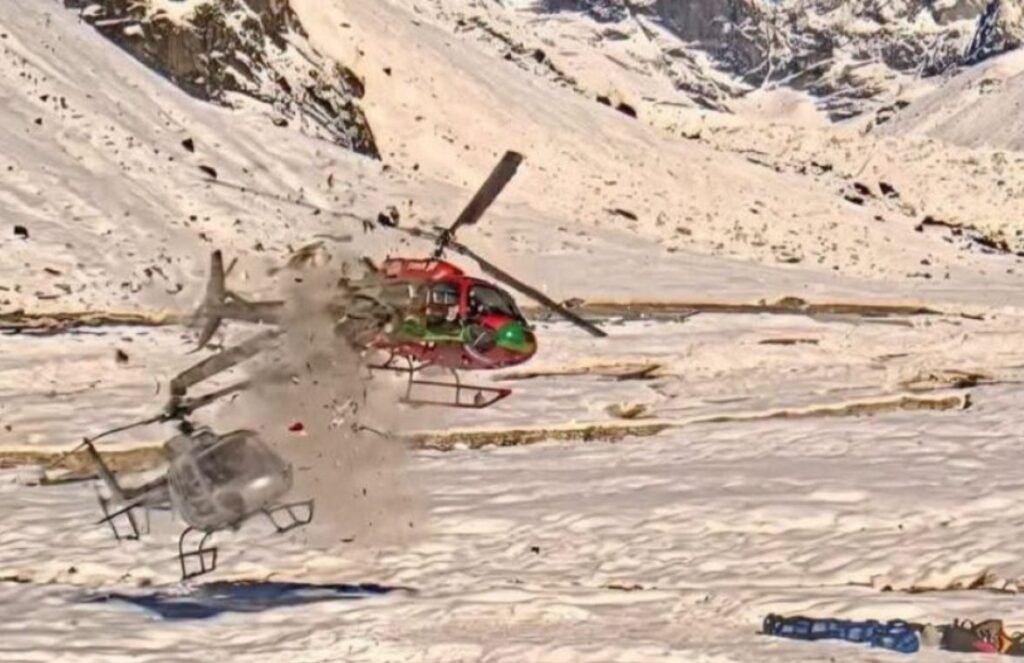
Two helicopters collided while attempting to land in Nepal’s Mount Everest region on Tuesday, 3 November 2026, killing a tourist from India and injuring other people. The aircraft were operating around Pheriche, a high-altitude settlement along the popular trek to Everest base camp. Nepalese aviation authorities have begun establishing the sequence of movements that brought the helicopters into contact, while medical and police teams have handled the injured and the victim’s remains.
The Kathmandu Post identified the tourist as Vasanth Kumar Balaramudu and said the crash occurred at about 8:12 a.m. local time at a helipad in Solukhumbu district. The report named Fishtail Air and Air Dynasty as the operators, with one aircraft arriving from Gorakshep and the other coming from Lukla. Officials described the encounter as a collision during landing, not a confirmed engine failure or a weather-related accident. The precise cause remains under investigation.

What Do Officials Know About the Collision?
Authorities said the aircraft were close to the helipad when they struck each other, leaving a passenger dead and other occupants needing assistance. Aircraft movements in mountain valleys require careful coordination because terrain can restrict approaches and available landing space. At this stage, video circulating online may illustrate the impact but cannot alone prove whether pilot communication, equipment, air traffic arrangements or another factor caused it.
Associated Press reported one fatality and at least two injured people in its initial account, including a New Zealand passenger and a Nepali pilot. Later local accounts identified an additional pilot with injuries. The varying totals appear to reflect successive updates rather than a confirmed change in the number of fatalities. The safest present description is one confirmed death, with the final injury count requiring reconciliation by the investigating authority.
Why Are Helicopters Important in the Everest Region?
Pheriche lies along trekking routes that pass-through communities far from dependable road access. Helicopters move cargo, support tourism operations and evacuate climbers or guides suffering from illness, injury or severe altitude symptoms. The terrain and thin air make mountain flying technically demanding, while seasonal weather changes can quickly affect visibility and flight planning. That importance also means prolonged disruption to helicopter services can complicate emergency response.
The Himalayan Times reported the collision during the morning landing attempt and cited Nepal Police as an early source. Its initial injuries figure differed from later reporting, underscoring why newsrooms should attach timestamps to rapidly changing accident information. The popular autumn trekking season follows the monsoon, and thousands of visitors can be travelling through high-altitude areas at once. Safety procedures need to protect both passengers and ground crews at small helipads.
Which Safety Questions Need Answers?
Investigators will need aircraft records, pilot statements, landing sequence information and whatever communications or ground observations are available. They may examine the spacing of arriving helicopters, the instructions given to pilots and the physical layout of the Pheriche helipad. An accident involving two aircraft cannot be explained solely by the difficult geography; technical evidence must establish the specific chain of events.
The case could prompt a wider review of traffic coordination at Himalayan landing sites, especially where tourist flights, rescue operations and cargo flights share limited infrastructure. Nepal has considerable experience operating helicopters in mountain conditions, but each serious incident requires a fresh evidence-based assessment. A regulatory response might concern procedures or equipment, yet no particular reform should be reported as ordered until the aviation authority formally announces it.
The collision is being closely watched because air support can be a lifeline in a region where trekkers may require evacuation from altitudes above 4,000 meters. The passenger’s nationality does not change the safety issues, although it means Nepalese and Indian officials may become involved in notifying relatives and repatriation arrangements. Medical details, the precise number aboard and pilot status should be drawn from named authorities rather than social-media footage or speculation about what the pilots saw.
What Happens Next?
Nepal’s civil aviation authorities are expected to examine the accident site, establish each helicopter’s flight path and issue further casualty and safety information. Operators may also clarify whether flights at Pheriche will continue under normal procedures. For now, the confirmed event is a fatal collision on Tuesday morning; mechanical failure, air-traffic miscommunication and weather should remain possible lines of inquiry rather than stated findings.
Related Trivane News
UK Air Accident Investigators Begin Inquiry into Scotland Crash
Flydubai Co-Pilot Attacked Captain with Crash Axe, UAE Says