
Guinea-Bissau has voted to approve constitutional changes that significantly strengthen presidential powers, setting the stage for a major shift in the country’s political system ahead of elections planned for December.
Provisional results announced by the National Electoral Commission showed that 70% of voters supported the new constitution, while 30% voted against it.
Reuters reported that about 544,060 people took part in the 30 August referendum, representing almost 60% of registered voters. The vote came less than a year after the military seized power following a disputed presidential election in November 2025.
The referendum is therefore about more than changing constitutional language. It could reshape how political power is divided in a country that has experienced repeated military interventions and long periods of instability.
President gains significantly greater powers
Under the existing system, Guinea-Bissau has operated with power divided between the president, prime minister and parliament.
The new constitution shifts that balance towards the presidency.
The president will be able to appoint and dismiss the prime minister and cabinet, create or abolish ministries and dissolve parliament in the event of what is described as a grave political crisis.
Under the previous constitutional arrangement, parliament selected a prime minister who then appointed a cabinet.
The authorities argue that competition between presidents and prime ministers has contributed to political instability and that clearer presidential authority could reduce institutional conflict.
Ahead of the referendum, military chief General Tomás Djassi defended the changes, arguing that the country needed greater clarity over who holds national political authority.
Parliament will become smaller
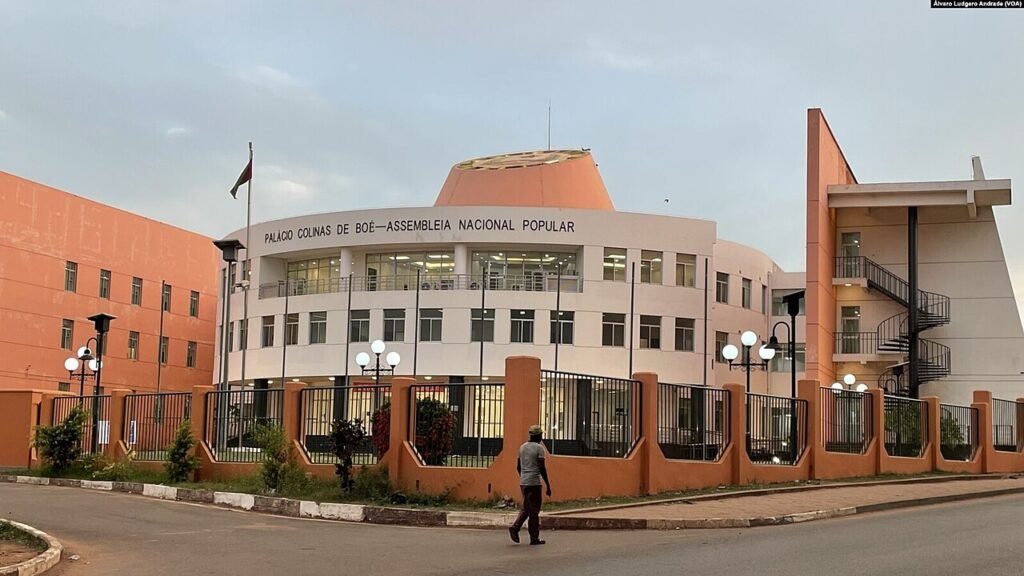
The changes also affect the National People’s Assembly.
The number of parliamentary seats will fall from 102 to 65, while the number of electoral constituencies will be reduced from 29 to 12.
Supporters of the reform say a smaller parliament could make political debate and decision-making more effective. Opposition groups dispute that argument and have warned that reducing parliamentary representation while strengthening the presidency could weaken checks on executive power.
The constitution also introduces a residency requirement for presidential candidates. Anyone seeking the presidency must have lived continuously in Guinea-Bissau for the previous five years.
These provisions could become particularly important as the country prepares for elections expected in December.
Opposition boycotted the referendum
The referendum was strongly opposed by the African Party for the Independence of Guinea and Cape Verde, known as PAIGC, one of Guinea-Bissau’s most established political parties.
PAIGC urged its supporters to boycott the vote, arguing that the process lacked adequate political and institutional safeguards.
Its leader, Domingos Simões Pereira, has challenged the legitimacy of institutions established following the military takeover and accused the transitional authorities of using the referendum to deepen their control.
Other opposition and civil society figures have also raised concerns about how the constitution was prepared and whether there was sufficient public consultation. DW reported that critics questioned the level of independent oversight surrounding the referendum.
Reuters journalists in Bissau reported that polling stations in the capital appeared largely empty on voting day, while some residents told local media they either did not know the referendum was taking place or did not fully understand its purpose.
The official provisional figures nevertheless recorded support for the constitution among those who voted.
December elections will be the next test
Guinea-Bissau has experienced repeated coups and attempted coups since independence from Portugal in 1973.
Its latest military takeover followed the disputed November 2025 presidential election. Former President Umaro Sissoco Embaló and opposition candidate Fernando Dias both claimed victory before official results were announced, and the military subsequently seized power.
Presidential and parliamentary elections scheduled for December are intended to return the country to civilian rule.
But the constitutional referendum means those elections could now take place under a substantially different balance of political power.
The result also leaves an important challenge for the transitional authorities: convincing opposition groups and voters who rejected or boycotted the referendum that the next elections will be credible and inclusive.
Trivane View: Stability must come with accountability
Guinea-Bissau’s history shows why political stability matters. Repeated institutional disputes and military interventions have made democratic government difficult to sustain.
But strengthening one institution does not automatically solve that problem.
The real test will be whether greater presidential authority produces stable government while preserving meaningful parliamentary oversight, political competition and institutional accountability.
December’s elections will provide the first major indication of how that new balance works in practice.
Source: Reuters – Guinea-Bissau approves new constitution that expands presidential powers
Facts first. Not frenzy.