
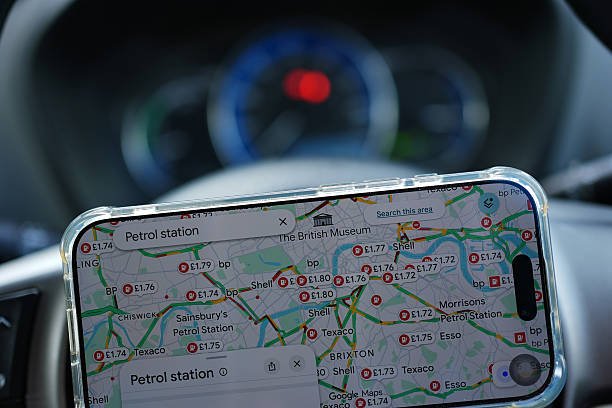
Drivers across the UK can now check nearby petrol and diesel prices on Google Maps following the integration of the government’s Fuel Finder service.
The feature launched on Thursday, 8 October, making near real-time pump prices available within an app many motorists already use for planning journeys.
According to the Department for Energy Security and Net Zero, Fuel Finder now reflects prices covering around 99 per cent of fuel sold on UK roads. That figure measures fuel sales coverage, rather than the percentage of individual petrol stations.
How to check prices
In its launch announcement, Google said motorists can search for “petrol” or “fuel” in Google Maps or Waze to see nearby stations and their prices.
Users can compare petrol and diesel rates and check the different fuel types offered at a station.
The information allows drivers to compare options before choosing where to fill up, rather than automatically using the nearest forecourt.
What the savings claim means
The government says comparing fuel prices could save a household with a car around £40 a year.
This is an estimate, not a guaranteed saving for every driver. Actual savings will depend on fuel consumption, price differences between stations, and whether reaching a cheaper forecourt requires additional travel.
For example, a price difference of 5p per litre would save £2.50 on a 50-litre purchase. A lengthy detour could reduce that benefit.
How current is the information?
The Competition and Markets Authority says fuel retailers must submit price updates to Fuel Finder within 30 minutes of a change.
The regulator can investigate and take enforcement action where businesses fail to comply.
Fuel Finder followed the CMA’s recommendation for a station-by-station price information scheme to strengthen competition and help motorists compare retailers.
Because updates are required within 30 minutes, the service is described as near real-time. Drivers should still check the displayed pump price before buying.
What to do if a price is wrong
Drivers can use the government’s Fuel Finder reporting service to flag discrepancies between an app listing and the price charged.
Reports should identify the forecourt, when the problem was noticed, and where the incorrect information appeared. Photographs or screenshots are optional, and reports can be submitted anonymously.
Why it matters to the diaspora
For African diaspora households in the UK, particularly those who drive regularly for work, school runs, or caring responsibilities, the feature offers a straightforward way to compare an everyday expense.
Its usefulness rests on accurate prices and convenient alternatives. Comparing nearby stations can help households make informed choices without assuming that the lowest advertised price always means the cheapest overall journey.