
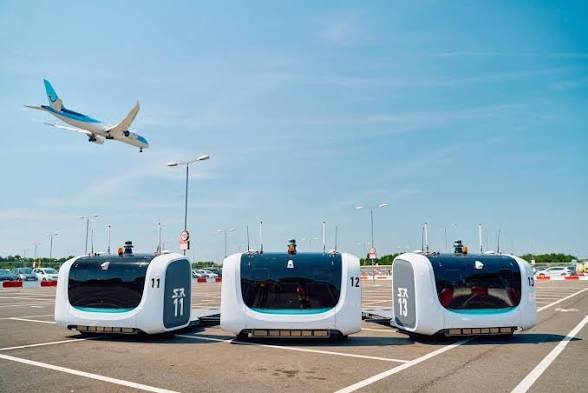
London Gatwick has introduced the UK’s first robotic airport parking service, allowing passengers to leave their cars in a private cabin while an automated machine moves the vehicle into a secure parking area.
The airport launched the service in partnership with French technology company Stanley Robotics. It was announced in July and became available to passengers in August 2026.
Unlike traditional airport valet parking, customers do not hand their keys to an attendant. They park inside a designated cabin, scan their booking and leave with their keys. A low-profile robot then enters beneath the vehicle, lifts it by the tyres and transports it to an allocated parking space.
London Gatwick said the service is intended to reduce the time passengers spend searching for spaces and make the journey from the car park to check-in more convenient.
How the robotic system works
Passengers must book the service before travelling and provide their return flight information.
When they arrive, they drive into a private drop-off cabin near Gatwick’s South Terminal and scan their booking details. Once the driver and passengers have left the cabin, the automated system checks the vehicle before assigning a robot to collect it.
The robot slides underneath the car without entering or starting it. It lifts the vehicle by its tyres and moves it into a restricted parking area that is not accessible to the public.
When the passenger’s return flight lands, the system uses the flight information supplied during booking to arrange for the vehicle to be returned to a collection cabin.
According to London Gatwick’s announcement, passengers can then collect their car without waiting for a valet attendant or surrendering their keys.
Oli Bedford, Gatwick’s head of airport access, marketing and commercial products, described the system as quick and easy to use. He said allowing passengers to keep their keys could also offer additional peace of mind while they are away.
Some vehicles cannot use the service
The robotic system is compatible with about 95 per cent of standard-sized vehicle models, according to information reported by The Independent.
The published limits include a maximum wheelbase of 3.3 metres, a maximum vehicle height of 2.3 metres, a maximum wheel diameter of 21 inches and a maximum weight of 2.6 tonnes.
Some large vehicles, vans and cars fitted with roof boxes may therefore be unsuitable. Passengers should check the vehicle requirements during booking rather than assume their car can be accepted.
The initial service also came with operating restrictions. Reports published around the launch said vehicles could only be dropped off or collected on weekdays between 9am and 5pm, while bookings required a minimum stay of five days.
Gatwick said the conditions could be reviewed as use of the service increases. Travellers should confirm the latest operating hours, prices and eligibility requirements directly through the airport’s booking system before travelling.
A five-day booking tested by The Independent ahead of the August launch produced a price of £109. However, airport parking charges vary according to travel dates, demand, booking time and length of stay. The figure should not be treated as a fixed price for every passenger.
A first for a UK airport
Stanley Robotics has previously deployed its automated parking technology at Lyon-Saint Exupéry Airport in France. Gatwick is the first airport in the United Kingdom to offer the company’s robotic parking service.
Clément Boussard, chief executive of Stanley Robotics, said the partnership would help Gatwick respond to pressure on its parking capacity as passenger numbers grow.
The system can arrange vehicles more closely than a conventional public car park because drivers do not need space to open doors or move between parked cars. It may therefore allow the airport to use the available area more efficiently.
Passenger Terminal Today reported that the service is designed to shorten the parking process while giving passengers the option of walking to the terminal or using a free shuttle bus.
The launch reflects the growing use of automation across airports, where operators are introducing technology to manage passenger movement, security, baggage handling and other services.
For passengers, however, the practical value will depend on reliability, price and availability. The service offers a simpler alternative to searching for a space, but its present restrictions mean it will not suit every journey or vehicle.