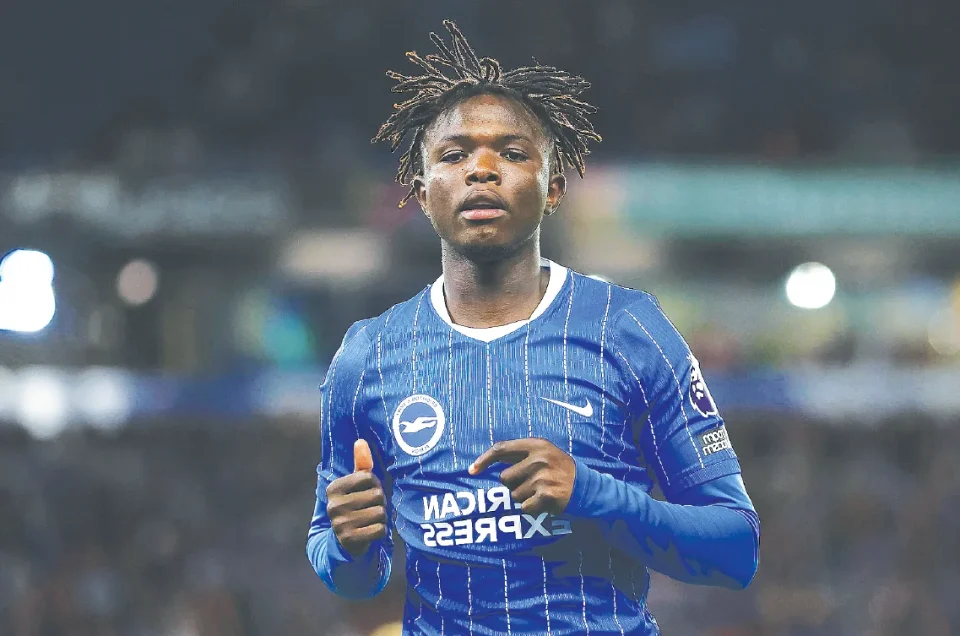
Brighton and Hove Albion manager Fabian Hürzeler has criticised Nigeria’s handling of winger Zadok Yohanna after the 19-year-old sustained a further injury while representing the country’s Under-23 side. His comments place attention on how clubs and national teams coordinate the return of players recovering from fitness problems.
PUNCH reported on Saturday, 21 November, that Hürzeler linked the setback to Yohanna’s international duty and said the player had not been perfectly managed. That is the Brighton manager’s assessment; the report does not establish a medical finding of negligence by the Nigerian coaching or medical staff.
Yohanna will miss Brighton’s Premier League game against Hull City on Sunday. The club has not disclosed a definitive medical diagnosis or a date for his return, making any prediction about how long he will be sidelined premature.

What happened during the qualifiers?
Yohanna sustained the setback during Nigeria’s 2027 Africa Under-23 Cup of Nations qualifying first leg against the Democratic Republic of Congo in Lubumbashi. Nigeria lost that match 2-0, and he was substituted during the first half. He subsequently returned to England and was absent from the return fixture.
Nigeria recovered to win the second leg 4-0 in Ikenne, advancing 4-2 on aggregate. That result represented a significant sporting recovery for the Olympic Eagles, but the winger’s injury has created a separate concern about the medical and welfare decisions around the fixture.
A player’s condition during international duty can change quickly. A previous injury, training load, travel, and an unexpected match incident may all be relevant, but none of those possibilities should be presented as the established cause without a clinical assessment.
Why Brighton are concerned
Yohanna joined Brighton from the Swedish club AIK during the summer on a five-year contract. He had only recently returned to first-team training after spending more than two months away from action with a muscle problem. A recurrence during that phase can interrupt both rehabilitation and a young player’s attempts to secure a regular role.
For Brighton, the absence affects immediate squad planning and raises questions about when it is safe to increase training intensity again. For the player, repeated rehabilitation may mean missed competitive minutes and uncertainty as he establishes himself in English football.
The account available so far contains the manager’s criticism but not a detailed response from Nigerian team medical officials. It would be unfair to assign responsibility conclusively before the treatment record and selection decisions are examined by the relevant parties.
Club-country communication under scrutiny
International football requires clubs to release eligible players while national teams make independent sporting decisions. Medical coordination is therefore critical when a footballer travels with an ongoing or recently resolved injury. Information about fitness restrictions, planned minutes, and changes in symptoms can help reduce disagreements after a setback.
The next significant development will be a confirmed medical update on Yohanna’s condition or a substantive response from Nigeria’s football authorities. Until then, the story is a dispute over player management, accompanied by a confirmed injury absence—not proof that one side caused the setback.
The wider question is whether communication between club and country can give young players a clearer, safer route back to competition without undermining the demands of international football.
The player at the centre of the dispute
The effects of an injury dispute are felt most directly by the footballer. Yohanna is at an early stage of his career at Brighton and needs both competitive opportunities and sufficient recovery time. A rushed return could complicate his progress; a needlessly prolonged absence could also hinder development. The appropriate balance is a clinical decision rather than a judgement that can be established from a manager’s public comments alone.
Club and country may have different immediate priorities but share an interest in the player’s long-term fitness. A national team wants its strongest squad available for important qualifiers, while the club manages a season of domestic fixtures and training commitments. Written fitness assessments, transparent rehabilitation milestones, and direct conversations between medical teams can help those interests coexist without placing the athlete in the middle of an avoidable disagreement.
Hürzeler’s comments may lead to further questions for Nigeria’s Under-23 officials, but they are not a substitute for hearing their explanation. An accurate account must distinguish what is confirmed—the injury, substitution, international absence, and Brighton unavailability—from competing interpretations of whether proper precautions were taken.
Any statement issued by the player or the Nigerian federation could materially change the account of the disagreement. Until then, medical conclusions would go beyond the evidence available to the public.
Related Trivane News
Super Eagles Arrive in Zanzibar for Tanzania Rematch as Lookman Misses Out
Super Eagles Face Tanzania in Zanzibar as AFCON Qualification Pressure Builds