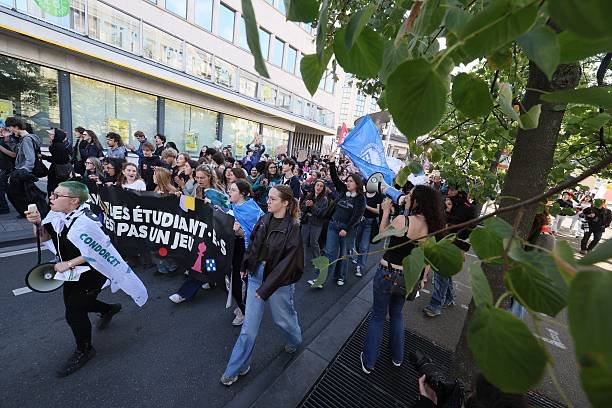
Students in French-speaking Belgium have taken to the streets over rising education costs, overcrowded classrooms, and difficulties accessing study materials.
Hundreds demonstrated in Liège on Wednesday, 7 October. Reuters reported that Belga news agency put arrests in recent days at 107, linked to offences including property damage and arson. Local authorities were not immediately available to confirm that figure.
Some protesters said demonstrations in neighbouring France had encouraged their movement.
A dispute with Belgian roots
The protests extend beyond university fees. Secondary-school pupils are also challenging changes to the education system.
Le Monde reported that the reforms include increased teaching hours and a cost-cutting plan. Students interviewed by the newspaper stressed that their demands arose from conditions in Belgium, rather than simply copying France.
For pupils approaching university, higher fees are a concern for their next stage of education.
What has changed in tuition fees?
The reforms concern education under the Wallonia-Brussels Federation, Belgium’s French-speaking Community. They should not be presented as a single fee change applying identically across the whole country.
The Université libre de Bruxelles confirms that registration fees were revised for the 2026/27 academic year following reforms adopted in June.
Its standard full annual fee is €1,194. Lower rates of €835, €374 or zero apply to eligible students under the income and grant arrangements.
The highest standard rate is therefore not the amount every student must pay.
Students had already raised concerns.
The latest demonstrations follow earlier opposition to the reforms.
On 16 September, students marched through Brussels against higher fees and the wider cost of studying. The Brussels Times reported concerns from the Federation of French-speaking Students about combining paid work with lectures, examinations and study.
The government has defended the reforms as a response to pressure on public finances. In June, education minister Valérie Glatigny said the aim was to release money for reinvestment in the sector, according to Reuters.
Why it matters to Africa and the diaspora
African students considering French-speaking Belgium should not assume that €1,194 will cover their annual tuition.
The University of Liège lists an additional €4,175 contribution for non-EU students who do not qualify for an exemption. Combined with the full standard fee, that totals €5,369.
Exemptions exist, including provisions linked to nationality, recognised status, scholarships, and certain programmes. Applicants must check which rules apply to their circumstances.
For diaspora relatives funding education, tuition is only one part of the budget. Accommodation, transport, food, and study materials must also be considered.
Families should obtain a written fee assessment from the chosen institution and check available support before making financial commitments. A headline figure alone is not enough to establish what an individual student will owe.
Trivane View
Education budgets need careful management, but higher costs can make studying harder for families already under financial pressure.
Authorities should listen to students and explain how the reforms will improve education. Peaceful protest deserves to be heard. Violence and damage put people at risk and weaken that effort.