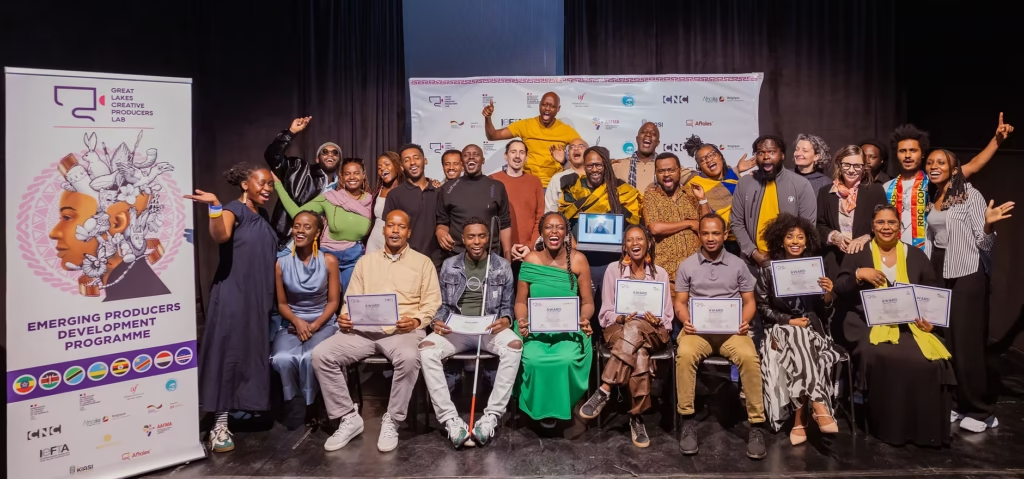
The Great Lakes Creative Producers Lab has unveiled a 15-member cohort drawn from seven African countries for its 2026 programme, which begins in Kigali, Rwanda, on October 26.
The selection includes producers from Sudan, Uganda, Kenya, the Democratic Republic of the Congo (DRC), Tanzania, Ethiopia, and Rwanda, according to The Hollywood Reporter in its report on the “newly announced cohort”.
Of the 15 participants, 13 are developing fiction or documentary feature projects, while two will participate as observers, focusing on their professional development without presenting a project.
Building skills beyond filmmaking
The programme is designed to strengthen the practical and creative skills producers need to develop projects, secure financing and bring films to audiences. Participants are expected to take part in workshops, individual mentoring and peer discussions during the October 26–30 programme.
The lab focuses on the producer’s role in shaping a film from its development stage through financing and delivery. Its approach also emphasises the importance of stories rooted in local experiences while remaining relevant to international audiences.
According to the “Great Lakes Creative Producers Lab’s official website“, the initiative was founded by Aftales Film Hub in Kenya and Kiasi Productions in Uganda to address gaps in professional training and support for creative producers in the region.

Why regional collaboration matters
Film producers often need more than a compelling story to move a project forward. Financing, distribution, access to experienced industry professionals, and international partnerships can determine whether a project progresses from development to production.
Bringing producers from several countries together creates opportunities to exchange knowledge, explore partnerships, and develop a stronger network across African film industries. The programme’s inclusion of observers also provides a route for professional growth beyond the immediate development of individual projects.
However, participation in the lab does not guarantee that the selected films will secure financing, enter production, or reach international distribution. Its immediate purpose is to strengthen the producers and projects involved.
A wider opportunity for African cinema
The programme comes as African film industries continue to seek more sustainable ways to finance and distribute locally developed stories. Stronger regional networks could help producers pool expertise, explore co-productions, and reach audiences beyond their home markets.
The upcoming Kigali sessions will provide an opportunity to assess how the lab supports the selected participants and whether the relationships formed lead to further collaboration.