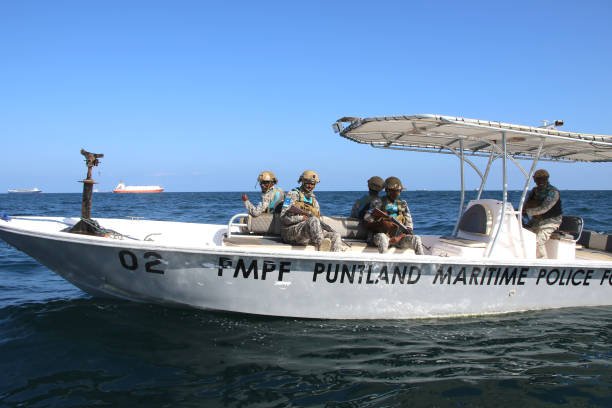
Fishing communities along Somalia’s Puntland coast are struggling with the effects of renewed piracy, as residents say arrests, disrupted trade, and continued security surveillance have made it harder to earn a living.
In a report published on Monday, 19 October 2026, Al Jazeera documented the experiences of fishermen in Bander Beyla, a coastal town where several hijacked vessels have been held nearby.
Local authorities introduced fishing restrictions in late August to disrupt suspected pirate support networks. Although the restrictions were lifted on 1 October, residents say the consequences of the crackdown have continued.
Fishing families face growing hardship
Abdifatah Mohamed, a 35-year-old fisherman who has worked at sea for two decades, told Al Jazeera that declining catches and competition from foreign trawlers had already reduced his income.
The restrictions introduced in August made the situation worse by preventing fishermen from accessing the waters on which their families depend.
Mohamed said fishermen feared being accused of involvement in piracy or of supplying hijacked vessels if they went to sea.
He also expressed concern about the possibility of being detained or harmed by international maritime forces if legitimate fishing boats were mistaken for pirate vessels.
These are the fishermen’s reported experiences and concerns, rather than independently established findings of wrongdoing by security forces.
Another fisherman, Abdirizak Said, told Al Jazeera that dozens of people had been arrested, including individuals accused of supplying food or khat to pirates.
Said also described warnings to local businesses against selling goods to pirate groups.
The reported arrests and individual circumstances have not been independently confirmed.

Three hijacked vessels released
Two local officials told Al Jazeera that the fishing restrictions were lifted on 1 October after operations against piracy resulted in the release of three vessels.
The International Maritime Organization (IMO) confirmed on 2 October that the vessels Honour 25, Seamull, also known as Sibu 1, and Eureka had been freed.
The organization said 44 seafarers were released during the operations.
However, the rescue efforts also involved a serious loss of life. The IMO reported that five crew members died during the operation to free Honour 25 on 29 September. Several other seafarers were seriously injured.
The IMO also said 22 seafarers remained captive aboard another vessel, Asana, at the time of its 2 October statement.
These developments show that the recovery of hijacked ships has not ended the wider threat to seafarers or coastal communities.
Piracy returns to Somali waters
Piracy has increased off Somalia’s coast in 2026 after several years of relatively low activity.
In an earlier report published on 31 August, Al Jazeera cited an AFP analysis of IMO data identifying at least 15 attacks since the beginning of the year.
That figure covered different forms of maritime attacks and should not be interpreted as 15 successful hijackings of commercial vessels.
The increase has renewed concerns about maritime security around the Gulf of Aden and the western Indian Ocean.
Analysts have pointed to several possible contributing factors, including the limited capacity of local security forces, illegal fishing, criminal networks, and competing demands on international naval operations.
The precise contribution of each factor remains uncertain.
Pirate networks extend beyond the sea.
Counter-piracy operations face difficulties because maritime attacks often depend on support from people and networks operating on land.
Jethro Norman, a senior researcher at the Danish Institute for International Studies, told Al Jazeera that family and community relationships can provide access to financing, equipment, personnel, and protection.
Such connections can help pirate groups sustain their operations, but they can also complicate investigations where legitimate businesses and family relationships exist alongside suspected criminal activity.
Residents say the consequences extend beyond fishing.
Said reported that boats transporting supplies from Yemen had stopped arriving, affecting local trade.
Restrictions on supplying suspected pirates can therefore have wider consequences for shopkeepers, transport operators, and households that depend on the coastal economy.
Surveillance continues after restrictions end
The two local officials interviewed by Al Jazeera said security helicopters continued operating around Bander Beyla and nearby coastal areas after the fishing restrictions were lifted.
They identified the aircraft as belonging to the European Union Naval Force, which conducts maritime security operations in the region.
According to the officials, the flights were intended to monitor possible movements by armed groups.
The accounts describe continued security activity but do not independently establish misconduct by the naval force.
Meanwhile, Mohamed said some residents had intervened to discourage armed young men from leaving the town to participate in pirate attacks.
He described the action as an effort by civilians to prevent further harm to their community.
Livelihoods remain under pressure
The release of three hijacked vessels and the lifting of fishing restrictions represent important developments in the response to renewed piracy.
Yet residents say the return of formal fishing access has not restored normal life.
Reduced catches, disrupted supply routes, and fears of being mistaken for pirates continue to affect how people work and travel along the coast.
The challenge facing authorities is to protect vessels and seafarers while ensuring that legitimate fishermen are not unnecessarily prevented from earning a living.
Whether security operations can achieve both goals will remain a central concern for communities such as Bander Beyla.