Zimbabwe is stepping up efforts to build confidence in its gold-backed ZiG currency, but persuading citizens and businesses to use it more widely remains a major challenge after years of monetary instability.
The Zimbabwe Gold (ZiG) was introduced in April 2024 as part of the government’s attempt to stabilise the economy and reduce its dependence on the US dollar.
The Reserve Bank of Zimbabwe says the currency is supported by foreign currency and precious-metal reserves, including gold.
However, a report published by Al Jazeera on Friday, 16 October 2026, found that some Zimbabweans remain reluctant to hold or transact in ZiG because of losses suffered during previous currency crises.
Past currency crises continue to shape public confidence
Zimbabwe abandoned its former local currency in 2009 following hyperinflation and adopted a multicurrency system dominated by the US dollar.
Efforts to restore a domestic currency during 2018 and 2019 were followed by further instability, reinforcing public concerns about the value of savings and wages.
Primary school teacher Charles Mbwandarikwa told Al Jazeera that he receives about a third of his salary in ZiG but exchanges it quickly rather than keeping it.
He said he lost his pension savings during the 2009 currency crisis and later experienced a sharp decline in the value of his earnings.
His experience illustrates why some workers remain cautious despite official assurances that the latest currency is more stable.
Businesses still face limited demand for ZiG
The challenge is also evident among retailers.
Clothing seller Sesedzai Chigumira told Al Jazeera that she had completed only a handful of sales in ZiG, with customers continuing to favour US dollars.
For businesses, the willingness of customers to use a currency can be as important as its official status.
If customers prefer dollars, retailers may have little incentive to hold large amounts of ZiG. Similarly, consumers may be reluctant to save in the local currency if they fear that its purchasing power could weaken.
Economist Cornelius Dube told Al Jazeera that demand for ZiG remains subdued and that reducing dependence on the US dollar will take time.

Central bank reports lower inflation.
Zimbabwe’s monetary authorities have reported improvements in some indicators used to assess currency stability.
According to the Reserve Bank of Zimbabwe, annual ZiG inflation stood at 3.7% in September 2026.
The figure indicates relatively low annual price growth measured in the local currency, although it does not mean that prices have fallen or that all households experience the same changes in living costs.
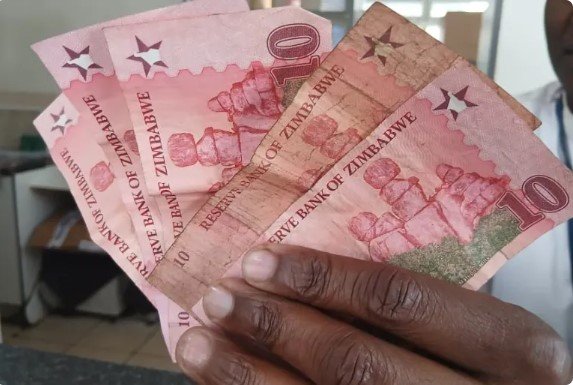
The central bank has also introduced updated ZiG banknotes and pursued measures intended to improve the currency’s use in domestic payments.
However, lower inflation and new banknotes alone cannot guarantee public confidence.
For households and businesses, confidence also depends on whether the currency remains stable over time and can be used conveniently for purchases, payments, and savings.
Zimbabwe reports progress towards a single-currency system
Zimbabwe is also assessing whether conditions are improving for a gradual transition away from its current multicurrency system.
According to The Herald, the Reserve Bank’s weighted assessment of progress towards a single-currency system increased to 54.9% in September, compared with 50.1% in August.
The newspaper reported that foreign currency reserves had reached US$1.9 billion by the end of September, with stronger reserves and subdued inflation contributing to the improved assessment.
Reserve Bank Governor John Mushayavanhu nevertheless cautioned that the higher score did not mean Zimbabwe was about to abandon the multicurrency system.
The score measures progress toward the central bank’s stated conditions. It is not a measure of how many citizens trust or use ZiG.
The authorities have moved toward a transition guided by economic conditions rather than an automatic change on a fixed date.
Public acceptance remains the central challenge.
The Reserve Bank’s framework identifies sustained low inflation, adequate reserves, exchange-rate stability, an effective foreign exchange market, and greater demand for ZiG among the conditions needed for a sustainable transition.
It also places importance on confidence in the financial system and reliable payment arrangements.
But increasing the use of ZiG in transactions is different from persuading people to keep their savings in it.
A worker may accept part of a salary in ZiG and immediately exchange it for dollars. A business may accept the currency for some payments while continuing to price major expenses in US dollars.
Dube argued that the transition should rely on incentives that encourage people to become comfortable holding either currency, rather than forcing an abrupt conversion.
For Zimbabwe, the longer-term test will be whether the ZiG can preserve purchasing power and become a currency people choose to use, rather than one they use only when required.
The latest official figures suggest progress in monetary stability, but the country’s multicurrency system remains in place.