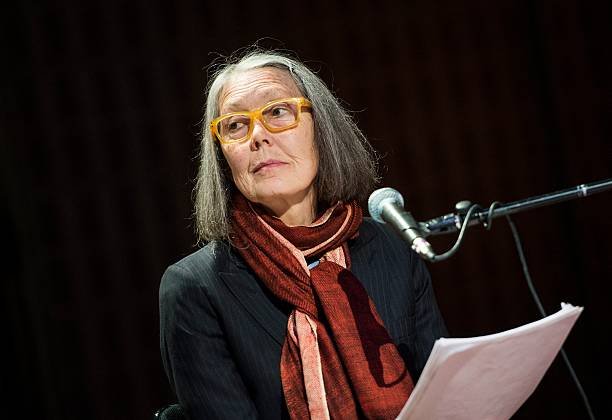
Canadian poet, essayist, and translator Anne Carson has won the 2026 Nobel Prize in Literature, the Swedish Academy announced on Thursday, 8 October.
In its official announcement, the academy recognised Carson for inventive work that draws on classical traditions to create new forms of contemporary literature.
The award honours a body of writing that moves between poetry, fiction, essays, translation, and performance.
A writer who crosses literary boundaries
Carson, 76, was born in Toronto and is known for combining classical scholarship with creative writing.
According to Reuters, her work frequently blends verse, prose, dialogue and translation. Ancient Greek literature has been a major influence on both her original writing and her translations.
Her best-known books include Autobiography of Red, a novel in verse published in 1998.
Other works include The Beauty of the Husband, Glass, Irony and God, Nox, and Wrong Norma, according to her publisher, New Directions.
Classical stories in contemporary forms
Carson’s writing often places ancient stories alongside modern experiences.
The Associated Press reported that her books include Eros the Bittersweet, which examines desire through ancient Greek literature, and Norma Jeane Baker of Troy, which brings together Marilyn Monroe and Helen of Troy.
She has also translated works by Sappho, Sophocles, and Euripides.
Her work extends beyond conventional printed poetry. New Directions describes Nox as a memorial to her brother, combining writing with photographs, letters, and other visual material.
Reaction to the announcement
Reuters reported that Carson was in Iceland when the academy contacted her.
Permanent Secretary Ingrid Carlberg said the writer was surprised by the news. This year’s literature prize carries an award of 12 million Swedish kronor, approximately $1.2 million.
Relevance to Africa and the diaspora
For readers, students, and writers across Africa and the diaspora, the announcement offers an opportunity to explore Carson’s approach to language and storytelling.
Her work shows how translation, poetry, and visual material can be brought together, and how older stories can be reconsidered through contemporary experiences.